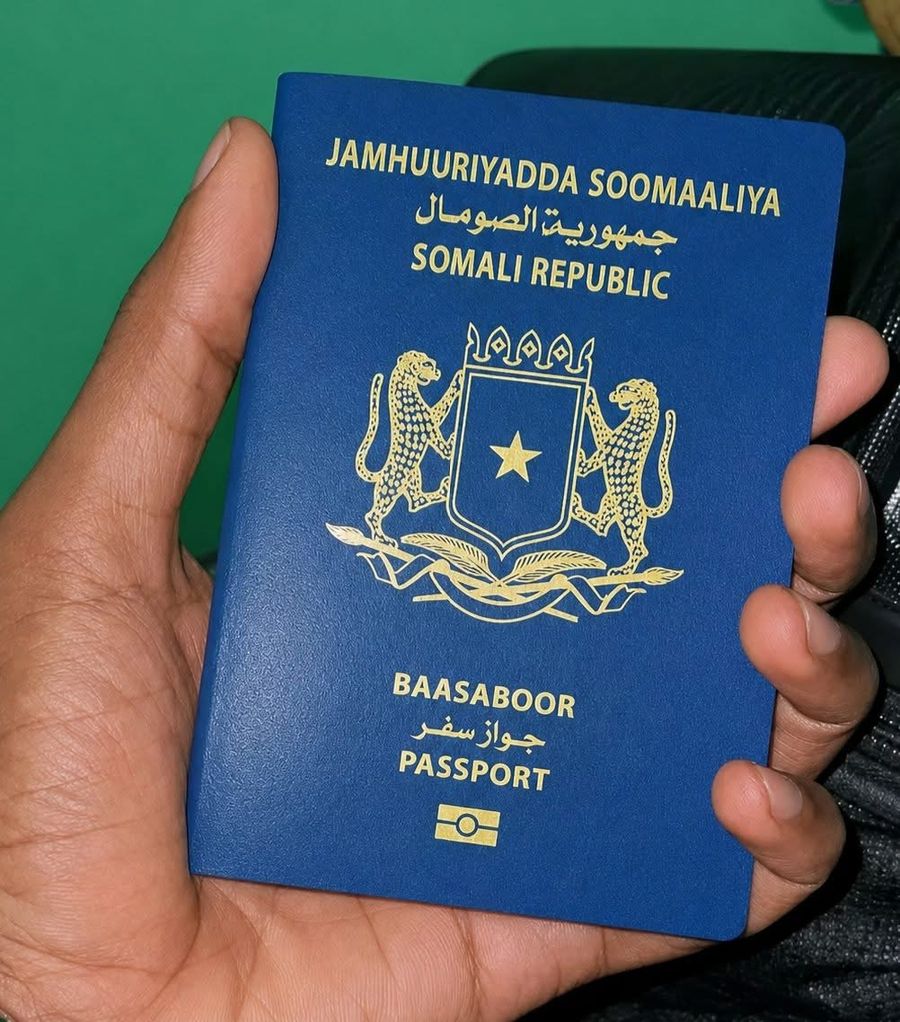
MOGADISHU, Somalia — July 2, 2026 — Somalia will begin issuing a new generation of passports in October 2026 as part of a broader effort to modernize the country’s identity management system and strengthen the security of travel documents, according to the Director General of the Somali Immigration and Citizenship Agency.
The announcement was made by Xuseen Qaasim Yuusuf, Director General of the Somali Immigration and Citizenship Agency (HSJ), who said the new passport will incorporate advanced security features and will be directly linked to the country’s national identification card system.
According to the agency, the upcoming document will be Somalia’s third-generation passport and is designed to meet international security standards while reducing the risk of fraud and identity-related crimes.
Officials said the new passport includes significant technological upgrades aimed at improving the integrity and reliability of Somali travel documents. The initiative forms part of wider government efforts to modernize public services and establish a more integrated national identity infrastructure.
Speaking about the planned rollout, Xuseen said the most significant change is the direct integration of passport services with Somalia’s national ID system.
Under the new framework, information contained in a citizen’s national identification card will be incorporated into the passport’s data page. Officials say this will make identity verification more efficient and strengthen confidence in Somali travel documents among domestic and international authorities.
“By October, we will have a new modern passport, and it will be necessary for the national identification card to become part of the passport issuance process,” Xuseen said.
The Director General added that the Immigration and Citizenship Agency will spend the next two months focusing on connecting passport services with the national identification database to prepare citizens and government institutions for the transition.
The Federal Government has increasingly prioritized the development of a national identification system as part of efforts to improve governance, public service delivery, and national security.
Officials say linking passports to the national ID database will help create a unified identity verification system that can be used across multiple government services.
The government believes the integration will reduce cases of duplicate identities, document fraud, and administrative inefficiencies while supporting digital transformation initiatives underway across federal institutions.
According to immigration officials, citizens seeking new passports or passport renewals may be required to possess a valid national identification card once the new system becomes operational.
Somalia has undertaken several reforms in recent years aimed at improving the credibility of official documents and strengthening institutional capacity.
The Somali passport has undergone multiple upgrades over the past decade as authorities sought to align travel documentation with international standards and improve recognition by foreign governments and border control agencies.
At the same time, Somalia has been expanding its national identification program, which aims to provide citizens with secure and verifiable identities. The initiative has been viewed as a critical step toward improving access to government services, financial systems, and civil registration mechanisms.
Identity management has become an increasingly important issue for many countries as governments seek to combat document fraud, strengthen border security, and facilitate digital public services.
According to officials, the integration of passport and national ID systems is intended to place Somalia among countries using centralized identity verification systems for travel documentation and public administration.
The Immigration and Citizenship Agency said preparations for the launch are already underway.
During the coming months, technical teams are expected to complete the integration between passport issuance systems and the national identification database. Public awareness campaigns may also be conducted to inform citizens about any new requirements associated with passport applications.
Officials have not yet announced whether existing passports will remain valid until their expiration dates or whether a phased replacement process will be introduced after the launch of the new passport.
Additional implementation guidelines are expected before October when the third-generation passport is scheduled to enter official circulation.
The introduction of a third-generation Somali passport represents one of the most significant upgrades to the country’s identity management infrastructure in recent years. By linking passports directly to national identification records, authorities aim to create a more secure and reliable system for verifying citizens’ identities.
The move could improve confidence in Somali travel documents among international border authorities and reduce opportunities for document forgery and identity fraud. Enhanced security features may also support smoother travel procedures for Somali citizens abroad.
The integration of national ID and passport systems may also contribute to broader government modernization efforts. A unified identity platform can support digital public services, civil registration programs, and administrative reforms across multiple sectors.
For citizens, the changes are likely to increase the importance of obtaining a national identification card as the government moves toward a more interconnected and technology-driven system for delivering public services and official documentation.