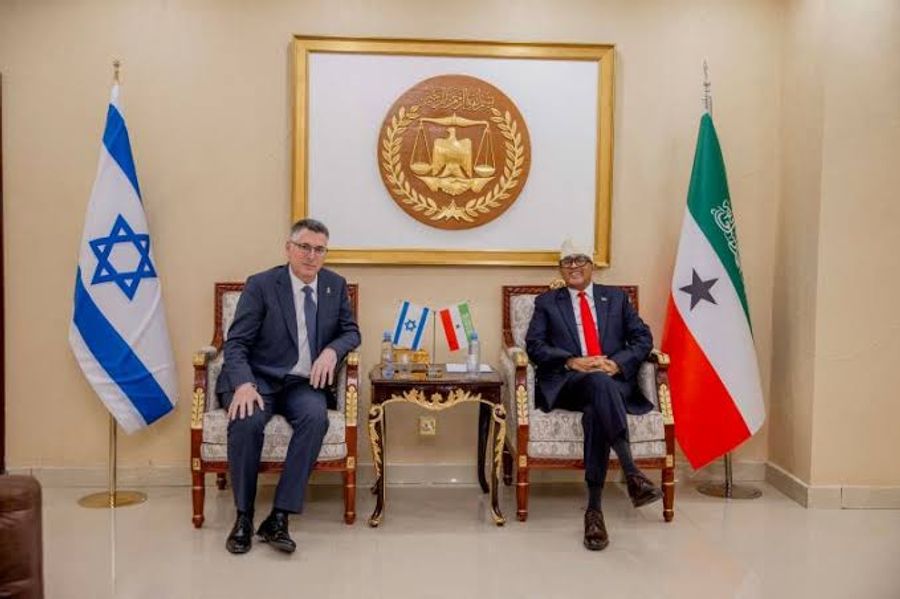
HARGEISA, Oct. 13, 2026 —Somaliland has rejected Somali President Hassan Sheikh Mohamud’s allegations that Israel plans to establish a naval base in Berbera, intensifying a dispute over sovereignty, diplomatic relations and foreign military access to the strategic Gulf of Aden coastline.
The response followed Mohamud’s Al Jazeera interview, in which he alleged that Israel intended to establish a naval facility and use Berbera’s airport. Somaliland’s Foreign Ministry rejected Mogadishu’s authority to determine its international relationships and dismissed claims that Berbera would be used to launch attacks against other countries.
The exchange highlights sharply opposing positions. Somalia considers Somaliland part of its territory and regards agreements concluded without federal approval as infringements on its sovereignty. Somaliland maintains that it restored its independence in 1991 and has the authority to negotiate diplomatic, economic and security arrangements independently.
In the remarks supplied for this report, Somaliland’s foreign minister accused Mohamud of speaking without knowledge of its relationship with Israel. He also challenged the federal government’s territorial reach, alleging that its authority did not extend beyond Mogadishu.
“He knows nothing about our relationship with Israel, and his administration does not extend beyond Mogadishu,” the minister said, according to the supplied account.
The criticism also targeted Mohamud’s domestic leadership, accusing him of failing to maintain the political coalition that supported his election in May 2022. Those comments represent Somaliland’s political assessment, rather than an independently established description of federal authority.
In its separately reported institutional response, Somaliland’s Foreign Ministry said its relationship with Israel reflected decisions taken by both parties and was based on cooperation, development and regional stability. It also rejected Somalia’s claim to speak on behalf of Somaliland’s population.
Mohamud’s Al Jazeera Interview
In an interview reported by Al Jazeera on October 3, Mohamud rejected any Israeli presence in territory Somalia claims as its own.
According to Anadolu’s account of the interview, the president alleged that Israel’s plans involved both Berbera’s port and airport. He argued that the objective was to position Israel closer to Gulf countries and Iran, and said attempts to draw Somalia into Middle Eastern conflicts would fail.
Mohamud also asserted that Somaliland’s residents opposed an Israeli presence. That assertion was disputed by Somaliland’s ministry, which rejected his authority to represent their views. Neither the president’s allegation about a planned base nor his characterisation of public opinion establishes that such an agreement exists. Somaliland rejects Hassan Sheikh Mohamud’s claims of an Israeli base in Berbera, as past recognition and security disputes deepen tensions with Somalia.
The central distinction remains between diplomatic recognition, security cooperation and permission to establish a permanent military installation. Evidence of cooperation between Israel and Somaliland does not, by itself, confirm an agreement granting basing rights.
Earlier Recognition and Military Disputes
The confrontation follows Israel’s recognition of Somaliland on December 26, 2025, becoming the first country to formally recognise the self-declared republic. Somalia condemned the decision as a violation of its sovereignty, while the African Union reaffirmed its support for Somalia’s unity and territorial integrity.
For Somaliland, recognition marked a breakthrough after decades of seeking international acceptance. For Mogadishu, it represented a challenge to its longstanding opposition to Somaliland’s separation.
The decision prompted nationwide demonstrations in Somalia. Tens of thousands participated in protests on December 30, including in Mogadishu, Baidoa and Dhusamareb, rejecting recognition and demanding the preservation of national unity. Turkey also publicly supported Somalia’s position.
Military allegations emerged almost immediately. On January 1, 2026, Somaliland denied that it had agreed to host Israeli military bases or receive Palestinians displaced from Gaza in exchange for recognition. That denial followed an earlier Al Jazeera interview in which Mohamud alleged that Israel had demanded those conditions.
In June, Somaliland Defence Minister Mohamed Yusuf Ali acknowledged that Israel was helping train Somaliland’s police and military. However, he told Reuters that there was no Israeli military presence or base and dismissed reports of negotiations over a permanent installation as rumours.
His comments demonstrated that security cooperation was developing, while maintaining Somaliland’s public rejection of claims that it had authorised an Israeli base. Those statements described the position in June and do not independently settle allegations about subsequent discussions.
Ethiopia Agreement Offers Another Precedent
The dispute also echoes the crisis triggered by Somaliland’s January 2024 memorandum of understanding with Ethiopia over coastal access. Somaliland presented the arrangement as a potential route towards recognition, while Somalia opposed it as an infringement on its territorial integrity.
The disagreement strained relations between Mogadishu and Addis Ababa and prompted Turkish mediation.
Under the Ankara Declaration signed on December 11, 2024, Somalia and Ethiopia reaffirmed respect for each other’s sovereignty, unity and territorial integrity. They agreed to pursue commercial arrangements allowing Ethiopia reliable access to the sea under Somalia’s sovereign authority.
Somaliland’s latest response nevertheless defended its right to conclude agreements with foreign partners, including the Ethiopian memorandum. That position underscores why external agreements continue to generate disputes: Mogadishu insists on federal authorisation, while Hargeisa rejects federal jurisdiction.
Berbera’s location across the Gulf of Aden from Yemen gives the disagreement wider regional significance. Any confirmed foreign military arrangement would raise questions about maritime security, regional competition and the consequences for relations between Somalia and Somaliland.