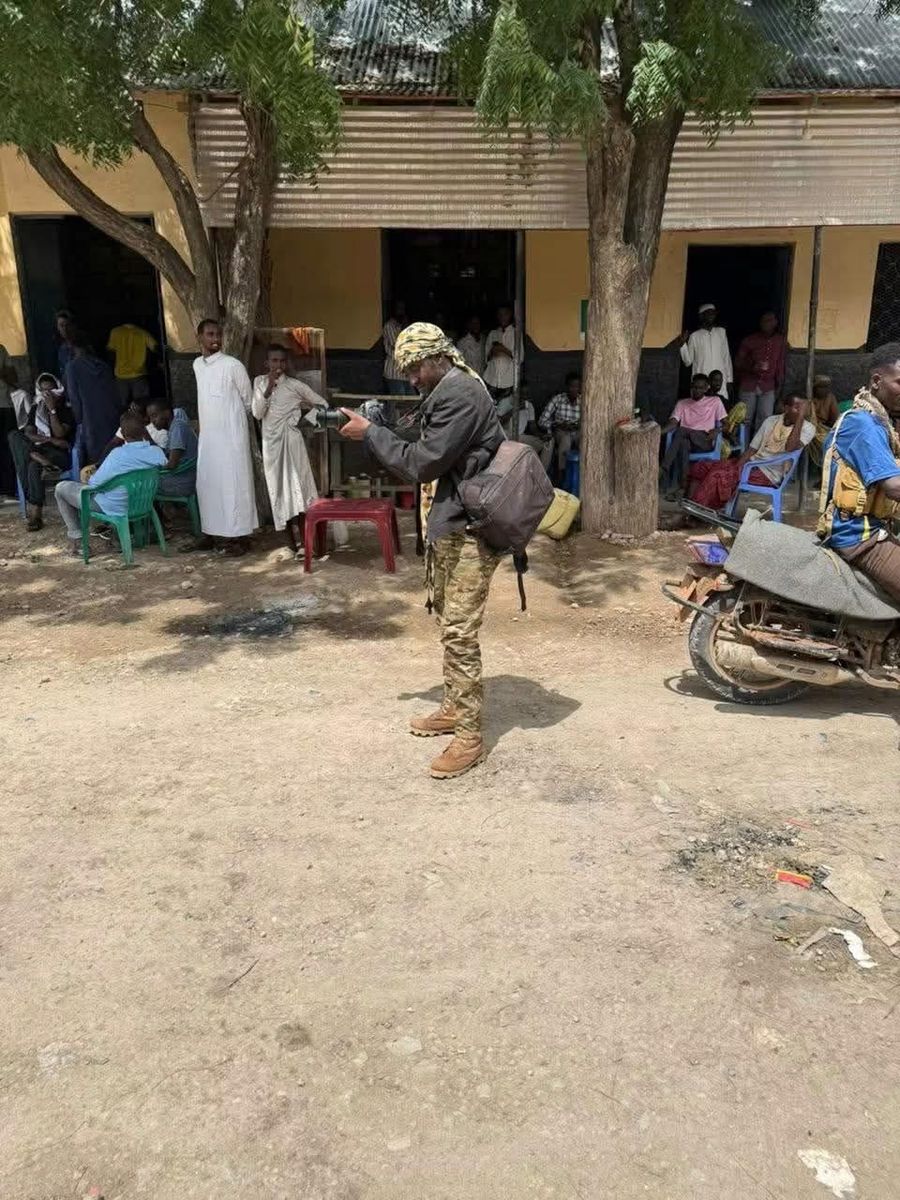
BAIDOA, Somalia — October 16, 2026-The reported capture of Berdaale town by South West State Darwish forces loyal to Abdiaziz Hassan Mohamed Laftagareen marks another significant development in the escalating struggle for political and military control of Somalia’s Bay region.
The development follows a series of territorial advances claimed by Laftagareen-aligned forces, raising questions about the ability of the federally backed South West State administration, led by Sheikh Adan Mohamed Nur Madobe, to maintain its authority outside Baidoa.
Baidoa Online had previously reported that Berdaale could fall to Laftagareen’s forces by Friday morning, following reports that federal government-aligned troops had withdrawn from several positions, including the district police station.
According to the latest information received by Baidoa Online’s ground reporting network, Darwish forces have now entered Berdaale and reportedly established control over key locations in the town.
Why Berdaale Matters Strategically
Located approximately 55 kilometres northwest of Baidoa, Berdaale occupies an important position within Bay region’s transport and commercial network, with connections to the wider Mogadishu–Doolow road corridor.
Its strategic importance extends beyond its administrative status. The town supports the movement of people, agricultural products, commercial supplies and other goods between communities across the region.
Control of Berdaale could strengthen Laftagareen’s influence over local transport routes and surrounding settlements while further weakening the territorial reach of the administration based in Baidoa.
The reported takeover also carries political significance, demonstrating that the confrontation between Laftagareen’s supporters and the federal-backed administration is increasingly being fought over district centres rather than confined to the regional capital.
Three District Centres Reportedly Under Laftagareen’s Control
Bay region has five districts under the classification used by Somalia’s federal Ministry of Planning:
Baidoa
Berdaale
Buurhakaba
Qansax-Dheere
Diinsoor
The latest reported developments suggest that Laftagareen-aligned forces have captured or claimed control of three of these five district centres.
Qansax-Dheere was reportedly captured on October 8, followed by Buurhakaba on October 15. Berdaale’s reported takeover on October 16 would represent a third significant territorial gain in just over a week.
These developments, if consolidated, would constitute a major achievement for Laftagareen’s camp, giving it influence over several strategically important towns surrounding Baidoa.
However, control of district centres should not be confused with complete control of their wider districts. Rural areas of Bay region remain affected by insecurity and the presence of Al-Shabaab.
Diinsoor Emerges as the Next Area of Concern
Attention is now turning to Diinsoor, one of the remaining district centres outside Laftagareen’s reported control.
Recent security reports have indicated movements of Darwish forces loyal to Laftagareen in areas surrounding Diinsoor, raising concerns that the district could become the next flashpoint in the expanding confrontation.
A change of control in Diinsoor would leave Baidoa as the principal district centre still held by the federally supported administration.
Such an outcome would represent a significant political and military setback for Madobe’s government and could further isolate its authority within the regional capital.
Nevertheless, the timing of any potential operation against Diinsoor remains uncertain, and reports of an imminent takeover should be treated as assessments rather than confirmed developments.
Baidoa Could Become the Central Focus
As Laftagareen’s supporters expand their reported territorial presence across Bay region, the broader political and military focus may increasingly shift towards Baidoa.
The city serves as the administrative headquarters of South West State and remains the principal centre of authority for the government led by Sheikh Adan Mohamed Nur Madobe, which is supported by Somalia’s federal government.
Baidoa has already witnessed repeated confrontations between federal-backed forces and fighters loyal to Laftagareen since the political crisis intensified earlier this year.
Any further territorial losses outside the city could increase pressure on the Madobe administration, complicate government supply movements and strengthen Laftagareen’s negotiating position.
However, territorial gains in surrounding districts do not necessarily mean that Baidoa itself is about to fall. The city’s security arrangements, federal military presence and political importance make its circumstances different from those of smaller district centres.
Political Crisis Deepens Following March Power Struggle
The current confrontation has its origins in the breakdown of relations between Laftagareen’s administration and the federal government over constitutional changes, regional elections and the distribution of political authority.
Federal forces entered Baidoa on March 30, 2026, forcing Laftagareen from power.
Although he initially announced his resignation, Laftagareen subsequently withdrew it and continued to challenge the legitimacy of the new regional administration.
Madobe was elected South West State president in June with federal backing, but Laftagareen’s supporters have refused to recognise his authority.
The competing claims have since developed into a wider armed confrontation involving regional forces, federal troops and rival political factions.
The federal government has also accused Laftagareen and some of his associates of suspected links to Al-Shabaab, allegations his camp has denied. Financial sanctions announced earlier this week have further intensified the political dispute.
Humanitarian and Economic Concerns
The continuing confrontation also presents serious risks for civilians.
Bay region has experienced years of insecurity, displacement, drought and restrictions on humanitarian access.
Further fighting around district centres could disrupt commercial activity, agricultural trade, transport services and the delivery of humanitarian assistance.
The possibility of renewed fighting around Baidoa is particularly concerning because the city hosts a substantial population of internally displaced people who depend on humanitarian assistance and functioning local markets.
Any escalation could trigger additional displacement and place further pressure on communities already facing economic and humanitarian difficulties.
A Major Gain for Laftagareen, but the Contest Remains Unresolved
The reported fall of Berdaale represents another important advance for forces loyal to Laftagareen and could significantly alter the balance of power in Bay region.
With Qansax-Dheere and Buurhakaba already claimed by his supporters, the addition of Berdaale would strengthen their position across three of the region’s five district centres.
Diinsoor’s future remains uncertain, while Baidoa continues to serve as the principal political and administrative stronghold of the federally backed Madobe government.
The central question is whether Laftagareen’s forces can consolidate their recent territorial gains and translate them into broader political authority, or whether federal-backed forces will regroup and attempt to reverse those advances.
For now, Bay region is entering a potentially decisive phase in the struggle over South West State’s leadership.