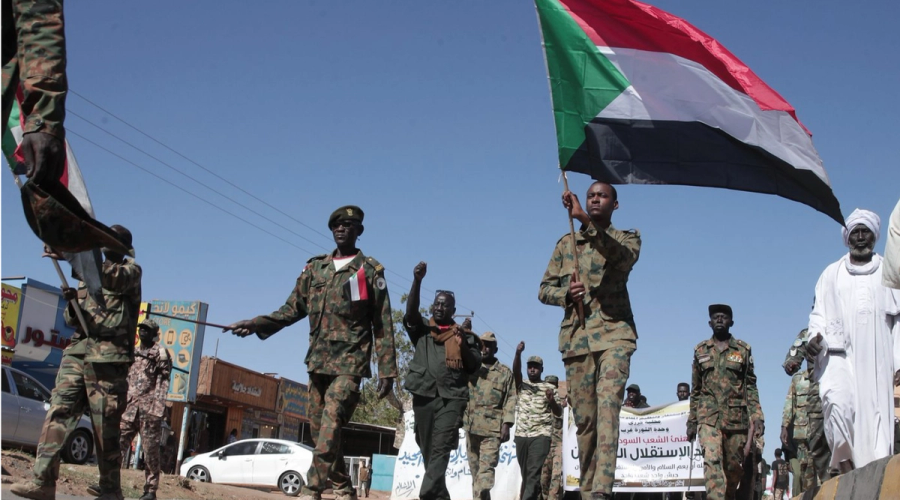
Saturday, May 16, 2026 (Baidoa Online) — Sudanese army says it has recaptured the town of Khor Hassan in southeastern Blue Nile State from the paramilitary Rapid Support Forces, or RSF, in one of the latest developments in the country’s ongoing civil war. The town lies in a strategically important border region near Ethiopia and has been a contested battleground since the conflict began in 2023.
The Sudanese Armed Forces announced in a statement that they had taken full control of Khor Hassan after intense fighting with the RSF. According to the army, its troops inflicted heavy losses on RSF fighters and destroyed military equipment during the operation.
Military officials did not provide independent verification of casualty figures, and RSF representatives have not issued an immediate response to the claim.
Local residents and security sources reported that fighting had intensified in the area in recent days as government forces advanced toward RSF positions near the Ethiopian border.
The capture of Khor Hassan is being described by military officials as part of a wider offensive aimed at securing key supply routes and pushing RSF forces away from strategic border corridors.
Strategic Importance of Blue Nile State
Blue Nile State has become one of the most contested regions in Sudan’s civil war. According to military analysts and regional observers, control of the area provides access to critical infrastructure, including the Al Roseires Dam, and key cross border routes linking Sudan and Ethiopia.
The region is also believed to contain valuable natural resources, including gold deposits, making it a high priority for both sides in the conflict.
According to Sudanese government statements, RSF forces had previously used Khor Hassan and surrounding areas as staging points for operations toward Kurmuk, another strategic town near the Ethiopian border.
Government Response
The Sudanese army framed the recapture as part of ongoing efforts to regain control of lost territory in the southeast. Officials said operations would continue in nearby areas where RSF presence remains active.
RSF leadership has not independently confirmed the loss of Khor Hassan, and battlefield information from both sides has remained difficult to verify due to restricted access and ongoing hostilities.
Background to the Conflict
The war in Sudan erupted in April 2023 following a power struggle between Sudanese Armed Forces chief Abdel Fattah al Burhan and RSF commander Mohamed Hamdan Dagalo, widely known as Hemedti.
The conflict quickly escalated into nationwide fighting, with both sides competing for control of military bases, cities, and strategic infrastructure.
According to humanitarian organizations and United Nations estimates, the war has killed tens of thousands of people and displaced millions, creating one of the world’s most severe humanitarian crises.
Blue Nile State has remained a key flashpoint due to its geography, border access, and contested local alliances, including the involvement of armed groups such as the Sudan People’s Liberation Movement North, which has been reported by local sources as having shifting alignments during the conflict.
Humanitarian Situation
Local aid workers and humanitarian monitors continue to warn that fighting in Blue Nile State has disrupted civilian movement, limited access to basic services, and increased displacement in border communities.
According to relief agencies, ongoing clashes in Sudan have strained humanitarian response efforts, particularly in remote regions where access is limited by insecurity.
The recapture of Khor Hassan highlights the continued fluidity of frontlines in Sudan’s civil war, where territorial control shifts frequently between the army and RSF forces.
Control of border regions like Blue Nile State carries both military and economic significance, especially due to access to trade routes, infrastructure, and natural resources.
The renewed fighting also raises concerns about further instability along the Sudan Ethiopia border, an area already sensitive due to cross border movements and regional security dynamics.
For the wider Horn of Africa, continued conflict in Sudan risks deepening humanitarian pressures, increasing refugee flows, and further destabilizing already fragile regional security conditions.