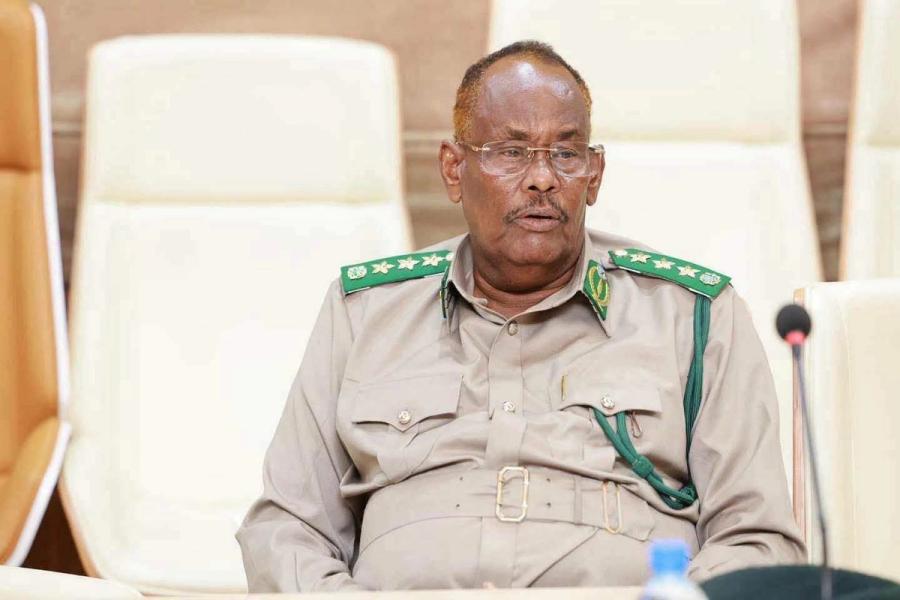
BAIDOA, Somalia — September 4, 2026 — Former Somali prisons chief Gen. Mahad Abdirahman “Shub” and three relatives sustained minor injuries in an airstrike on his residence in Doolow, security sources told Baidoa Online, prompting a former minister to warn against the alleged use of foreign military aircraft in domestic political disputes.
Shub suffered shrapnel wounds to his face, while his wife and two other family members sustained minor injuries, the sources said. He was taken to a secure facility operated by Jubbaland forces in the town for treatment.
According to the sources, two missiles struck the entrance and interior of the general’s residence near Doolow airport. Another missile reportedly hit the nearby home of the district commissioner.
The available information did not establish whether anyone was injured at the commissioner’s residence or provide a full assessment of the damage.
Laftagareen Camp Accuses Türkiye
Security sources cited by Baidoa Online said aircraft had been heard overhead since the afternoon before the reported attack. They attributed the strike to a drone supplied by Türkiye to Somalia for counterterrorism operations.
In a statement, the Southwest administration aligned with Abdiaziz Hassan Mohamed Laftagareen accused Turkish military aircraft of conducting what it described as an assassination attempt against Shub. It also confirmed that the former commander had been wounded.
Responsibility for the strike, the aircraft involved and the intended target have not been independently verified. The sources’ account of a Turkish-supplied drone and the administration’s allegation of direct Turkish involvement remain unconfirmed.
No response from Turkish authorities or the Somali federal government was included in the information available for this report.
Former Minister Warns of Dangerous Precedent
Former Somali State Minister for Environment and Climate Change Adam Aw Hirsi warned that the alleged use of foreign military aircraft in internal political disputes could encourage similar actions by other Somali actors.
Hirsi said that if Villa Somalia had planned the attack and used an aircraft belonging to a foreign government, the operation could set a dangerous precedent.
He warned that Somalia could eventually see a federal member state using a foreign government’s aircraft to strike an embassy in Mogadishu or an area inhabited by a Somali clan.
His remarks described a hypothetical consequence of such operations. They did not identify an existing threat to an embassy or suggest that a regional administration was planning an attack.
The warning followed reports of injuries to Shub and his relatives, alongside the Laftagareen-aligned administration’s accusation against Türkiye.
Background to the Dispute
Doolow lies near Somalia’s borders with Ethiopia and Kenya, in an area affected by tensions between the federal government and Jubbaland authorities.
The reported strike comes amid a dispute between federal authorities and Laftagareen’s supporters over control of Southwest State. Federal authorities have recently accused Shub of involvement in fighting on the outskirts of Baidoa.
The information provided did not include Shub’s response to that accusation or establish a connection between the Baidoa fighting and the reported attack on his residence.
Shub served twice as commander of the Somali Custodial Corps, which oversees the country’s prisons. He was removed from office following the political rift between Laftagareen and President Hassan Sheikh Mohamud.
Laftagareen’s camp has accused Türkiye of intervening in Somalia’s internal political disputes in support of the federal government. Those allegations do not independently establish who conducted the Doolow strike.
Hirsi’s warning adds a political dimension to the reported attack, focusing on the precedent that foreign military involvement could create. Establishing who authorised and carried out the operation remains central to assessing those concerns.