Garowe, Somalia — September 17, 2026 — Puntland authorities and the United States have confirmed a counterterrorism operation targeting what Puntland described as an Al-Shabaab weapons-storage site in the Cal-Madow area of the Golis Mountains in northern Somalia, as unverified reports said alleged Houthi- and Al-Shabaab-linked drone specialists were among those targeted.
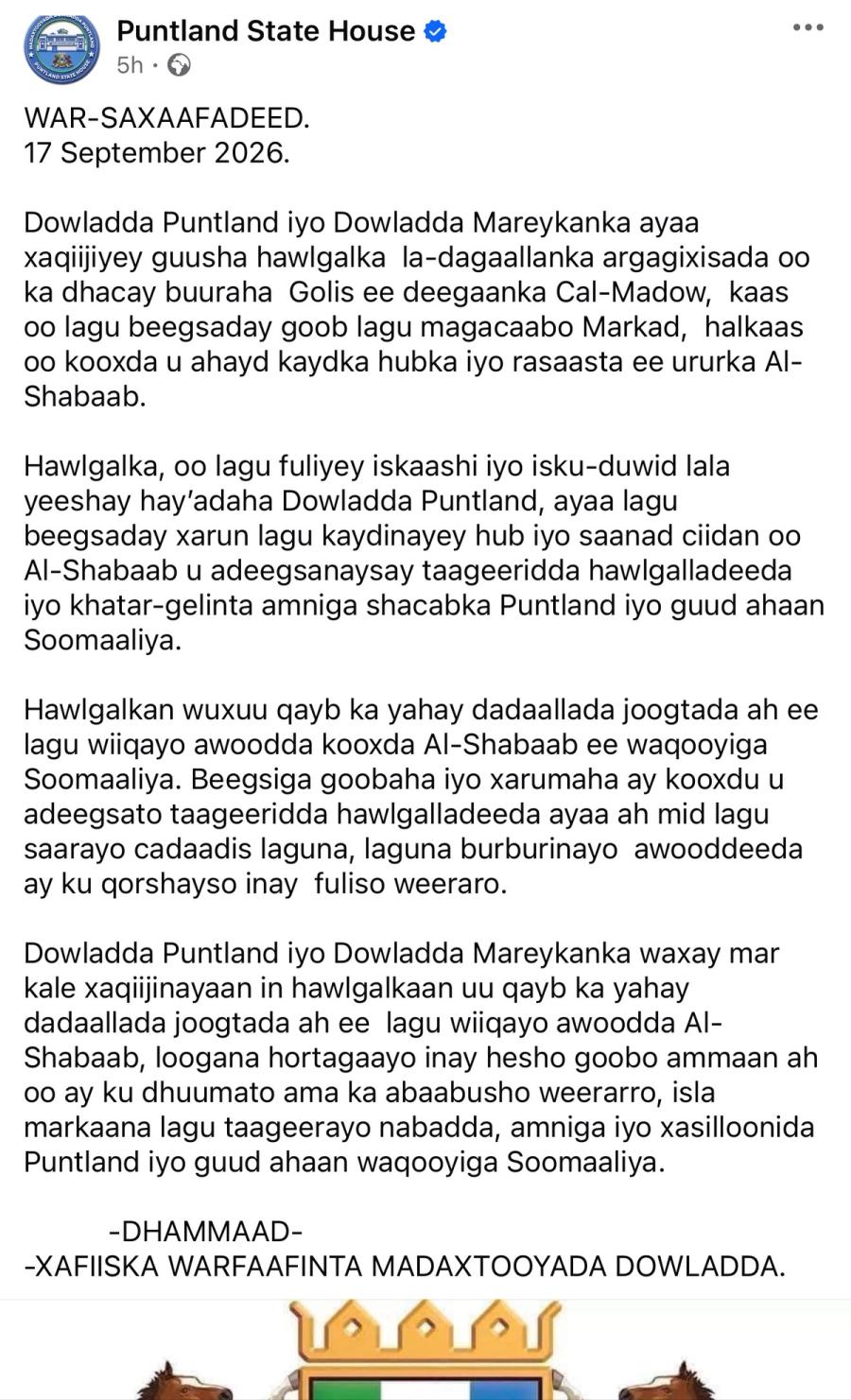
In a statement released on Thursday, Puntland’s presidential office said the operation struck a location known as Markad, which it described as an arms and ammunition depot used by Al-Shabaab to support its operations and threaten security in Puntland and elsewhere in Somalia.
The operation was carried out in coordination with Puntland government agencies, according to the statement. It did not state when the strike was conducted, identify the aircraft involved, provide casualty figures, or name any individuals targeted.
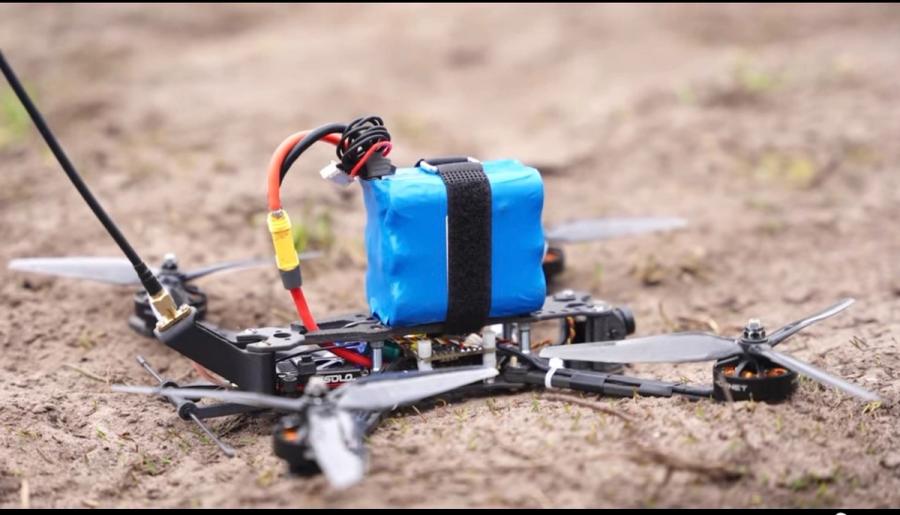
However, reports circulating after the operation said Badri al-Hussain, described in those reports as a Houthi drone expert, and Abdi Khalif al-Badawi, described as a drone technology specialist, were among the targets.
The same reports alleged that foreign individuals had been working at the Markad site on missile and drone testing, and that Al-Shabaab and Houthi-linked operatives were preparing final tests when the airstrike took place.
Puntland said the strike was part of continued efforts to weaken Al-Shabaab’s operational capacity in northern Somalia and prevent the group from using remote areas to prepare attacks.
“The targeting of locations and facilities used by the group to support its operations is intended to increase pressure and degrade its ability to plan and carry out attacks,” the Puntland statement said.
The authorities said the operation reflected continued security cooperation between Puntland and the United States, with the stated aim of denying Al-Shabaab safe havens and disrupting its ability to organise attacks.
Markad Site Described as Weapons Depot
The Golis Mountains, including the Cal-Madow area, are a rugged and difficult-to-access region stretching across parts of northern Somalia. The terrain has long posed challenges for security forces, allowing armed groups to establish temporary camps, move supplies and use remote locations beyond major population centres.
Puntland’s presidential office said the Markad site was used to store weapons, ammunition and military supplies. It said the material was intended to support Al-Shabaab operations and create a security threat for civilians in Puntland and across Somalia.
Claims of Al-Shabaab–Houthi Links
The reports naming al-Hussain and al-Badawi have drawn attention because of wider concerns over possible links between Al-Shabaab, an al-Qaeda-linked armed group, and Yemen’s Houthi movement.
Somali, regional and international security officials have in recent years warned of the risk of growing contacts between militant networks operating across the Gulf of Aden. Such concerns have included the possibility of technical knowledge-sharing, weapons trafficking, financing networks and maritime facilitation.
Publicly available evidence has varied, and officials have not always detailed the scope of alleged contacts between Al-Shabaab and the Houthis. The Puntland statement on the Cal-Madow operation did not directly accuse the Houthis of participating in the activities at Markad.
Still, the reported presence of individuals described as drone specialists would be significant if independently confirmed. Armed groups across the region have increasingly sought access to unmanned aerial technology, communications equipment and technical expertise that can improve surveillance, targeting or attack capabilities.
Security analysts have warned that the movement of such expertise between armed groups could create new risks for Somalia, particularly in remote areas where security forces face difficulties monitoring militant supply routes and training sites.
No Casualty Figures Released
Puntland and U.S. authorities did not release information about casualties from the operation.
There was no immediate independent confirmation from local residents, medical facilities or other sources regarding deaths, injuries or civilian impact in the area. The remoteness of the Cal-Madow region can make rapid verification of incidents difficult.
The Puntland statement framed the operation as part of efforts to protect civilians by disrupting militant facilities used to store weapons and support attacks. It did not report civilian casualties or damage to nearby communities.
Background to Counterterrorism Operations in Northern Somalia
The United States has conducted airstrikes against Al-Shabaab targets in Somalia for years, often in coordination with Somali security forces. Such operations have typically focused on disrupting militant leaders, training camps, weapons sites and units believed to be preparing attacks.
Al-Shabaab remains one of Somalia’s most capable armed groups despite sustained military pressure. The group has carried out bombings, assassinations and attacks against Somali government targets, security forces, African Union forces and civilians.
While Al-Shabaab’s most visible operations have often been concentrated in central and southern Somalia, the group has maintained networks and influence in several parts of the country, including northern areas. Puntland security forces have conducted operations against militant cells in the Golis Mountains and other remote areas, often with support from international partners.
The Cal-Madow strike comes as Puntland continues to face threats from multiple armed networks operating in northern Somalia. Security officials have repeatedly said the region’s mountains and coastline can be used for movement, concealment and the transfer of weapons and supplies.
For now, Puntland’s official account is limited to its assertion that the facility served as an Al-Shabaab weapons-storage site and that the operation was intended to reduce the group’s ability to prepare and carry out attacks.
If confirmed, the reported presence of drone and missile specialists at a militant site in Cal-Madow would point to a potentially more advanced threat environment in northern Somalia. Drones can provide armed groups with surveillance and reconnaissance capabilities even when they are not used as weapons.
The claims also highlight persistent concerns about cross-border militant networks around the Gulf of Aden. Any confirmed transfer of technical skills or equipment between armed groups in Yemen and Somalia could complicate counterterrorism efforts for Puntland, Somalia’s federal authorities and international partners.