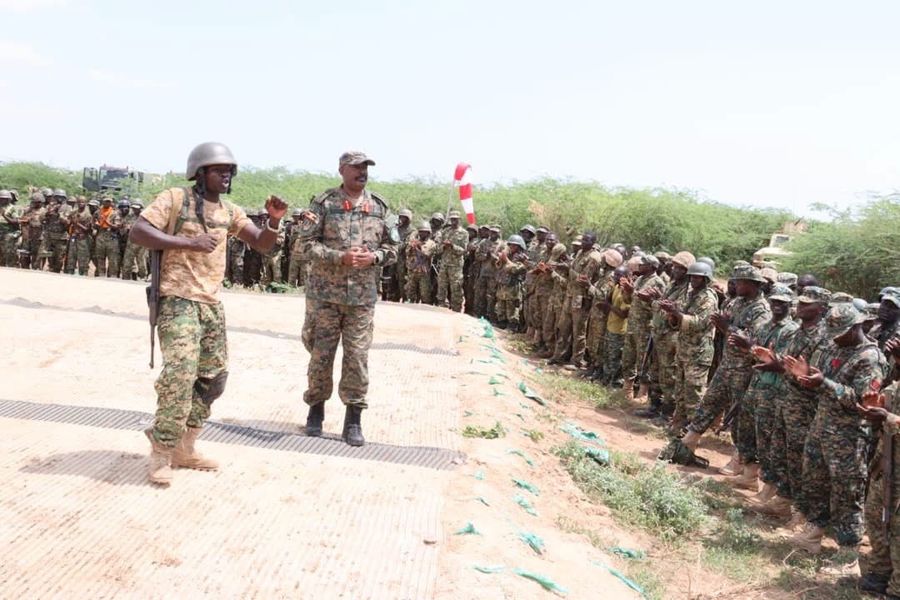
BAIDOA, Somalia -22 November 2026 — Uganda’s planned transfer of military bases to Somali government forces has renewed concerns about whether federal troops can hold territory as African Union forces prepare to leave the country.
Kenyan newspaper The EastAfrican reported that Ugandan troops are transferring responsibility for bases they currently operate to the Somali National Army. The handover comes amid wider preparations for the African Union Support and Stabilization Mission in Somalia (AUSSOM) to draw down, and questions about the readiness of Somali forces to take over.
According to the newspaper, a Ugandan People’s Defence Force (UPDF) unit handed five bases in the Barawe area to Somali forces on 15 November. The transfer marks a new stage in Somalia’s security transition, under which national forces are expected to assume responsibility for positions held by African Union troops.
But the move has brought back concerns about earlier handovers, when Al-Shabaab rapidly seized some locations after African Union forces withdrew. The newspaper warned that the latest transfer could renew fears that bases vacated by international troops may again be vulnerable to the militant group.
Those concerns are sharpened by the scale of the task facing Somalia’s security forces. They must secure the bases, maintain supply routes and protect nearby communities while continuing operations against Al-Shabaab. The transfers also come as foreign military support and financing for the mission face pressure.
The EastAfrican cited financial constraints and a United States decision to close the United Nations Support Office in Somalia (UNSOS) among the factors accelerating discussions about ending the AUSSOM mission. UNSOS provides logistical support to African Union forces, making its future significant to the mission’s operations.
Recent developments, the report said, point to an accelerated process of troop withdrawals and base handovers. The pace of the transition has raised questions about whether the transfer of responsibility is being matched by adequate planning, resources and operational capacity on the Somali side.
The challenge is not simply to take possession of a base. Somali forces must be able to keep it supplied, coordinate with other units and respond to attacks after the departing troops leave. Any gap in those capabilities could create an opening for Al-Shabaab to return to areas from which it was previously pushed out.
The five Barawe bases are among the latest positions to change hands as Somalia and its international partners navigate a gradual shift in security responsibilities. The handover’s outcome may offer an indication of how future transfers will proceed, though it is too early to determine whether Somali forces can hold the positions independently over the long term.
The transition is unfolding against a backdrop of uncertainty over the mission’s funding and future. If international forces leave before Somali units are sufficiently equipped and supported, the government could face greater difficulty securing areas outside major urban centres. A rapid withdrawal could also put pressure on local communities who depend on security forces to prevent militant incursions.
Somalia’s authorities have repeatedly said the country’s forces are taking on a larger role in national security. The Barawe transfer will put that capacity to a practical test. Maintaining control will depend not only on troop numbers, but also on reliable logistics, clear command arrangements and continued funding.
The handover also adds to wider criticism of the international military campaign in Somalia, which has lasted for about two decades. Critics question whether sustained foreign military involvement has delivered durable security, particularly when bases remain at risk after international forces depart. The latest transfer is therefore being watched as a measure of whether the transition can avoid the setbacks seen in earlier withdrawals.