LOWER SHABELLE, SOMALIA — November 20, 2026
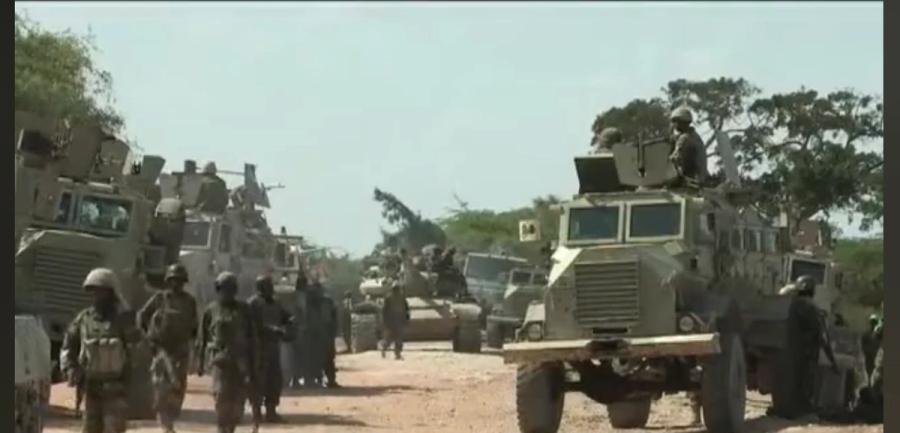
A Ugandan military convoy travelling between Barawe and Buulo Mareer in Somalia’s Lower Shabelle region has reportedly faced significant delays after six consecutive days of movement marked by repeated roadside explosions and suspected Al-Shabaab attacks, according to local sources familiar with the situation.
The convoy, which is attempting to cover a distance of less than 65 kilometres, had reportedly failed to reach Buulo Mareer as of Thursday evening, raising concerns about the security challenges confronting Ugandan troops operating along one of the region’s vulnerable military routes.
Residents and local sources told Baidoa Online that elements of the Ugandan convoy were positioned around Canbareey and Fito-Dheer, two neighbouring locations on the outskirts of Buulo Mareer.
Despite spending nearly a week on the road, the troops reportedly made limited progress following several explosive attacks targeting their movement.
Roadside Explosions Disrupt Military Movement
According to information obtained from local residents, the convoy encountered explosive attacks near Mariin Gubaay, approximately 40 kilometres from Barawe.
The explosions reportedly damaged an armoured military vehicle and caused casualties among Ugandan soldiers. However, the exact number of troops killed or injured remains unclear, and Baidoa Online has not independently verified the reported losses.
Sources indicated that the attacks significantly disrupted the convoy’s movement, forcing troops to proceed cautiously while assessing potential threats along the route.
The reported damage to a military vehicle also raised questions about the convoy’s ability to maintain its planned pace through territory where Al-Shabaab militants have previously conducted roadside bombings and ambushes.
Ugandan Forces Spread Across Nearby Villages
Additional local sources reported that different sections of the convoy were positioned around Canbareey and Fito-Dheer rather than moving together in a single formation.
According to these accounts, the deployment across neighbouring locations was intended to reduce exposure to possible militant attacks while allowing troops to assess road conditions ahead.
The reported dispersal illustrates the difficulties facing military units attempting to move through areas where explosive devices and surprise attacks remain serious threats.
Residents described the convoy’s progress as unusually slow, particularly considering the relatively short distance between Barawe and Buulo Mareer.
However, the precise operational reasons behind the delays have not been independently established.
Six Days Without Reaching Buulo Mareer
One of the most notable aspects of the reported operation is the time required to cover a route measuring less than 60 kilometres.
According to Thursday’s local reports, the convoy had spent six consecutive days travelling without reaching Buulo Mareer, despite the destination being relatively close to its departure point.
The repeated attacks reportedly forced the troops to slow their movement, highlighting the challenges associated with maintaining military mobility in areas exposed to insurgent threats.
The situation also raises broader concerns about the vulnerability of military supply routes in Lower Shabelle, where armed groups can exploit difficult terrain and limited road security.
Although Al-Shabaab has frequently used improvised explosive devices against Somali and international forces, responsibility for each reported attack against this particular convoy has not been independently confirmed.
Security Concerns Mount in Lower Shabelle
The convoy's difficulties come amid a broader withdrawal and redeployment of Ugandan forces from Barawe, with some troops being repositioned closer to Mogadishu while others are expected to return to Uganda as part of a reduction in the country's military presence in Somalia. According to reports, Ugandan troops previously stationed in Barawe and surrounding areas have been directed to reinforce strategic military positions near the Somali capital, including Sabiid-Anole, Bariire, Awdheegle and Bulonagad. The withdrawal has raised concerns about potential security gaps in Lower Shabelle, where Al-Shabaab militants remain active. Meanwhile, the reported repeated roadside bomb attacks against the Ugandan convoy travelling toward Buulo Mareer highlight the growing difficulties facing troops during the withdrawal process.