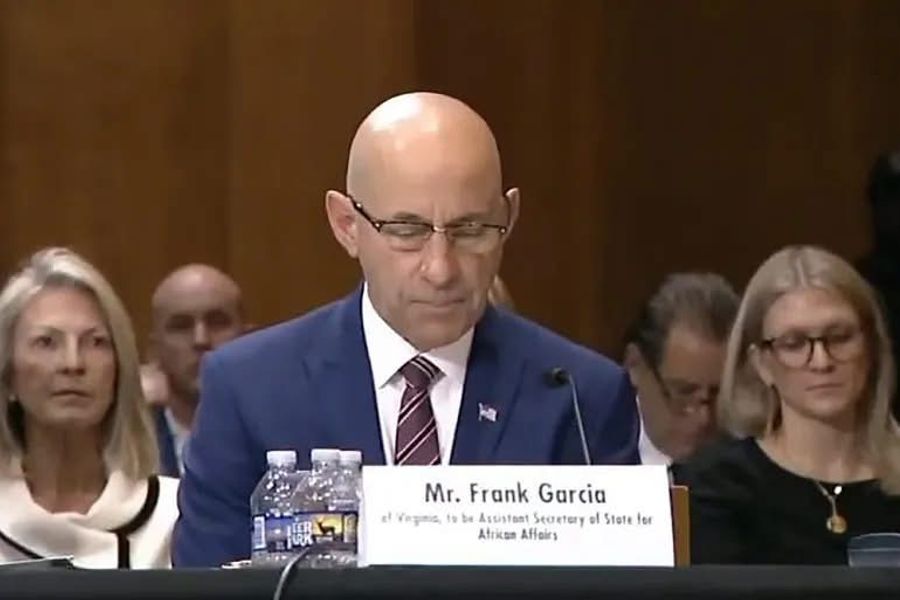
BAIDOA, SOMALIA — August 29, 2026 — US Assistant Secretary of State for African Affairs Frank Garcia is travelling to Zambia, Kenya and Ethiopia to strengthen economic and security partnerships, placing Somalia’s security challenges and the future of the African Union mission among the regional issues likely to attract attention.
The US Bureau of African Affairs announced the trip on Saturday, saying additional countries could be included if commercial agreements were secured. It did not publish the dates of Garcia’s individual meetings or identify the government officials he would meet.
Somalia has not been announced as one of Garcia’s destinations. However, his meetings in Nairobi and Addis Ababa come as Washington reassesses its approach to African security assistance and presses regional governments to assume greater responsibility for confronting armed groups.
Kenya and Ethiopia share borders with Somalia, contribute troops to the African Union Support and Stabilisation Mission in Somalia, known as AUSSOM, and conduct security operations intended to contain the threat from Al-Shabaab.
Regional security partnerships
According to the US Bureau of African Affairs, Garcia’s tour is intended to strengthen bilateral relationships and advance shared security and economic partnerships.
The visit reflects the Trump administration’s stated policy of linking American engagement in Africa more closely to national security, investment and commercial opportunities.
Garcia is expected to hold discussions in Nairobi and Addis Ababa on bilateral priorities. The State Department has not confirmed whether Somalia, Al-Shabaab or AUSSOM will appear formally on the agenda.
Kenya and Ethiopia’s involvement in Somalia makes regional security difficult to separate from their wider relationships with Washington.
Kenyan forces have operated in southern Somalia and along the countries’ shared border, where Al-Shabaab has carried out attacks against civilians and security personnel. Ethiopia has deployed forces in southwestern Somalia and maintains security interests in areas close to its border.
Both governments also exchange security information with Somalia and international partners concerning militant movements, cross-border attacks and terrorist financing.
Possible areas of discussion include intelligence sharing, border security, counterterrorism operations and the future responsibilities of regional forces in Somalia. Maritime security and the protection of commercial routes through the Gulf of Aden and western Indian Ocean could also feature in wider regional talks.
AUSSOM faces financial uncertainty
Garcia’s visit comes amid growing uncertainty over the financing and long-term future of AUSSOM, which supports Somali forces in operations against Al-Shabaab and helps secure several strategic population centres.
Reuters reported in July that the United States planned to stop supporting United Nations funding for logistical assistance to AUSSOM from 2027. The reported decision has raised concerns about the mission’s ability to obtain food, fuel, medical support, transportation and other essential services.
AUSSOM has nearly 12,000 uniformed personnel and depends heavily on support provided through the United Nations Support Office in Somalia.
African Union officials and Somalia’s international partners have repeatedly warned that inadequate funding could weaken the mission at a time when Al-Shabaab continues to carry out attacks and contest government control in parts of southern and central Somalia.
Washington has not indicated that Garcia’s regional tour is intended to negotiate alternative financing for AUSSOM. Kenya and Ethiopia, however, are among the countries most directly affected by any reduction in the mission’s operational capacity.
A major funding shortfall could force contributing countries to reduce deployments, restrict operations or seek new bilateral security arrangements with Somalia.
Garcia brings military and intelligence experience
Garcia assumed office as Assistant Secretary of State for African Affairs on June 1 after his confirmation by the US Senate in May.
He served in the US Navy for 28 years and spent approximately 15 years working with the House Permanent Select Committee on Intelligence, where his duties included a focus on Africa. He also previously served as chief of staff at the National Reconnaissance Office, the agency responsible for US intelligence satellites.
During his Senate confirmation hearing in March, Garcia said American counterterrorism efforts would concentrate on preventing attacks against the United States and its interests.
He pledged to develop reciprocal relationships with selected African governments to combat Islamic State and Al-Qaeda affiliates, while arguing that African countries should play a greater role in protecting their own regions.
Al-Shabaab is affiliated with Al-Qaeda, while Islamic State maintains a smaller but active branch in Somalia, particularly in Puntland’s Bari region.
Garcia also criticised what he described as open-ended assistance commitments and said US spending in Africa would be assessed according to its contribution to American security and economic priorities.
Somalia under pressure to deliver results
The policy outlined by Garcia could place greater pressure on Somalia’s Federal Government to demonstrate measurable results from international security assistance.
Washington may seek stronger accountability over equipment and funding, closer coordination among Somali security institutions and clearer progress towards transferring responsibilities from foreign troops to national forces.
The United States continues to provide targeted counterterrorism support. US Africa Command has conducted airstrikes against Al-Shabaab and Islamic State targets in coordination with Somalia’s Federal Government.
That continuing military activity suggests Washington could maintain direct operations against groups considered threats to American interests, even while reducing broader financial commitments to international missions.
Garcia’s meetings in Kenya and Ethiopia will be watched for any announcements concerning counterterrorism cooperation, intelligence sharing or new defence and commercial agreements.
It remains unclear whether he will add Somalia to his itinerary or meet Somali officials during the tour.
Any public commitments involving AUSSOM or regional security would provide a clearer indication of how Washington intends to balance its continued campaign against Al-Shabaab with its demand that Somalia and neighbouring countries carry a greater share of the financial and operational burden.
Kenya and Ethiopia are central to Somalia’s security system because of their military deployments, border exposure and intelligence networks. Any change in their cooperation with Washington could affect operations against Al-Shabaab inside Somalia and across the wider region.
The most immediate concern is AUSSOM’s financial future. If UN logistical support declines without a replacement, the mission could face serious restrictions, increasing pressure on Somali forces to secure territory before they have completed the transition from foreign military support.
Garcia’s approach also signals that future American assistance may be more conditional and narrowly focused. Somalia could continue receiving counterterrorism support while losing access to some broader programmes unless its government demonstrates accountability, political coordination and progress in building effective national security institutions.