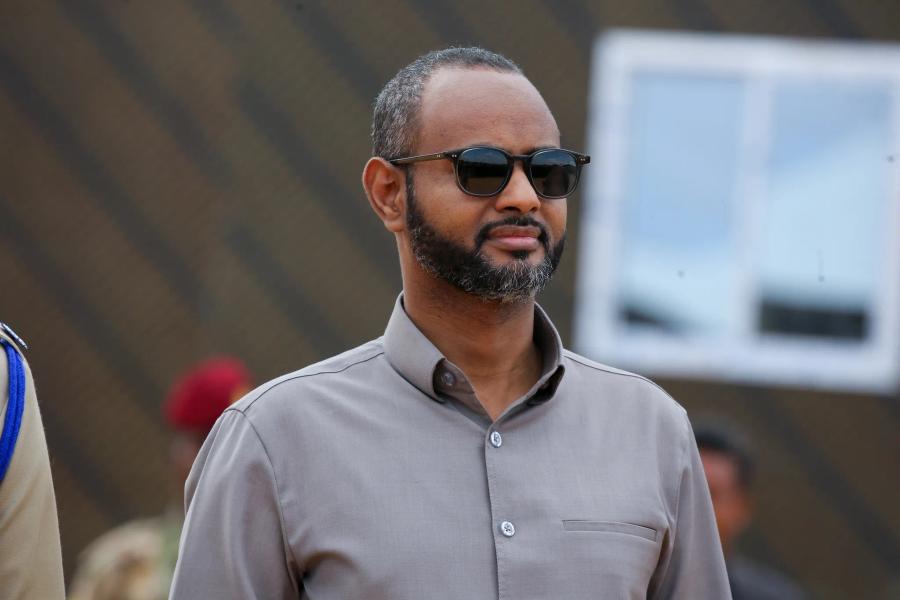
MOGADISHU, Somalia, June 20, 2026-Political consultations surrounding the leadership of Somalia’s Lower House have intensified after reports emerged that Villa Somalia is backing Ports and Maritime Transport Minister Abdulqadir Mohamed Jama, widely known as “Madaxa Nafuran,” for the position of Speaker of the House of the People.
According to political sources familiar with the discussions, senior federal government officials have been engaging with lawmakers and influential figures from Southwest State in an effort to build support for Abdulqadir’s candidacy.
The reported lobbying effort comes amid growing political maneuvering ahead of anticipated decisions regarding parliamentary leadership, a development that could have implications for relations between the federal government and regional political actors.
Sources involved in ongoing consultations told local media that President Hassan Sheikh Mohamud has recently held discussions with several politicians and lawmakers originating from Southwest State who are viewed as influential in determining support for the position.
Details of the conversations have not been made public. However, political sources say the discussions focused on the future leadership of the House of the People and efforts to consolidate support around a preferred candidate.
According to individuals familiar with the matter, federal authorities have signaled support for Abdulqadir Mohamed Jama in recent days. Those sources claim the position has also been communicated to key parliamentary figures, including members of the temporary leadership structure until formal decisions are made.
Neither Villa Somalia nor the Office of the Speaker had issued an official statement on the reports at the time of publication.
Abdulqadir’s Growing Political Influence
Abdulqadir Mohamed Jama has emerged as one of the most prominent political figures from Southwest State during the past several years.
Since 2021, he has remained a member of successive federal cabinets and has held senior government responsibilities. Political observers note that his continued presence within the executive branch has strengthened his national profile and expanded his political influence.
Supporters describe him as an experienced government official with extensive connections across federal institutions. Critics, meanwhile, argue that parliamentary leadership should be determined through broad political consensus rather than executive preference.
Several political analysts say Abdulqadir’s long tenure in government has positioned him as a viable contender for senior parliamentary leadership roles.
Regional Political Calculations
Political figures in Baidoa and other parts of Southwest State are closely monitoring developments.
According to regional political sources, some stakeholders believe Abdulqadir’s elevation to a senior parliamentary position could increase Southwest State’s influence within federal institutions.
Others view the ongoing consultations through the broader lens of Somalia’s evolving federal political landscape, where alliances between Mogadishu and regional administrations continue to play a central role in national decision making.
The reported support for Abdulqadir comes at a time when parts of Southwest State continue to face security challenges, including recurring clashes in some districts and ongoing political tensions linked to governance and representation.
Government Response
Federal government officials have not publicly commented on claims regarding support for any specific candidate.
Political observers note that lobbying and consultations are common features of Somalia’s parliamentary politics, particularly during periods involving leadership contests and major legislative decisions.
Without an official announcement, the extent of support for Abdulqadir’s candidacy remains unclear.
Background and Context
The position of Speaker of the House of the People is one of Somalia’s most influential political offices.
The Speaker oversees parliamentary sessions, manages legislative procedures, and plays an important constitutional role during periods of political transition.
Historically, contests for parliamentary leadership have often involved negotiations among federal leaders, regional administrations, lawmakers, and influential political stakeholders.
Political competition surrounding senior parliamentary positions has frequently reflected broader debates over power sharing, federalism, and representation among Somalia’s regions and political groups.
Political consultations are expected to continue in the coming days as lawmakers and regional leaders assess potential candidates.
Any formal nomination process would likely trigger further negotiations among competing political camps seeking to secure support within parliament.
Observers say the outcome could influence both legislative priorities and the broader balance of power within Somalia’s federal political system.
The reported effort to build support for Abdulqadir Mohamed Jama highlights the importance of parliamentary leadership in Somalia’s political system.
The Speaker’s position carries significant influence over legislative proceedings and can shape political negotiations between the executive branch and parliament.
The developments also underscore the continuing role of regional political blocs in national decision making. Support from Southwest State lawmakers and political leaders could prove important in determining the outcome of any leadership contest.