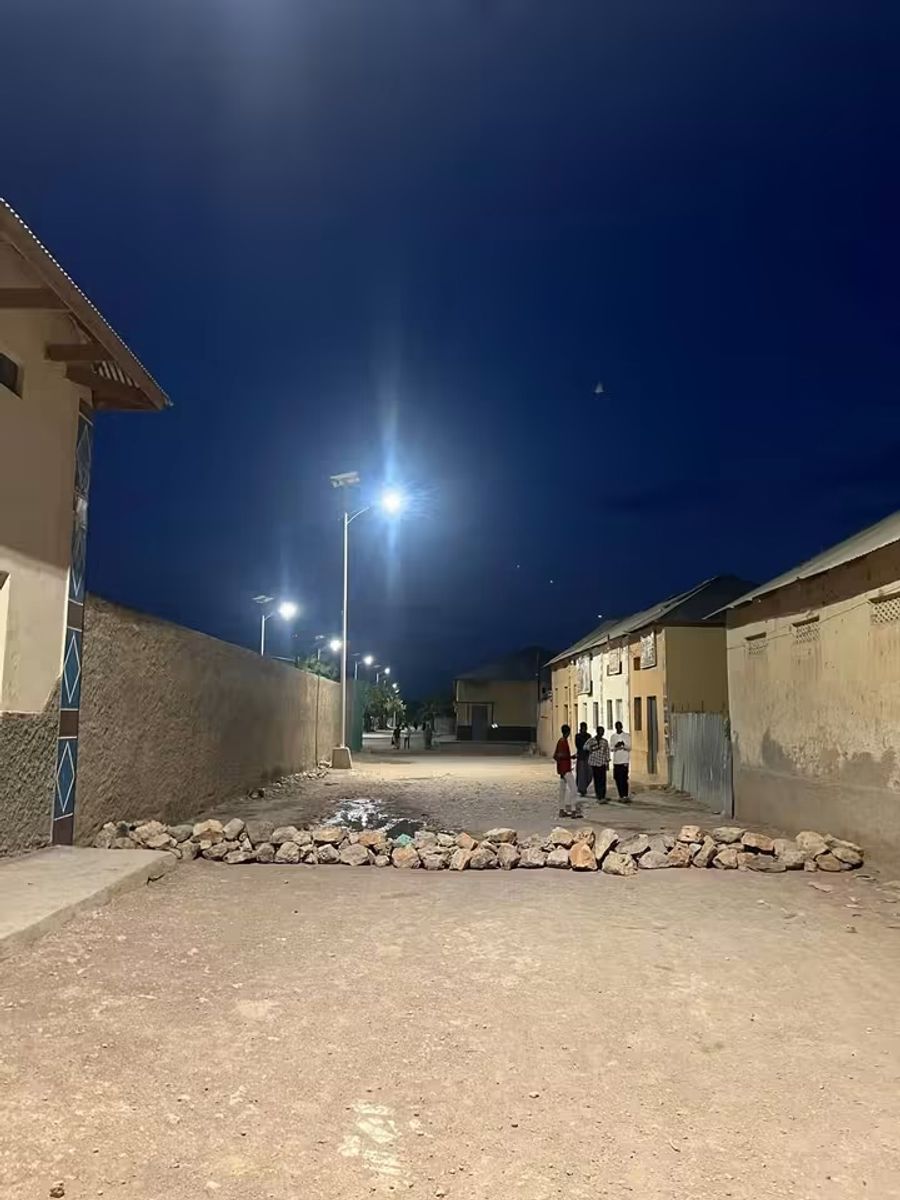
October 18, 2026 | Waajid, Bakool Region, Somalia
Tensions are rapidly escalating in Somalia’s Bakool region as large numbers of South West State Darawish forces loyal to former regional President Abdiaziz Hassan Mohamed, widely known as Lafta Gareen, are reportedly mobilising on the outskirts of Waajid town, raising fears of an imminent military confrontation with troops aligned with the Federal Government of Somalia.
The reported movement of heavily armed Darawish forces towards Waajid comes amid a series of territorial gains by Lafta Gareen-aligned fighters across neighbouring Bay region, where several strategically important towns have fallen under their control in recent days.
Authorities currently controlling Waajid, who are aligned with Somalia’s federal government, have reportedly introduced a curfew as part of emergency security measures designed to prevent a possible takeover of the town.
According to information received concerning the situation, the restrictions are intended to run from October 18 until October 30, 2026, although the full duration and operating hours have not been independently confirmed through an official administrative order.
The security measures follow reports that Lafta Gareen’s forces are preparing to extend their military campaign into Bakool region after consolidating positions in several districts of Bay.
Lafta Gareen’s Darawish Forces Capture Key Towns Across Bay Region
The latest military developments follow a significant shift in territorial control across Bay region, where forces loyal to Lafta Gareen have captured or entered several important district centres previously controlled by federal-backed security forces and the current South West State administration.
Recent reports indicate that the Darawish forces have established control over Buurhakaba, Diinsoor, Awdiinle, Qansaxdheere and Berdaale, marking a major expansion of their influence beyond the outskirts of Baidoa, the regional administrative capital.
In Qansaxdheere, Lafta Gareen-aligned forces reportedly secured control earlier in October, while Buurhakaba witnessed heavy fighting on October 15 before federal-aligned forces withdrew.
Darawish fighters subsequently entered Diinsoor, Awdiinle and Berdaale, with several of the territorial changes reportedly taking place after government-aligned security personnel abandoned their positions.
The capture of these locations represents an important development in the struggle for control of South West State, potentially weakening the federal government’s security presence across parts of Bay region.
The reported advances have also increased pressure on federal-backed forces operating in neighbouring Bakool, where Waajid has emerged as a possible next flashpoint in the confrontation.
Waajid Emerges as the Next Strategic Target
Following the territorial changes in Bay region, attention has shifted towards Waajid, an important district town in Bakool region.
Reports of a substantial concentration of Darawish forces outside Waajid have generated concern among the federal-aligned authorities responsible for the town’s security.
The reported military mobilisation suggests that Lafta Gareen’s forces may be seeking to expand their territorial influence into Bakool, potentially challenging the remaining positions held by the federal-backed administration.
A successful takeover of Waajid would represent another significant setback for the authorities aligned with Mogadishu and could further alter the security and political balance across South West State.
Federal-Backed Administration Introduces Security Restrictions
The federal-aligned administration currently overseeing Waajid has reportedly responded to the emerging threat by introducing emergency security measures, including restrictions on civilian movement.
The reported curfew is intended to allow government security personnel to strengthen their defensive positions, maintain public order and respond to any possible attempt by advancing forces to enter the town.
The measures come amid fears that fighting could erupt if the Darawish forces attempt to dislodge federal-backed troops.
Reports of the restrictions have already coincided with disruptions to normal activity in Waajid, including the closure of some businesses and reduced movement on certain streets.
The reported security alert also follows the deployment of federal police personnel to Waajid earlier in October, part of efforts to strengthen the district’s policing capacity.
Political Crisis Behind the Escalating Conflict
The confrontation forms part of a broader political struggle between Lafta Gareen and the administration supported by Somalia’s Federal Government under President Hassan Sheikh Mohamud.
Relations between Lafta Gareen and Mogadishu deteriorated sharply in March 2026 following disagreements over constitutional reforms, regional elections and the distribution of political authority.
Lafta Gareen’s administration broke relations with the federal government, accusing Mogadishu of interfering in South West State’s internal affairs.
The dispute subsequently developed into an armed confrontation, culminating in federal forces taking control of Baidoa on March 30, 2026, and the establishment of a federal-aligned regional administration.
Although Lafta Gareen lost control of the administrative capital, forces remaining loyal to him continued to challenge the new political arrangement.
The confrontation has since developed into repeated fighting between federal-backed troops and Darawish forces supporting the former regional leader.
The latest territorial advances suggest that the dispute is no longer confined to the immediate surroundings of Baidoa but is spreading across other important districts of South West State.
Battle for Baidoa and the Changing Military Situation
Baidoa has remained central to the political and military confrontation because of its position as the administrative capital of South West State.
Since August 2026, the city has experienced several rounds of fighting involving federal-aligned troops and forces loyal to Lafta Gareen.
Clashes on August 17 and September 3 resulted in civilian casualties and placed significant pressure on local medical services.
Further fighting prompted the federal-aligned South West State administration to impose restrictions on movement in Baidoa at the beginning of October.
Despite the federal government’s continued presence in Baidoa, Lafta Gareen’s forces have recently expanded their influence across surrounding districts.
The capture of Buurhakaba, Qansaxdheere and Diinsoor, together with reported advances into Awdiinle and Berdaale, has left Baidoa increasingly isolated politically from several district centres in Bay region.
Analysts warn that continued territorial changes could complicate government supply routes, troop movements and administrative control, although the extent of these effects has not yet been independently established.
Growing Pressure on Federal Government Forces
The recent advances present an increasingly difficult security challenge for federal-backed forces operating in South West State.
The rapid change of control in several towns suggests that the political confrontation has entered a new phase, with Lafta Gareen-aligned fighters seeking to consolidate their position across a wider geographical area.
Should Waajid fall under their control, the development would give the Darawish movement an additional foothold in Bakool and potentially increase pressure on other federal-backed positions.
However, the situation remains fluid, and control of individual towns could change again depending on military developments, local political negotiations and the deployment of reinforcements.
Neither the full scale of the reported Darawish mobilisation near Waajid nor the strength of the federal-aligned defensive positions has been independently established.
Humanitarian Concerns as Fighting Spreads
The expanding confrontation is also generating concern about the potential humanitarian consequences for residents of Bay and Bakool regions.
Both regions have experienced prolonged insecurity, drought-related hardship, displacement and disruptions to essential services.
Any additional fighting around Waajid could expose civilians to further risks, including displacement, interruption of trade, restrictions on transport and reduced access to food and medical assistance.
Extended curfew restrictions could also affect families dependent on daily business activities and movement between rural communities and district markets.
South West State already faces significant humanitarian challenges, with large displaced populations relying on assistance from aid organisations operating under difficult security conditions.
Humanitarian access remains particularly sensitive because the wider region continues to experience threats associated with Al-Shabaab, which maintains a presence in parts of rural southern and central Somalia.
A prolonged confrontation between federal-backed forces and Lafta Gareen’s Darawish fighters could further complicate efforts to address existing security and humanitarian needs.
Political Divisions Threaten Stability in South West State
The continuing confrontation highlights the broader challenges facing Somalia’s federal political system.
Disagreements over electoral procedures, constitutional changes and the authority of federal member states have contributed to growing tensions between Mogadishu and several regional political leaders.
Lafta Gareen’s political movement continues to reject the arrangement that replaced his administration in Baidoa, while the federal government supports the current regional authorities.
The dispute has raised concerns that political differences are increasingly being settled through armed confrontations rather than negotiated agreements.
Observers have also warned that the expanding conflict could divert personnel, resources and political attention away from operations against Al-Shabaab.
With fresh reports of Darawish mobilisation near Waajid, the confrontation risks drawing additional communities into a dispute that has already affected several towns across South West State.
What Happens Next in Waajid?
Waajid has now become one of the most closely watched locations in the escalating confrontation between Lafta Gareen’s forces and the federal-backed South West State administration.
The reported arrival of large numbers of Darawish fighters near the town, combined with the curfew imposed by local authorities, has heightened expectations that the security situation could deteriorate.
Several important developments remain uncertain, including whether the approaching forces intend to launch an immediate attack, whether negotiations could prevent fighting and whether federal-backed troops will receive additional support.
The reported changes in territorial control across Bay region have nevertheless demonstrated the expanding geographical scope of the confrontation.
For the federal government, maintaining control of Waajid would be important to preserving its position in Bakool and preventing further territorial losses.
For Lafta Gareen and his supporters, extending their presence into Bakool could strengthen their influence in the continuing contest over South West State’s political future.
As of October 18, 2026, Waajid remains reportedly under federal-aligned administration, while the possible advance of Lafta Gareen’s Darawish forces has placed the town on heightened security alert.