Thursday, June 4, 2026 (Baidoa Online) -Heavy fighting erupted across parts of Mogadishu beginning late Wednesday, June 3, and continued into Thursday morning, marking one of the most serious political-security confrontations in the Somali capital in recent years. The clashes involved Somali government forces and armed groups allied with opposition leaders, raising fears of a wider political conflict at a time when Somalia is already battling the Al-Shabaab insurgency.
Residents reported heavy gunfire, mortar fire, damaged homes, burning vehicles, and civilians fleeing affected neighborhoods as fighting spread through districts including Howlwadaag and Abdiasis. Witnesses described families abandoning their homes while others sought shelter from the crossfire. International organizations have expressed concern over reports of civilian casualties and damage to civilian infrastructure.
How the Fighting Started
According to multiple reports, the violence began on the eve of planned anti-government demonstrations organized by opposition figures who accuse President Hassan Sheikh Mohamud of undermining Somalia's constitutional order. Opposition leaders argue that constitutional amendments approved earlier this year effectively extended the president's tenure and postponed elections without broad political consensus. The government rejects those accusations and maintains that its actions are constitutional and intended to stabilize the country's political transition.
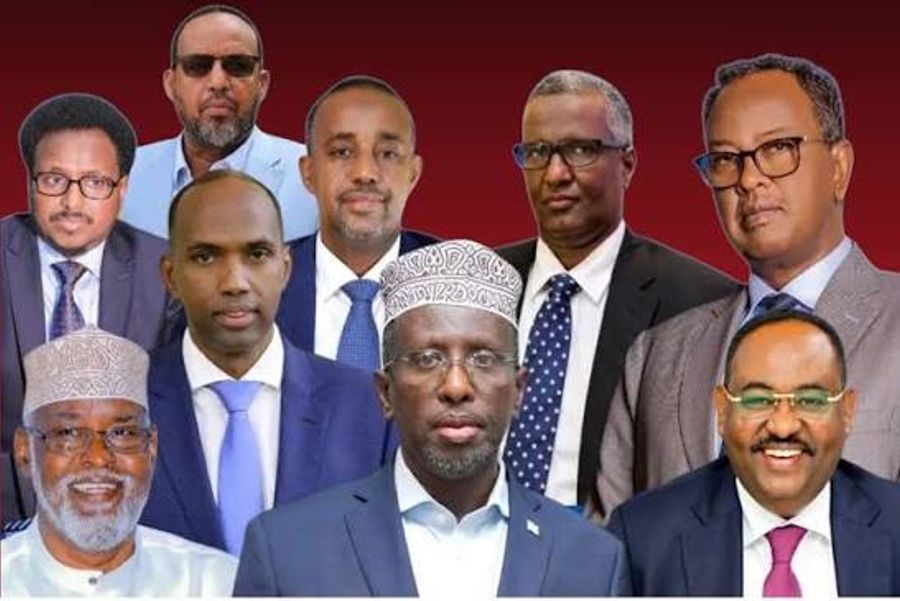
The immediate trigger for the fighting appears to have been confrontations between government security forces and armed groups linked to opposition leaders, including former President Sharif Sheikh Ahmed and former Prime Minister Hassan Ali Khaire. Both opposition figures accused government forces of targeting their residences and political gatherings. Government authorities, however, stated that security forces were responding to armed threats and actions that endangered public order in the capital.
The Political Alliance Challenging Villa Somalia
The latest crisis reflects months of growing tensions between the Federal Government and its political opponents.
Opposition groups in Mogadishu have increasingly coordinated their activities with leaders in Puntland and Jubbaland, both of which have voiced strong criticism of the federal government's constitutional reform process. Political analysts describe the emerging alignment between opposition politicians, Puntland authorities, and Jubbaland leaders as one of the most significant challenges facing the federal administration since Hassan Sheikh Mohamud returned to office in 2022.
Critics argue that the constitutional changes were implemented without sufficient national consultation, while supporters of the government maintain that reforms are necessary to move Somalia toward a more stable political system.
The resulting deadlock has transformed a political dispute into a security confrontation, raising fears that Somalia's federal institutions could face a prolonged legitimacy crisis.
Civilian Impact
Although no verified official casualty figures had been released by Thursday, witnesses reported injuries among civilians, destruction of homes, and displacement of residents from affected neighborhoods. Reports from the ground described mortar rounds striking residential areas and civilians being caught between opposing forces.
The United Nations said the violence had resulted in deaths, civilian injuries, and damage to infrastructure, while calling for the protection of civilians and immediate de-escalation.
International Response
United States
The U.S. Embassy in Mogadishu strongly criticized the violence, describing the events as "reckless" and warning Somali leaders that decisions made in the coming days could have lasting consequences for Somalia's security, unity, and future.
The embassy urged all Somali political actors to preserve stability and resolve their differences through peaceful dialogue rather than armed confrontation.
United Kingdom
The United Kingdom also condemned the violence and called for restraint, dialogue, and a peaceful political solution. British officials stressed that armed conflict among Somali political actors is unacceptable and risks undermining years of state-building efforts.
United Nations
UN Secretary-General António Guterres expressed alarm over the clashes, condemning violence carried out for political advantage and urging all parties to exercise restraint, protect civilians, and settle disputes through dialogue and constitutional mechanisms.
African Union
The African Union Commission stated that it is deeply concerned by the security developments in Mogadishu and called on all parties to immediately cease fighting, protect civilians, and avoid actions that could further escalate tensions.
European Union
The European Union, a major supporter of Somalia's stabilization and governance programs, has consistently advocated political dialogue and constitutional consensus among Somali stakeholders. European diplomats are closely monitoring developments amid concerns that renewed political violence could undermine security gains achieved over the past decade.
Implications for Somalia's International Image
The violence comes at a particularly sensitive moment for Somalia.
In recent years, Somalia has sought to project itself as a country moving beyond decades of state collapse and conflict. The government has emphasized progress in security sector reforms, economic development, debt relief, international investment, and diplomatic engagement.
However, armed confrontations between government forces and political opponents risk damaging that image internationally. Foreign partners may question the stability of Somalia's political institutions, while investors could become more cautious about future commitments.
The clashes may also divert attention and resources away from the ongoing fight against Al-Shabaab, which remains one of the country's most significant security threats. International partners have repeatedly emphasized that political disputes should not undermine national efforts against terrorism.
Outlook
The coming days will be critical for Somalia's political future. While mediation efforts reportedly helped reduce some fighting on Thursday, the underlying political disagreements remain unresolved. Unless meaningful dialogue is established between the federal government, opposition leaders, and regional administrations, analysts warn that Somalia could face a prolonged political crisis with significant security consequences.
For many Somalis, the immediate concern remains the safety of civilians and the preservation of stability in a country that has spent decades attempting to rebuild its institutions after years of conflict and state collapse.
The international community has delivered a unified message: dialogue, restraint, and political compromise—not armed confrontation—are the only viable path forward for Somalia.