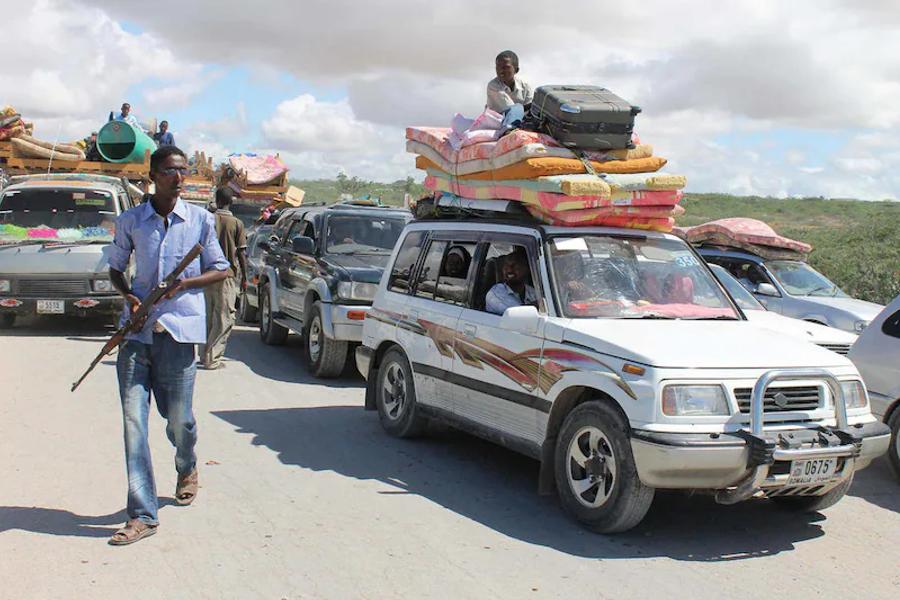
MOGADISHU, Somalia — August 19, 2026 —illegal checkpoints operating along the Mogadishu–Afgooye road are forcing farmers, traders and transporters to make repeated payments, according to former Prime Minister Hassan Ali Khaire and local residents. Fourteen areas have been identified by name, while five additional roadblocks reportedly operate beside or between those locations along the 30-kilometre corridor linking Mogadishu with Lower Shabelle’s agricultural communities.
Local residents and transport operators put the total at 19. They identified 14 areas by name and said five additional checkpoints were positioned side by side with, or between, some of the listed locations.
The 14 identified areas are:
Baar Ismaaciil
Boodboodka
Lafoole
Xaawo Cabdi
Ceelasha Biyaha Police Station
Shabelle, at the Ceelasha Biyaha exit
Siinka Dheer
Albiri
Kalkaal
Weydow
Tabeelaha Sheekh Ibraahim entrance
Tabeelaha exit
Macallin Nuur
Seybiyaano
Local sources said the five remaining roadblocks do not represent separate named settlements. Instead, they reportedly operate close to existing checkpoints or across sections of the road between the 14 identified areas.
The precise position of each of the five additional roadblocks could not be independently verified. It also remains unclear whether every listed checkpoint is unauthorized or whether some are formally established security posts where personnel are accused of collecting unofficial charges.
Farmers face repeated payments
Khaire said farmers transporting fruit, vegetables and other locally produced goods to Mogadishu were being charged repeatedly before reaching the capital’s markets.
He warned that the cumulative payments were causing heavy financial losses. Some farmers had reportedly lost perishable produce because of delays, while others had abandoned shipments after transport costs became unaffordable.
The Mogadishu–Afgooye road is one of the main routes connecting the capital with Lower Shabelle, among Somalia’s most productive agricultural regions. Bananas, vegetables, maize, fruit and other locally produced goods regularly travel through the corridor.
Residents and drivers alleged that payments collected at the checkpoints were not registered with the federal Ministry of Finance or the relevant local authorities. The amounts demanded reportedly vary according to the vehicle and the goods being transported.
The identities of those controlling each checkpoint, the amount collected daily and the destination of the money could not be independently established.
Repeated charges along the road effectively increase the cost of transporting food into Mogadishu. Traders may seek to recover those expenses by offering farmers lower prices or charging consumers more at markets in the capital.
Perishable products are particularly affected because delays at multiple roadblocks increase the risk that fruit and vegetables will spoil before reaching consumers.
Allegations involving officials
Some residents accused government officials and politically connected individuals of benefiting from the collections. They did not provide documentary evidence supporting those allegations, which could not be independently verified.
Residents also claimed that the number of checkpoints had increased under the current federal administration and that complaints submitted to government institutions had not produced effective action.
According to local sources, fear of retaliation has discouraged drivers, farmers and traders from identifying checkpoint operators publicly. The alleged participation of armed personnel has also raised concerns about whether victims can report the collections safely.
Federal authorities had not issued a detailed public response to the latest allegations at the time of publication.
The corridor crosses areas where federal, regional, municipal and security institutions exercise varying levels of authority. That overlap can complicate efforts to establish which agency is responsible for individual posts and for investigating alleged unlawful collections.
Troubled history of the Afgooye corridor
Illegal roadblocks and unofficial taxation are longstanding problems along commercial routes in southern Somalia. During the civil war, armed factions established checkpoints to collect money, restrict movement and control access to towns and markets.
African Union and Somali government forces captured the Afgooye corridor from Al-Shabaab in 2012. The operation sought to secure the route, protect displaced communities and end militant control over an important connection between Mogadishu and Lower Shabelle.
Despite later security improvements and road reconstruction, the corridor has remained exposed to bombings, militant activity and unauthorized taxation.
In December 2019, a truck bombing at the Ex-Control Afgooye junction on the outskirts of Mogadishu killed scores of people, including university students. In January 2020, another bombing in Afgooye targeted personnel guarding Turkish contractors involved in road construction, killing and injuring several people.
Security assessments have also documented numerous checkpoints across Lower Shabelle. Some have been operated by government forces or allied personnel, while Al-Shabaab has maintained roadblocks and taxation systems in areas under its influence or within its reach.
Reports in 2024 said the militant group had established roadblocks farther west on routes connecting Afgooye, Wanlaweyn and Leego. Those locations fall beyond the immediate Mogadishu–Afgooye section, but they illustrate the continuing struggle for control of Lower Shabelle’s roads.
Khaire’s remarks are expected to increase pressure on the federal government to investigate the 19 reported checkpoints and explain which roadblocks, if any, are officially authorized.
Authorities could publish a register identifying every lawful security post, the institution responsible for it and whether any payment may legally be collected. Drivers and traders would then be better able to distinguish official security operations from unauthorized demands.
Any investigation would also need to establish who controls the alleged checkpoints, how much money is collected and whether officials or members of the security services are involved.
The reported checkpoints directly affect Somalia’s food supply chain. Every additional payment raises the cost of moving locally grown produce from Lower Shabelle to Mogadishu, potentially reducing farmers’ earnings and increasing market prices for consumers.