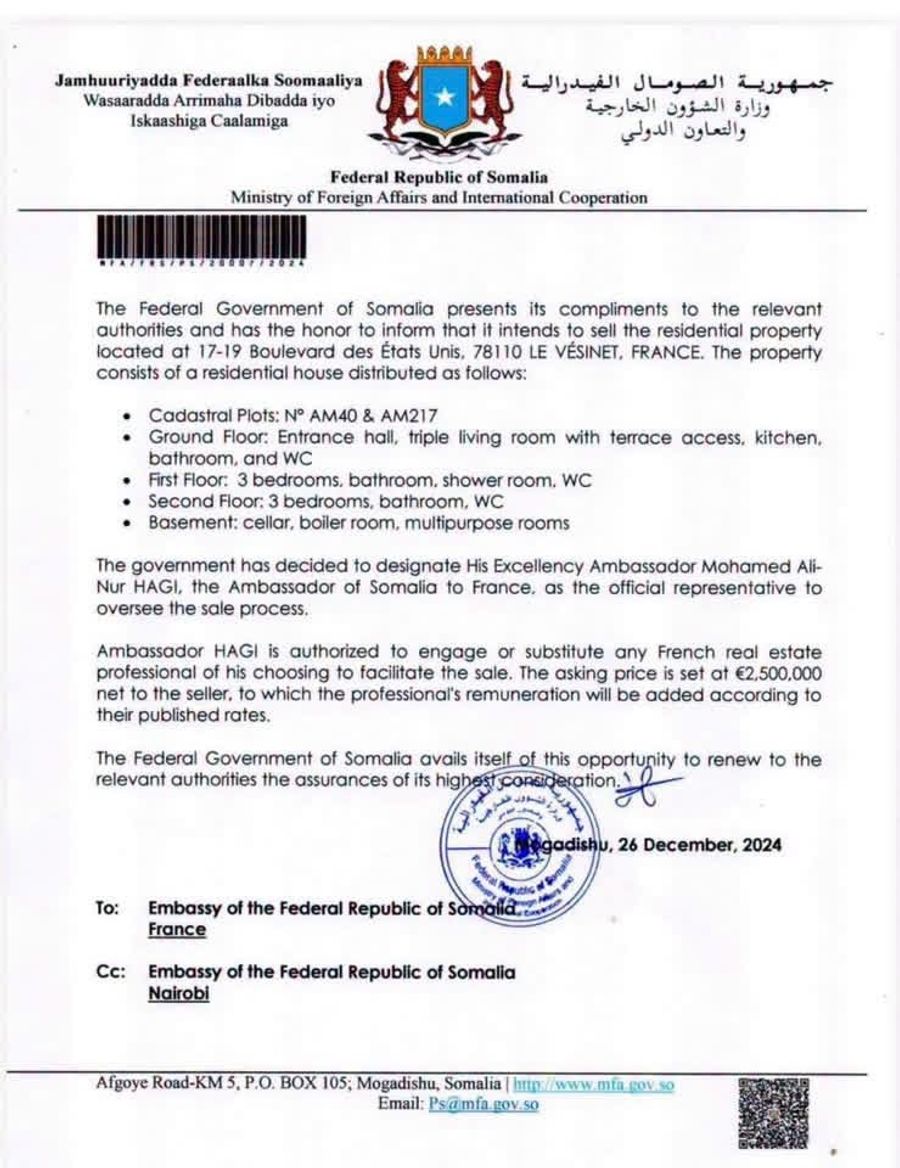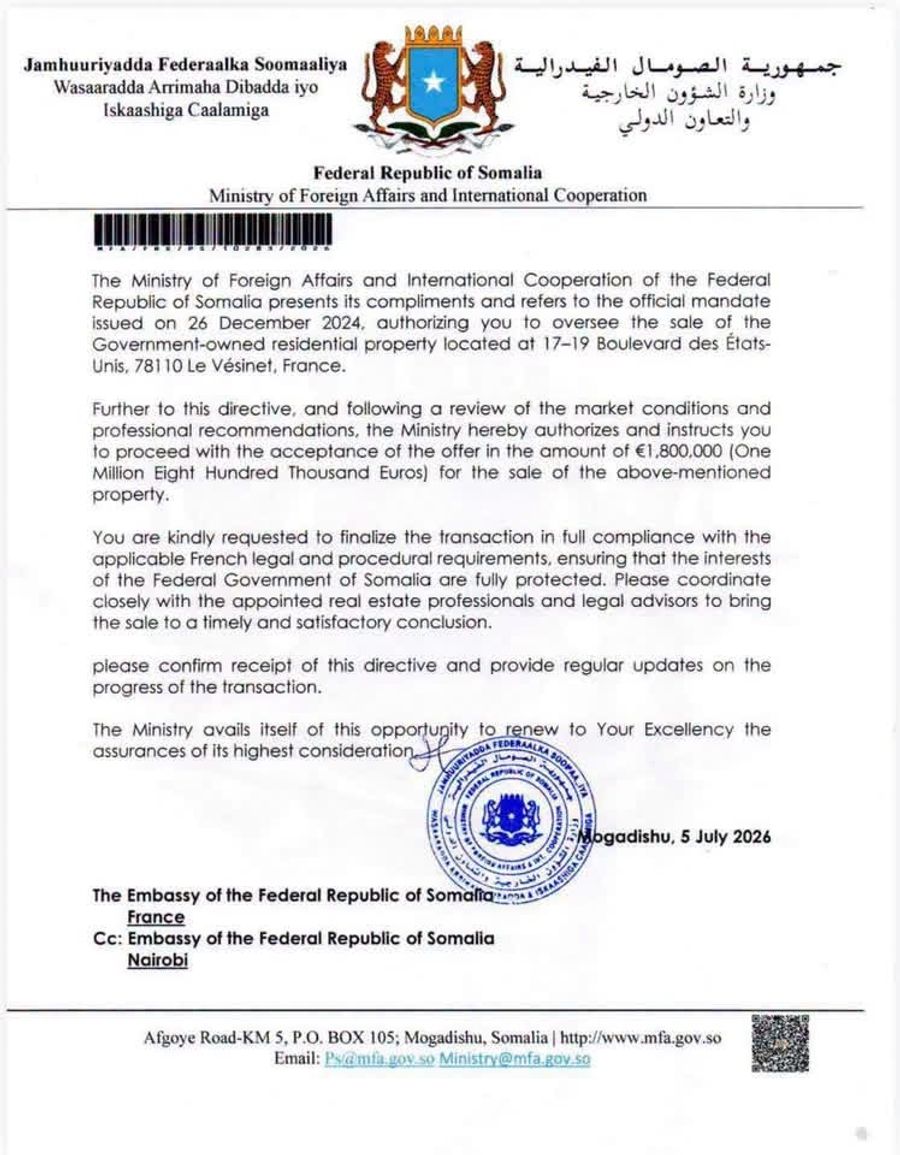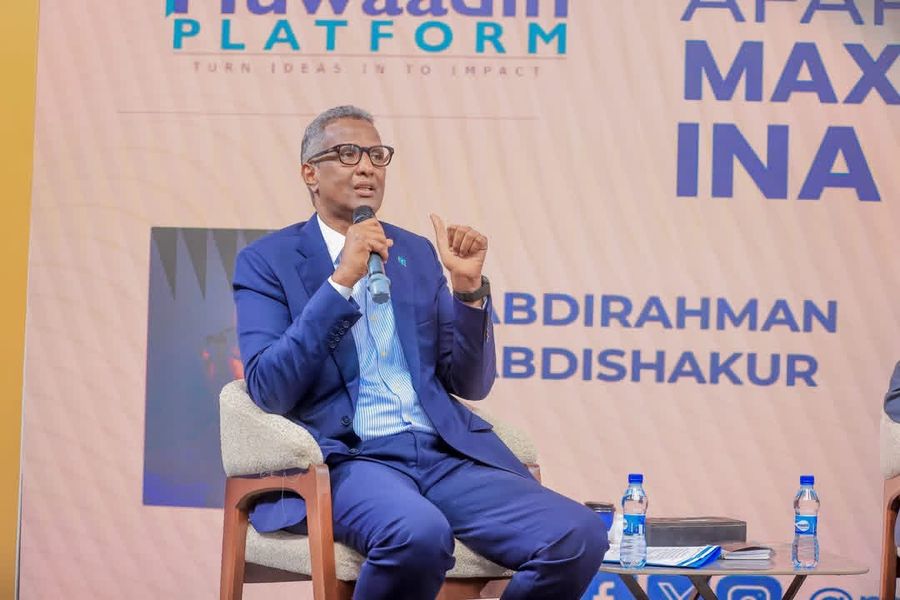
MOGADISHU, Somalia — July 26, 2026 — Somali opposition lawmaker Abdirahman Abdishakur Warsame has accused President Hassan Sheikh Mohamud of extending what he described as the disposal of public assets beyond Somalia’s borders, alleging that state-owned properties abroad are now at risk. The lawmaker called for urgent measures to protect national property and ensure transparency in its management.
Somali opposition politician Abdirahman Abdishakur Warsame has accused President Hassan Sheikh Mohamud’s administration of moving beyond the alleged sale of public assets inside Somalia and targeting Somali government-owned properties located overseas.
In a statement, Abdishakur claimed that public property belonging to the Somali state outside the country was at risk, although he did not provide specific details or evidence to support the allegations. His remarks have raised renewed debate over the management and protection of national assets.
The lawmaker warned that if immediate action is not taken, Somalia could face further losses of state property, adding that even the country’s islands could potentially be sold in the future. He described national assets as a shared inheritance belonging to Somali citizens and future generations.
Abdishakur said government property must be managed through transparent and accountable processes, arguing that decisions involving national assets should be subject to public oversight and legal procedures.
Government Response
The Somali presidency has not issued an immediate response to Abdishakur’s accusations. No official government statement has been released confirming or rejecting the claims at the time of publication.
Government officials have previously stated that public assets are managed according to national laws and state interests. However, the opposition has repeatedly called for greater transparency regarding government decisions involving land, public property, and national resources.
The allegations come as political disagreements continue between the federal government and opposition figures over governance, accountability, and the management of state institutions.
Abdirahman Abdishakur Warsame, a prominent opposition figure and former presidential candidate, has been among the government’s vocal critics on issues related to governance and public accountability.
Questions surrounding the management of Somalia’s public assets have remained a sensitive political issue, particularly as the country continues efforts to rebuild state institutions after decades of conflict and instability.
Somalia’s government owns various properties and assets both inside the country and abroad, including diplomatic facilities and other state-owned resources. The management of such assets is generally considered a matter of national interest due to their financial and strategic importance.
In recent years, Somali political debates have frequently focused on the need to strengthen oversight mechanisms, prevent misuse of public resources, and improve transparency in government decision-making.
Opposition leaders have argued that state assets should be protected through stronger legal safeguards, while government officials have emphasized the need for administrative reforms and economic development initiatives.
The dispute highlights ongoing political tensions in Somalia over accountability and the management of national resources. Public assets represent important economic and strategic resources for the state, particularly as Somalia works to strengthen government institutions and recover from years of conflict.
Allegations involving state property can have wider political consequences, as questions over transparency and public ownership often influence public trust in government institutions.
The issue may lead to further calls from opposition groups and civil society organizations for clearer procedures governing the protection, use, and transfer of government assets.
It remains unclear whether the Somali government will respond directly to Abdishakur’s allegations or provide further information about the management of state-owned properties abroad.
Political observers say continued debate over public assets could increase pressure on authorities to improve transparency and provide clearer explanations regarding decisions involving national property.