A Growing Currency Crisis Hits Somalia's Poorest Workers
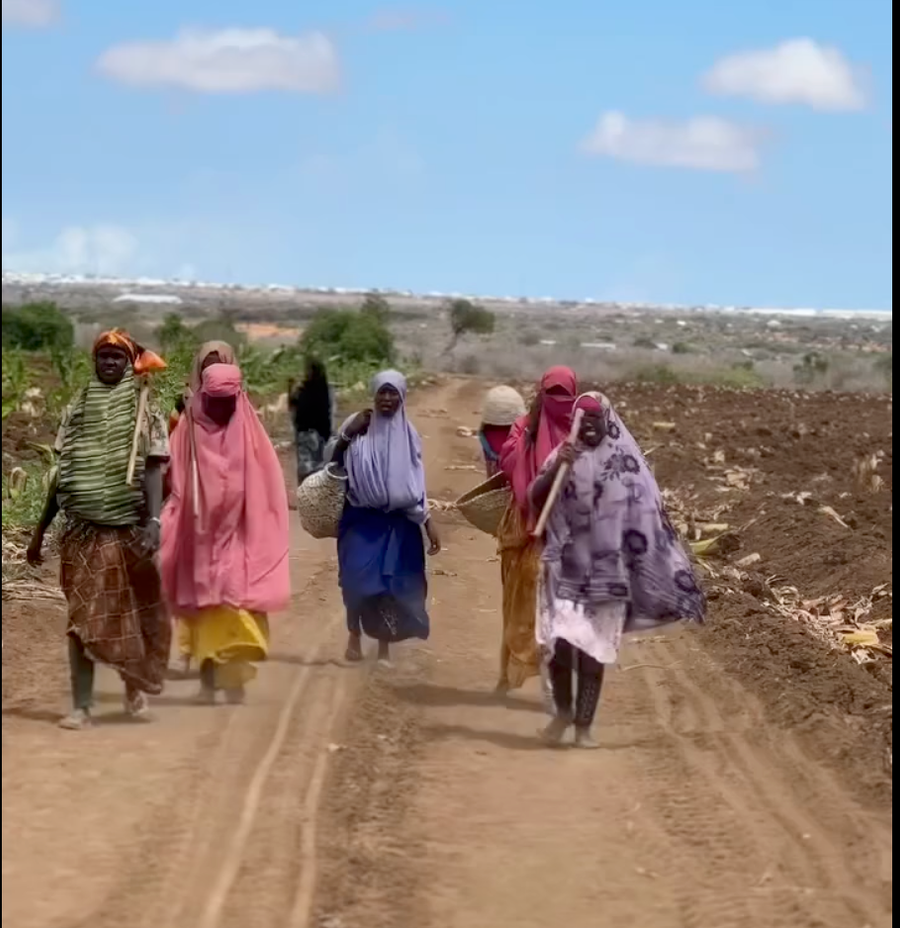
Thousands of daily wage labourers in Afgoye town, Lower Shabelle region, are facing worsening economic hardship following the widespread rejection of the Somali shilling in markets across southern Somalia. For many workers who depend on cash payments and informal daily labour, the rapid shift toward U.S. dollar transactions and mobile money systems has created a new barrier to survival.
Residents say they can no longer use the Somali shillings they have saved or earned through farm work, construction, transportation, and other casual labour. As traders increasingly refuse to accept Somali shilling notes, many households are finding themselves unable to purchase food, transport, water, and other essential goods.
The crisis is particularly severe in Afgoye, a town whose economy depends heavily on agricultural labour and seasonal farm work. Many workers are elderly, poorly educated, or lack familiarity with digital payment systems such as EVC Plus, leaving them vulnerable to exclusion from daily commerce.
Labourers Left Behind by Digital Payments
For years, labourers in Afgoye received wages in Somali shillings and conducted transactions using cash. However, Somalia's economy has become increasingly dollarized, with businesses preferring U.S. dollars and mobile money services for transactions.
While mobile money platforms such as EVC Plus have transformed commerce in Somalia, many low-income workers report difficulties adapting to the technology. Some lack mobile phones, others have limited digital literacy, and many older residents say they struggle to understand electronic transactions.
Workers interviewed by local media have expressed concern that although they may receive digital balances, they are unable to convert them into usable cash or navigate mobile payment systems effectively. This has left many families unable to access necessities despite technically having money in their accounts.
Somali Shilling Rejected Across Markets
The rejection of the Somali shilling has spread across major markets in Mogadishu and other regions. Reports indicate that traders increasingly refuse to accept the country's most commonly circulated 1,000-shilling note due to concerns over depreciation, poor quality notes, and lack of confidence in the currency. Markets that once relied heavily on cash transactions have increasingly shifted toward U.S. dollars and mobile payments.
Recent reports describe residents carrying large bundles of Somali shillings yet being unable to purchase goods because traders refuse to accept them. Low-income earners, including drivers, labourers, and small traders, are among the hardest hit.
Why the Somali Shilling Lost Public Confidence
The roots of the crisis stretch back to the collapse of Somalia's central government in 1991. Since then, monetary management has remained weak, and much of the currency circulating in the country has not been issued through a unified, regulated process. Economists and banking experts note that the absence of effective currency regulation has undermined confidence in the Somali shilling for decades.
According to banking experts, uncontrolled printing of currency after state collapse contributed to inflation, counterfeiting concerns, and erosion of trust in the national currency. These factors accelerated the shift toward dollarization and mobile money services.
Mobile Money Dominates Somalia's Economy
Somalia is frequently cited as one of Africa's most advanced mobile money economies. Studies by the World Bank found that mobile money services such as EVC Plus and Zaad function as a virtual dollar-based payment system used throughout much of the country. Mobile transactions have largely replaced cash in many urban areas.
The World Bank previously reported that approximately seven out of ten Somalis regularly use mobile money services and that hundreds of millions of dollars in transactions move through these systems every month.
However, while mobile money has increased financial inclusion for many people, critics argue that it has also accelerated the decline of physical cash and contributed to the marginalization of those who cannot easily access digital financial services.
Rising Cost of Living and Dollarization
Many residents in Afgoye complain that the growing use of U.S. dollars has made everyday goods more expensive. Since most imported goods are priced in dollars, fluctuations in exchange rates can directly affect food prices and household purchasing power.
Daily wage earners who are paid in Somali shillings often find that their earnings lose value before they can spend them. Some labourers report that the amount they earn today buys less food and fewer household necessities than it did only a few years ago.
Economic analysts warn that excessive dollarization can deepen inequality because access to dollars and digital payments is not evenly distributed across society. Those without access to banking services, smartphones, or digital literacy face greater barriers to participation in the economy.
Afgoye's Particular Vulnerability
Afgoye and surrounding Lower Shabelle communities depend heavily on agriculture. Previous assessments in the region documented tens of thousands of farm workers relying on seasonal agricultural employment. When economic disruptions occur, labourers often have few alternative sources of income.
The current currency crisis compounds existing challenges, including unemployment, drought impacts, rising living costs, and periodic disruptions to agricultural production.
For many households, the inability to use Somali shilling savings has effectively erased years of accumulated income. Reports from affected communities elsewhere in Somalia describe families whose savings became nearly worthless when businesses stopped accepting their cash.
Calls for Government Action
Economists, bankers, and community leaders are increasingly calling on the Federal Government of Somalia and the Central Bank of Somalia to accelerate currency reform efforts.
Recommendations include:
- Restoring confidence in the Somali shilling through regulated issuance.
- Introducing secure new banknotes.
- Expanding financial literacy programs.
- Ensuring cash remains available for vulnerable populations.
- Improving consumer protection within mobile money systems.
- Supporting low-income workers during the transition to digital payments.
Banking experts warn that failure to address the crisis could further marginalize poor households and undermine economic stability.
Conclusion
The currency crisis affecting Afgoye labourers is more than a monetary issue; it is a social and humanitarian challenge. While digital payments and dollarization have modernized parts of Somalia's economy, they have also exposed deep inequalities in access to financial services.
For daily wage earners in Lower Shabelle, the rejection of the Somali shilling has transformed a long-standing economic problem into an immediate struggle for survival. Unless meaningful reforms restore confidence in the national currency and ensure that vulnerable populations are not left behind, many workers will continue to face growing difficulty in meeting their most basic needs.
The experience of Afgoye's labourers illustrates a broader national dilemma: how to modernize Somalia's financial system while protecting the livelihoods of those who remain dependent on cash.
By Ahmed Abdikadir Mohamoud
Economist