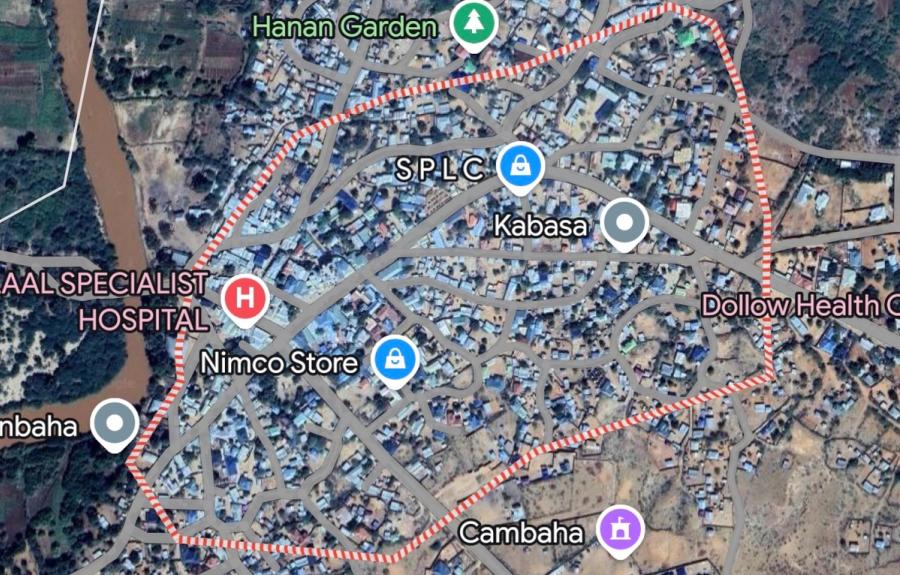
MOGADISHU, Somalia — August 2, 2026 — Al-Shabaab militants attacked a Jubaland military base outside Doolow in Somalia’s Gedo region overnight, briefly taking control of the facility and setting it on fire before withdrawing early Sunday, according to local residents. Jubaland forces later returned to the base, but the extent of the damage and any casualties remained unclear.
Residents said heavy fighting began late Saturday after fighters they identified as members of Al-Shabaab attacked the military position located along the main road connecting Doolow and Beled Hawo.
The militants reportedly used heavy and light weapons during the assault, triggering an exchange of gunfire with Jubaland forces stationed at the base. Witnesses said the fighting continued for an unspecified period before the regional troops withdrew from the compound.
Al-Shabaab fighters then entered the base and took control of it, according to the residents. The militants did not remain at the facility and withdrew before dawn.
Local residents said the fighters burned buildings and other structures inside the camp before leaving. The reports could not be independently verified, and it was not immediately clear whether weapons, military vehicles or ammunition were captured or destroyed.
Jubaland forces returned to the damaged facility early Sunday and re-established their presence after the militants had left, residents said.
The situation around the base was reported to be calm later in the morning, although concerns remained that the militants could be operating in surrounding rural areas.
Casualties and Civilian Impact
No verified casualty figures were immediately available from the overnight fighting. Residents did not provide confirmed information about deaths or injuries among Jubaland forces, Al-Shabaab fighters or civilians.
There were also no immediate reports of large-scale civilian displacement from nearby communities. However, fighting along the Doolow-Beled Hawo road could affect civilian travel, commercial transport and access to services if insecurity continues.
The road has previously been targeted with improvised explosive devices and attacks against government forces and civilians. In May 2024, two civilians were killed and five others were injured when a landmine struck a vehicle travelling along the Beled Hawo-Doolow route, according to a European Union Agency for Asylum security assessment.
Doolow also hosts displaced communities and is one of the districts monitored by humanitarian agencies tracking conflict and climate-related displacement. The International Organization for Migration included Doolow among districts covered by its emergency displacement monitoring in June 2026.
Government Response
Jubaland authorities had not issued a detailed public statement about the attack by the time of publication.
Somalia’s federal government also had not commented on the incident. No official information was available about planned military operations to pursue the attackers or secure the surrounding villages.
Al-Shabaab had not publicly claimed responsibility through its usual media channels at the time of publication. The identification of the attackers was based on accounts from local residents.
Gedo remains one of the most contested regions in southern Somalia because of its position near the borders with Kenya and Ethiopia and the strategic roads connecting its major districts.
A recent European Union Agency for Asylum assessment said control of rural areas around Doolow, Luuq and El Waq remained divided between Al-Shabaab and Jubaland regional forces. The assessment recorded Al-Shabaab’s involvement in 46 incidents targeting Somali military or police forces and 12 incidents of violence against civilians in Gedo between April 2025 and March 2026.
Al-Shabaab has repeatedly attacked military facilities, government officials and transport routes across the region.
In March 2023, a vehicle packed with explosives struck a guest house in Bardhere, killing at least nine people, including five soldiers, according to witnesses cited by The Associated Press. The Gedo regional governor and senior military officers were among those wounded. Al-Shabaab claimed responsibility for the bombing.
In July 2023, Al-Shabaab fighters captured the Geriley military base near the Kenyan border after fighting Jubaland forces. The base had recently been transferred from African Union troops to regional forces. Jubaland troops retook the position the following day, according to security reporting compiled by the EU asylum agency
Somali National Army and Jubaland forces also carried out operations in August 2024 that recaptured about 10 villages along the Luuq-Doolow road. The villages had reportedly been used by Al-Shabaab as military positions and locations for collecting payments from travellers.
Security officials are expected to assess the damage to the Doolow base and determine whether military equipment was lost during the attack.
The return of Jubaland forces suggests the militants did not attempt to hold the position permanently. However, the incident may lead to additional patrols and security operations along the Doolow-Beled Hawo road and in nearby rural communities.
Authorities have not announced whether the burned base will be rebuilt or whether additional troops will be deployed to strengthen the position.
The temporary seizure of the base shows that Al-Shabaab retains the ability to mobilize fighters, attack isolated military positions and withdraw before reinforcements arrive. The reported burning of the facility could reduce the ability of Jubaland forces to maintain a permanent presence along the road.
The Doolow-Beled Hawo corridor connects communities, markets and border areas used by civilians, security forces and humanitarian organizations. Renewed attacks could disrupt transport and increase the risks faced by residents already affected by displacement and recurring insecurity.