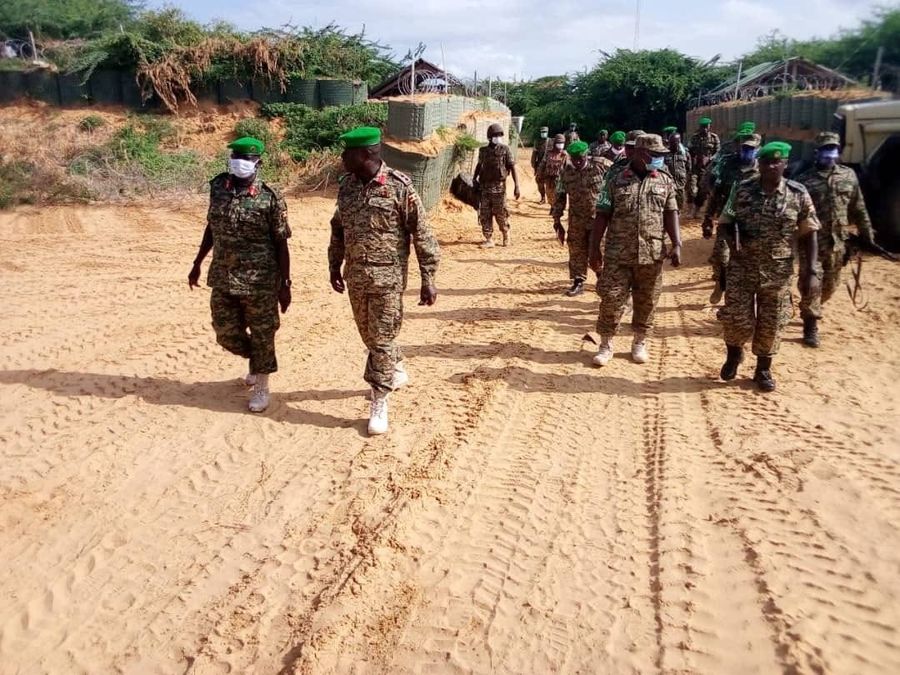
MOGADISHU, November 3 — Uganda’s withdrawal of troops from southern Somalia is raising concerns about the readiness of Somali forces to secure strategic towns in Lower Shabelle and protect key approaches to Mogadishu.
Uganda confirmed on November 2 that troops deployed under its bilateral agreement with Somalia had begun returning home, with their departure expected to conclude within days. Kampala separately announced a gradual withdrawal of all its forces, including those serving under the African Union Support and Stabilisation Mission in Somalia (AUSSOM), by the end of 2027. (
That distinction is important: the immediate departure of bilateral forces does not mean Uganda’s entire AUSSOM contingent is leaving this month.
Locations reportedly affected
According to the source account underlying this analysis, Ugandan troops are expected to withdraw by November 10 from the following towns and military positions in Lower Shabelle:
- Barawe
- Qoryooley
- Janaale
- Buulo
- Golweyn
- Kabtan Laas
The account says the movements have already begun, with departing troops expected to assemble at Number 60 in Lower Shabelle by November 13, ahead of their anticipated return to Uganda.
These specific locations, deadlines and assembly arrangements have not been independently verified. It also remains unclear which listed positions are held by bilateral forces and which fall under AUSSOM.
Replacement plans and possible security gaps
Some replacement arrangements are being prepared. The Associated Press reported on November 3 that AUSSOM plans to take over four positions during November troop rotations:
- Sabid-Anole
- Bariire
- Awdheegle
- Bulonagad
Responsibility for other positions being vacated remains unclear. These four bases should therefore be distinguished from the six locations identified in the source account.
Reuters also reported that an October 31 letter from AUSSOM to the UN Support Office in Somalia warned that the withdrawal could leave parts of Lower Shabelle vulnerable to Al-Shabaab attacks.
The immediate challenge is whether each departing unit will be replaced by a force capable of defending its position, maintaining supply routes and supporting surrounding communities.
A successful handover requires more than placing soldiers inside a vacated base. Incoming units need sufficient equipment, ammunition, communications, intelligence, transport and medical support.
Warnings over Mogadishu’s approaches
The supplied account cites unnamed security analysts and former officers who argue that withdrawing troops before Somali replacements are adequately prepared could create serious security risks.
One unnamed officer predicted that Al-Shabaab could reach the Balcad and Afgoye checkpoints serving Mogadishu before November 20, potentially threatening access to the capital.
The same officer suggested that Al-Shabaab might allow withdrawing Ugandan troops to leave without interference, then exploit any gaps in security. The account also raises the possibility of ambushes that could delay troop movements.
Somali reinforcements reportedly sent to Barawe
According to the source account, the federal government has used five aircraft, each described as capable of carrying approximately 50 soldiers, to transport replacement troops to Barawe. It says further deployments are continuing.
That concern raises a wider operational question: can the government sustain these garrisons after their deployment?
Airlifting soldiers into a town can reinforce it quickly, but holding it requires dependable supplies, defensive capabilities and the ability to move beyond the base. If surrounding roads become unsafe, an isolated garrison may face increasing pressure even while retaining control of its immediate position.
Claims of shortages and proposed redeployments
The supplied account alleges that President Hassan Sheikh Mohamud’s administration lacks a fully equipped brigade immediately available to replace departing Ugandan units.
It links that alleged shortage to reported losses and dispersal involving Gorgor troops near Leego. Neither the claimed shortage nor the account’s description of those battlefield developments has been independently verified.
The account further claims that the government has requested the transfer of the 77th Brigade to Lower Shabelle from positions in:
- Ceeldheer
- Masagawaay
Moving experienced troops toward the capital could strengthen Lower Shabelle while increasing pressure elsewhere unless replacement forces are available. However, the information currently available does not establish that Ceeldheer or Masagawaay will be abandoned.
Questions over the Leego operation
The source account also raises allegations concerning the planning and command of the Leego deployment. These include claims that officers were pressured to proceed, commanders were replaced following disagreements over military advice, and replacement officers received an allocation of $1.5 million.