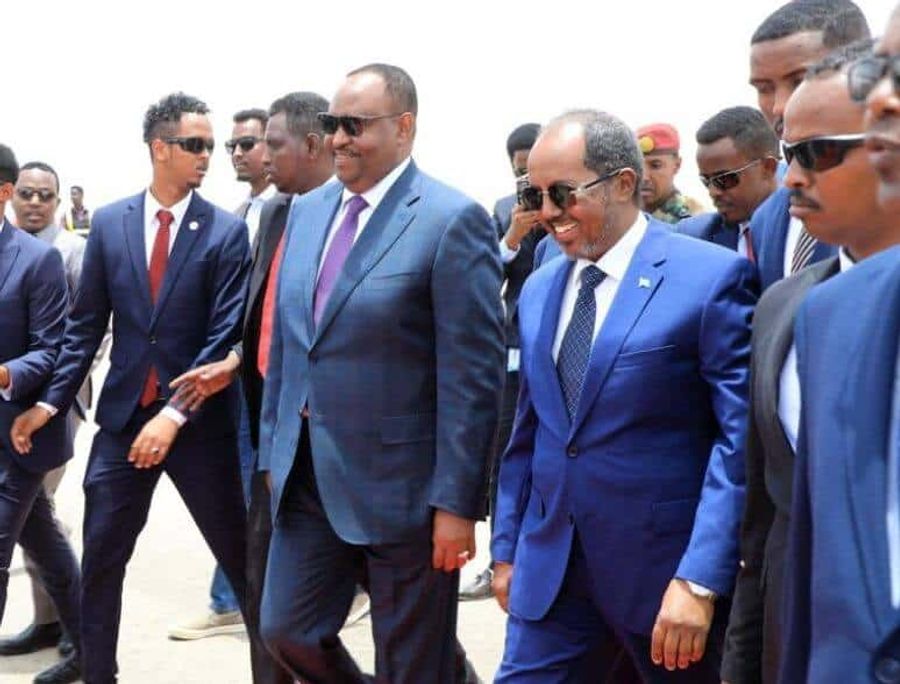
MOGADISHU, Somalia — June 27, 2026 —The latest exchange between Somalia's Federal Government and the Puntland administration reflects more than a dispute over security deployments. It highlights a broader struggle over political authority, constitutional interpretation, and control of state institutions that has shaped Somalia's federal system for more than a decade.
Puntland President Said Abdullahi Deni's statement that federal forces will not be allowed to operate in Puntland without the approval of regional authorities underscores the administration's position that security remains a shared constitutional responsibility rather than an area that can be directed unilaterally by Mogadishu. The Federal Government, meanwhile, has consistently argued that national security institutions must be able to operate across the country to address common threats, including Al Shabaab and maritime insecurity.
A central element of Puntland's latest accusations is the claim that Mogadishu is attempting to expand its political influence by cultivating relationships with district officials and establishing federal security structures inside Puntland. Puntland officials have also alleged that clan based mobilization has taken place in districts including Xaafuun, Eyl, Jariiban, Goldogob, parts of Nugaal, and Galkayo. These allegations have not been independently verified, and the Federal Government has not publicly responded to the specific claims.
Puntland has drawn comparisons with earlier political disputes in Southwest State involving President Abdiaziz Hassan Mohamed, widely known as Lafta Gareen. According to Puntland officials, the Federal Government previously increased its influence in Southwest State by strengthening ties with local district leaders before expanding its political presence. Those claims remain disputed and have not been independently verified. Mogadishu has previously rejected accusations that it seeks to undermine federal member states.
The timing of the latest dispute is significant. Somalia is navigating constitutional reforms, security sector restructuring, and preparations for future political processes. At the same time, the country continues military operations against Al Shabaab and seeks greater cooperation among federal institutions and regional administrations. Political disagreements between Mogadishu and Puntland could complicate that coordination if they continue to deepen.
Puntland has also accused the Federal Government of failing to address maritime security concerns and has alleged that actors linked to Mogadishu are facilitating armed groups and pirate networks along parts of the northeastern coastline. Puntland argues that such developments threaten shipping routes in the Gulf of Aden and the Indian Ocean. These allegations have not been independently verified, and the Federal Government has not publicly commented on them.
Relations between Puntland and the Federal Government of Somalia have long been shaped by disputes over constitutional authority, resource control, and security jurisdiction. Puntland operates as a federal member state with its own security institutions while also participating in the national federal system.
Key areas of disagreement include the division of security responsibilities, control over federal deployments, and political influence at district level. Similar tensions have also emerged in other federal member states at different times.
Somalia is currently engaged in constitutional review processes, security sector reforms, and ongoing military operations against Al Shabaab. These national priorities require coordination between federal and regional authorities, which analysts say can be affected by political disagreements.
If the political dispute expands beyond public statements, analysts say it could affect governance, security coordination, and service delivery in areas where federal and regional authorities must cooperate. Competition for influence at the district level has historically increased political tensions in Somalia, particularly where questions of constitutional authority remain unresolved.
The current standoff also reflects a broader challenge facing Somalia's federal system. While the Provisional Constitution establishes both federal and regional institutions, several key provisions governing the division of powers, security responsibilities, and resource management remain contested. Without political consensus, disagreements over authority are likely to continue.
Whether the current tensions evolve into a prolonged political confrontation or lead to renewed dialogue will depend on the willingness of both Mogadishu and Garowe to engage through existing constitutional and political mechanisms. A negotiated approach could help preserve cooperation on national security and governance, while continued confrontation risks widening divisions between the Federal Government and one of Somalia's most influential federal member states.
The current dispute is part of a broader structural challenge in Somalia’s federal system, where constitutional provisions remain only partially implemented. Without clear agreement on security jurisdiction and political authority, tensions between Puntland and the Federal Government are likely to continue shaping national politics and influencing stability across multiple regions.