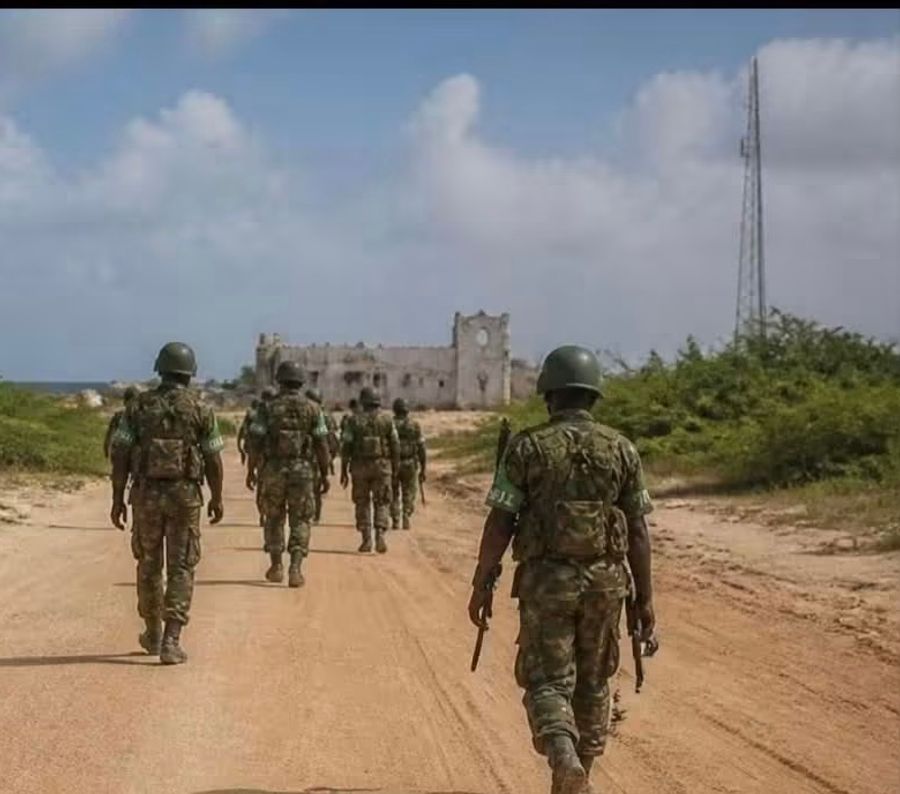
MOGADISHU, Somalia — November 3, 2026-The African Union Support and Stabilization Mission in Somalia (AUSSOM) is facing growing uncertainty as reports emerge of troop withdrawals from Barawe and Shalanbood in the Lower Shabelle region, potentially marking the beginning of a broader reduction in international military deployments across southern Somalia.
The reported departures come as Uganda, one of the largest contributors to African Union military operations in Somalia, has officially announced a phased withdrawal of its forces, bringing nearly two decades of military involvement in the country toward an end.
According to reports from Lower Shabelle, AUSSOM personnel have withdrawn from positions in Barawe and Shalanbood, with additional locations across the region potentially affected by the ongoing drawdown.
The developments have raised concerns about the security implications of reducing foreign military support while Al-Shabaab remains active across southern and central Somalia.
Uganda Announces Military Withdrawal
On November 2, the Uganda People’s Defence Forces (UPDF) officially confirmed that it had begun withdrawing soldiers deployed in Somalia under bilateral security arrangements with the Federal Government.
Military spokesperson Colonel Chris Magezi announced that the first group of Ugandan soldiers had already returned home, confirming that the withdrawal process was underway.
Uganda plans to withdraw all its remaining forces, including troops serving under AUSSOM, by the end of 2027.
The announcement represents a major development in Somalia’s security landscape, considering Uganda’s longstanding military involvement since March 2007.
Ugandan forces have played a central role in operations against Al-Shabaab, including efforts to secure Mogadishu, protect strategic infrastructure, and support Somali government forces in southern regions.
Thousands of Ugandan troops remain deployed in Somalia, both under the African Union mission and separate bilateral military arrangements.
Their departure will require significant adjustments to Somalia’s existing security structure.
Lower Shabelle Faces Growing Security Uncertainty
Lower Shabelle is among Somalia’s most strategically important regions because of its proximity to Mogadishu, major transportation routes, agricultural resources, and continued insurgent activity.
Towns including Barawe, Shalanbood, Qoryoley, Janaale, and Bulo Marer have historically played important roles in military operations conducted by Somali government forces and their international partners.
Barawe, a coastal town and the administrative capital of South West State, is particularly significant because of its strategic position along Somalia’s southern coastline.
Shalanbood is another important location along the transport corridor connecting Mogadishu with communities farther south.
A reduction in international military deployments could place additional pressure on Somali security forces responsible for protecting these areas.
The primary concern is whether national forces can maintain sufficient troop strength, logistical support, and operational coordination to prevent Al-Shabaab from exploiting potential security gaps.
Any poorly coordinated withdrawal could expose military installations, transportation corridors, and surrounding communities to increased security threats.
AUSSOM Warns of Potential Security Gaps
The concerns are not limited to local security assessments.
According to Reuters, an October 31 communication from AUSSOM to the United Nations Support Office in Somalia warned that the withdrawal of Ugandan troops could leave parts of Lower Shabelle vulnerable to Al-Shabaab attacks.
The warning highlights the operational challenges associated with transferring responsibility from experienced international military contingents to Somali forces.
Somalia’s State Minister for Foreign Affairs, Ali Omar, also acknowledged the potential difficulties associated with a sudden departure of Ugandan troops.
Although Somali authorities have not described the current situation as a security emergency, the withdrawal has intensified questions about the government’s preparedness to assume greater responsibility for territorial security.
A successful transition will depend on coordinated military planning, sufficient resources, and the ability to maintain control of areas previously secured by African Union forces.
Funding Challenges Threaten AUSSOM Operations
The withdrawal comes amid serious financial and logistical challenges affecting the African Union mission.
AUSSOM, which succeeded the African Union Transition Mission in Somalia (ATMIS) in January 2025, was established to support Somali security institutions and facilitate a gradual transfer of security responsibilities.
The United States has announced plans to end its support for the United Nations Support Office in Somalia (UNSOS), which provides essential logistical assistance to African Union personnel.
These services include transportation, medical support, fuel, food supplies, and other operational requirements.
Washington subsequently supported an additional transition period for winding down the logistical arrangements, but the longer-term funding situation remains unresolved.
Without adequate financing and replacement logistical arrangements, AUSSOM could face difficulties maintaining its existing operational capabilities.
The uncertainty has intensified discussions about the sustainability of foreign military deployments and Somalia’s ability to independently manage its security challenges.
Will Other Countries Follow Uganda?
Uganda’s announcement has also raised questions about the future participation of other African countries contributing troops to Somalia.
Kenya, Ethiopia, Burundi, and Djibouti have participated in African Union security operations, providing military personnel and supporting stabilization efforts.
While Uganda has established a withdrawal timetable, there has been no equivalent confirmed announcement establishing a coordinated departure schedule for all other troop-contributing countries.
Somalia Approaches a Critical Security Transition
The latest developments come at a sensitive moment for Somalia, where government forces continue confronting Al-Shabaab while managing political disagreements and competing security priorities.
The insurgent group remains capable of conducting attacks against military positions, government institutions, and civilian targets despite years of international counterterrorism operations.