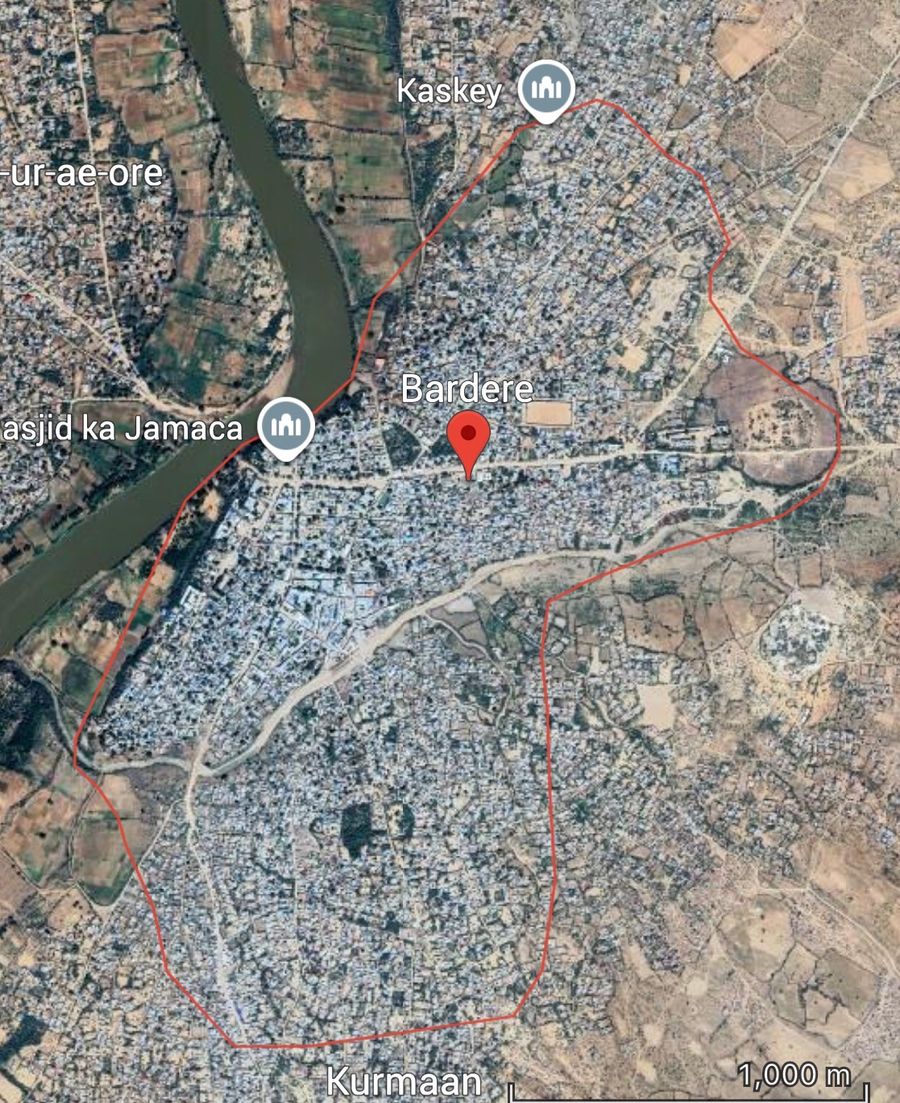
BAARDHEERE, Somalia — September 13, 2026 — Large numbers of Al-Shabaab fighters have reportedly spotted around Baardheere in Somalia’s Gedo region, raising fears of a possible attack as federal forces prepare to use the strategic town as a base for operations against the militant group.
Local residents and security sources said suspected militants had been observed in several rural areas surrounding Baardheere in recent days. Their numbers, exact locations and intentions could not be independently verified.
The federal government and Al-Shabaab have not publicly commented on the reported mobilisation.
The reports follow the deployment of additional Somali National Army personnel to Baardheere. According to security sources, federal authorities are seeking to establish a military base in the town from which government troops could launch operations against Al-Shabaab-controlled areas in neighbouring Middle Juba.
Senior military officers visited Baardheere several days ago and announced preparations to recruit and train new soldiers for the proposed offensive. Brigadier General Sahal Abdullahi Omar, commander of the Somali National Army’s land forces, recently led a military delegation to the town.
Security concerns have increased since the visit amid reports that Al-Shabaab is moving fighters closer to the district. Local sources fear the group may attempt to disrupt the government’s military preparations before the planned offensive begins.
The government has not announced a timetable for the operation or disclosed how many troops have been deployed to Baardheere.
Jubbaland Opposes Federal Deployment
The Jubbaland administration has expressed opposition to the presence of federal forces in Baardheere, saying the deployment was made without coordination with the regional government.
Jubbaland officials view Gedo as part of their territory and have repeatedly rejected attempts by Mogadishu to deploy or reorganise security forces there without their approval. The regional administration has warned that unilateral military deployments could deepen political and security instability.
Federal authorities have not publicly responded in detail to Jubbaland’s objections. Mogadishu has previously maintained that national forces can operate across Somalia to protect civilians and confront Al-Shabaab.
The disagreement creates a second challenge for the federal troops stationed in Baardheere. They face a possible threat from Al-Shabaab outside the town while also operating in an area contested politically by Jubbaland.
Security sources have warned that disputes between Mogadishu and Kismayo could complicate coordination, intelligence sharing and military planning against the militant group.
Strategic Importance of Baardheere
Baardheere is situated along the Juba River and serves as an important link between Gedo and southern Somalia. Roads from the district connect with areas leading toward Middle Juba, where Al-Shabaab maintains a significant presence.
Holding Baardheere would allow federal forces to deploy troops and supplies closer to militant-controlled territory. Losing access to the surrounding roads, however, could isolate government positions and make military resupply more difficult.
Al-Shabaab has previously placed pressure on government-held towns by operating in surrounding rural areas, restricting road movement and attacking military positions and supply convoys. The group continues to control or influence large parts of rural southern and central Somalia.
Residents said they fear renewed fighting could disrupt transportation, local trade and humanitarian access. No casualties or large-scale displacement linked to the latest reported movements had been confirmed at the time of publication.
New Military Commander Appointed
The federal government has also reportedly appointed Colonel Rashid Mohamed Osman to a senior military command position in Gedo as it reorganises its forces ahead of the proposed campaign.
According to sources familiar with the appointment, Osman previously declined to participate in a federal military operation in Beled Hawo. His appointment has raised questions about the government’s command structure and broader strategy in Gedo.
No official explanation for his selection has been released. It also remains unclear what authority he will hold over the different federal units operating in Baardheere and elsewhere in the region.
Background to the Conflict
Gedo has long been at the centre of disputes between Somalia’s federal government and Jubbaland over political authority, local administration and control of security forces.
In February 2025, federal forces attacked the Baardheere district headquarters, according to a European Union Agency for Asylum security assessment. Six people were reportedly killed in the resulting clashes with Jubbaland forces.
Beled Hawo and Doolow have also experienced repeated confrontations involving forces aligned with Mogadishu and Jubbaland. Fighting in Beled Hawo in July 2025 caused several deaths as both sides traded accusations over responsibility for the violence.
The federal-Jubbaland dispute has periodically diverted personnel and resources away from operations against Al-Shabaab. The militant group has historically exploited divisions among Somali political and security authorities to maintain freedom of movement in contested regions.
The reported encirclement places Baardheere at the intersection of two security problems: the Al-Shabaab insurgency and the continuing political confrontation between the federal government and Jubbaland.
A successful militant attack could weaken the government’s planned advance into Middle Juba before it begins. Even without a direct assault, restricting roads around Baardheere could disrupt troop movements, supplies and civilian transportation.
The dispute with Jubbaland also risks dividing forces that would otherwise be expected to cooperate against Al-Shabaab. Without an agreement between Mogadishu and Kismayo, the military buildup could increase local tensions while providing the militants with an opportunity to exploit gaps in security coordination.