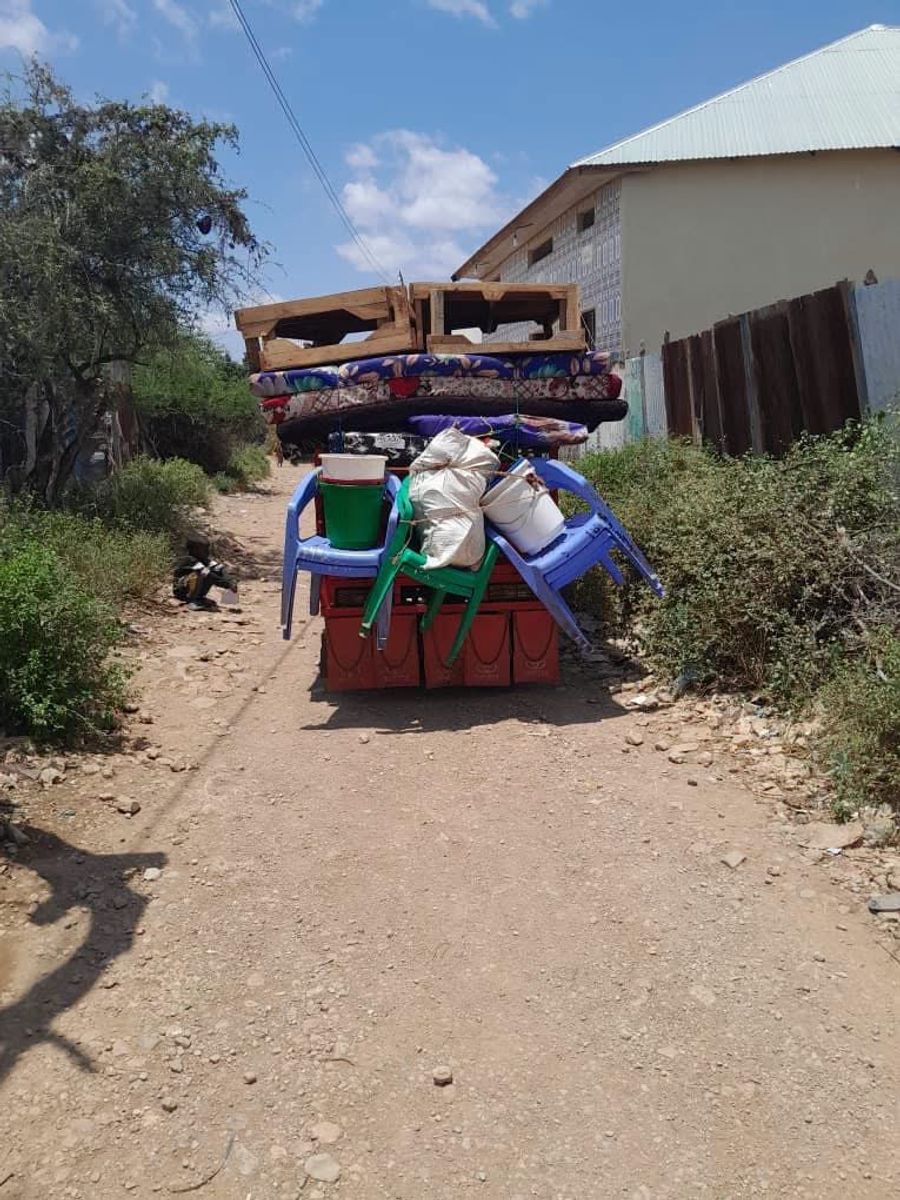
BAIDOA, Somalia — September 5, 2026 — Civilians continued fleeing several neighbourhoods in Baidoa on Saturday amid fears of renewed clashes between Somali government forces and armed groups aligned with former South West State President Abdiaziz Hassan Mohamed Laftagareen, days after deadly fighting struck residential areas of the southwestern city.
Footage and accounts from local residents showed families leaving with children, bags and household belongings. Some were reportedly moving towards quieter areas within Baidoa, while others were seeking safety outside the city.
The number of people displaced since Thursday has not been officially established. Local reports described the movement as significant, but humanitarian agencies had not released a verified figure by Saturday.
Residents said uncertainty remained high following fighting on Thursday, September 3, when government forces clashed with Laftagareen-aligned fighters in and around Baidoa.
Heavy gunfire and stray bullets reached residential neighbourhoods during the confrontation, forcing families to leave their homes. Although the fighting later subsided, residents remained concerned that armed confrontations could resume.
There was no official confirmation on Saturday that a new attack was imminent. Security forces remained present in parts of the city as civilians monitored developments and assessed whether it was safe to return to affected neighbourhoods.
Somalia’s Defence Ministry said Thursday’s fighting began after armed groups loyal to Laftagareen attacked government positions. The ministry also alleged that Al-Shabaab fighters participated in the assault, but that claim has not been independently verified.
Laftagareen-aligned groups have previously denied links to Al-Shabaab and described their forces as a political and military opposition movement challenging the federal-backed administration in Baidoa.
Casualties and humanitarian impact
Bay Regional Hospital received 71 wounded people, including 15 women, and the bodies of two civilians following Thursday’s violence, according to information attributed to the hospital’s emergency department.
Initial reports carried differing civilian death tolls, and complete casualty figures from the fighting remain unavailable. The number of combatants killed or wounded has also not been independently established.
The latest displacement is adding pressure to communities already affected by repeated conflict, drought and food insecurity. Baidoa is one of Somalia’s main humanitarian centres and hosts more than half a million displaced people living in the city and surrounding settlements.
Many displaced families depend on humanitarian assistance for food, water, shelter and medical care. New arrivals could place further strain on services that were already struggling to meet existing needs.
Bay Regional Hospital has also faced shortages of beds and essential medicines during previous emergencies. After the August fighting, medical workers erected an emergency tent to accommodate casualties because the hospital had only 40 beds available.
Baidoa has experienced several rounds of fighting linked to the political struggle over South West State’s leadership and electoral process.
Federal forces took control of the city on March 30 after the federal government rejected Laftagareen’s disputed indirect re-election. Laftagareen, who had led South West State since 2018, subsequently announced his resignation, but armed forces and political figures aligned with him continued to challenge the new administration.
Humanitarian reporting indicated that more than 45,000 people fled Baidoa during fighting in March between South West forces and opposition-aligned groups.
Another major confrontation occurred on August 17, when armed groups attacked government positions and temporarily entered parts of the city. Government forces later regained control following several hours of fighting.
At least four civilians were killed and 98 people were wounded in that confrontation, according to Bay Regional Hospital. The wounded included 28 women and an elderly man struck by stray bullets. Dozens of combatants were also reported killed, but conflicting figures issued by the parties were not independently verified.
Thursday’s fighting represented another escalation in the dispute and again exposed civilians to gunfire inside populated areas.
Local authorities have not announced a comprehensive plan to assist the newly displaced families or assess damage to homes and businesses. Humanitarian organisations may need to determine how many people have fled and identify their immediate needs.
Continued instability could also disrupt commercial activity, transport, health services and humanitarian operations in Baidoa and surrounding areas.
Repeated civilian displacement shows that the political struggle over South West State is developing into a wider humanitarian and security crisis. Families already affected by drought and poverty are being forced to move again, often without secure shelter or dependable access to food and healthcare.
Further fighting could overwhelm Baidoa’s limited medical and humanitarian services. It could also restrict aid access to displacement settlements that depend on supplies transported through the city.
The violence risks deepening political divisions between the federal government and Laftagareen’s supporters. Without negotiations or an effective ceasefire, civilians are likely to remain exposed to further displacement and casualties.