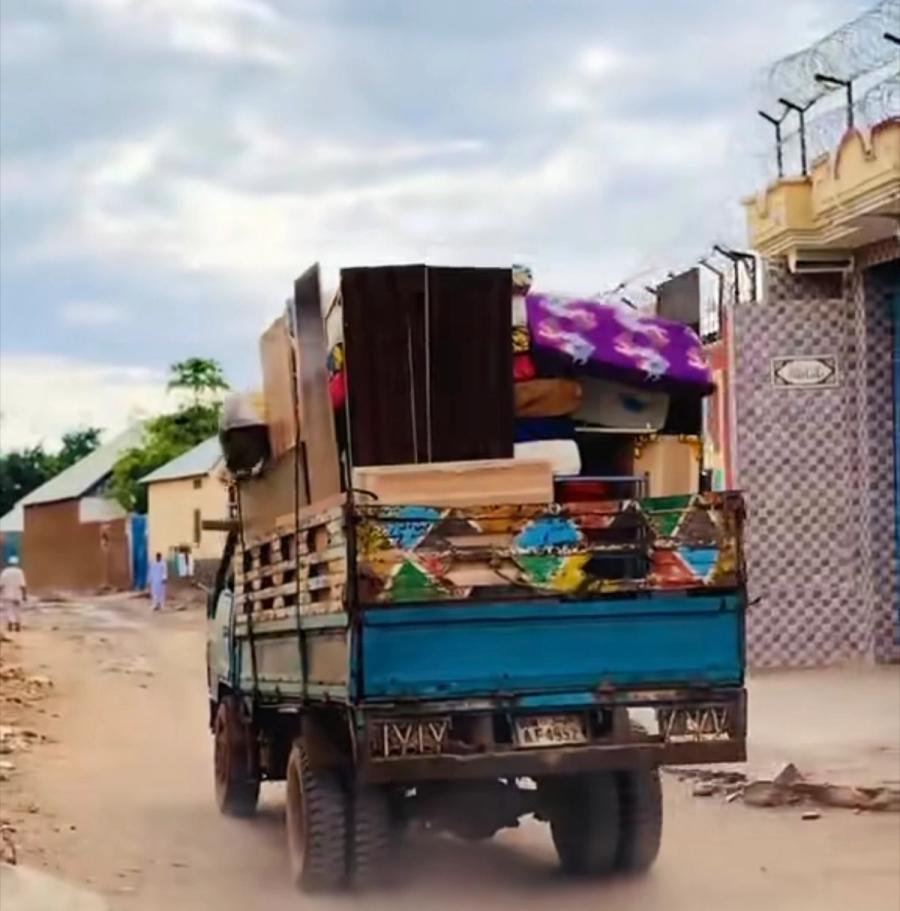
BAIDOA, Somalia — August 22, 2026 — Civilians continued leaving parts of Baidoa for a third consecutive day on Saturday as reported troop deployments, security restrictions and confrontational rhetoric raised fears of renewed fighting between federal government forces and fighters loyal to former South West State President Abdiaziz Hassan Mohamed Laftagareen.
Residents reported seeing vehicles carrying household belongings moving through Baidoa and toward settlements on the city’s outskirts. Some families said they were relocating temporarily to areas they considered safer following recent clashes and warnings of possible further violence.
The number of displaced residents could not be independently established. Humanitarian organizations operating in Baidoa had not released a comprehensive assessment of the latest civilian movements at the time of publication.
Local sources said security forces supporting South West State President Aden Mohamed Nur, widely known as Aden Madobe, had instructed residents to avoid major roads, intersections and areas expected to be used by government convoys.
The security measures were reportedly introduced after Madobe arrived in central Baidoa under heavy protection. Residents said armed personnel were deployed along parts of his route and around sensitive government installations.
Local reports said Madobe’s arrival followed talks with Somali President Hassan Sheikh Mohamud. Neither Villa Somalia nor the South West State administration had released detailed information about the reported meeting or the security arrangements in Baidoa.
Sources aligned with Laftagareen separately claimed that approximately 30 vehicles equipped with heavy weapons and more than 150 soldiers previously stationed in the coastal town of Barawe had reached the outskirts of Baidoa.
The sources described the deployment as part of preparations for possible military operations. The number of troops, their affiliation and their instructions could not be independently verified. Federal and regional security institutions had not publicly confirmed the reported movement.
Armed forces from the rival camps remain positioned in and around Baidoa, according to residents and local security sources. No major fighting was reported in the city on Saturday, but fear remained widespread following the recent confrontation.
Casualties and Humanitarian Impact
Baidoa was the scene of intense fighting on August 17 when armed groups loyal to Laftagareen attacked government positions and briefly entered parts of the city. Federal forces later pushed the attackers toward the outskirts after hours of gunfire and explosions.
At least four civilians were killed and 98 others wounded, including 28 women, according to a Bay Regional Hospital official
Somalia’s Defence Ministry said government forces killed approximately 30 attackers. That figure could not be independently confirmed, and the rival sides issued conflicting accounts of the fighting.
The latest displacement places additional pressure on a city already hosting hundreds of thousands of people affected by drought, food insecurity and conflict. Families leaving their homes may face shortages of shelter, food, clean water and medical assistance if the security crisis continues.
Baidoa’s health services were already under strain after receiving dozens of people wounded in the August 17 fighting. Renewed clashes could disrupt treatment, restrict civilian movement and interfere with humanitarian deliveries across the Bay region.
Government Response
Federal and South West State authorities have not announced formal negotiations with Laftagareen’s camp. Officials have maintained heightened security in Baidoa following the latest attack, while government forces continue operating inside the city and along its main approaches.
Authorities supporting Madobe have not publicly explained how long the road restrictions will remain in place. Residents have called for clear security instructions to prevent civilians from accidentally entering military areas.
Laftagareen’s representatives have also not issued a detailed public response to reports of new federal and regional troop deployments.
Community leaders have appealed to both sides to avoid fighting inside populated areas and resolve their political differences through dialogue.
The current confrontation developed from a prolonged dispute between Somalia’s federal government and Laftagareen’s former administration over regional elections, constitutional amendments and the division of authority between Mogadishu and federal member states.
Federal forces took control of Baidoa in March 2026 after Laftagareen’s administration announced that it was suspending relations with the federal government. Many residents fled before the takeover, while some humanitarian agencies suspended activities because of fears that fighting would erupt.
Laftagareen announced his resignation shortly after claiming another term in a disputed regional election. Aden Madobe later assumed the South West State presidency with federal government support. Fighters loyal to Laftagareen, however, remained active outside Baidoa and continued challenging the new administration.
The March takeover and Laftagareen’s resignation deepened political divisions in South West State. Those tensions escalated into open fighting on August 17, when his supporters launched a coordinated assault on government positions.
Baidoa has a history of deadly election-related unrest. In December 2018, the arrest of regional presidential candidate Mukhtar Robow shortly before the South West State election triggered three days of demonstrations.
Security forces used lethal force during the protests, killing civilians and arresting hundreds of people, according to the United Nations and human rights organizations. Amnesty International described the use of deadly force against protesters as unjustifiable and called for an independent investigation.
Laftagareen was elected president of South West State later that month. His administration subsequently became an influential federal ally before relations with Mogadishu deteriorated over constitutional and electoral disputes.
Security conditions will depend partly on whether the reported reinforcements remain outside Baidoa or move farther into the city. Additional troop deployments could increase the risk of another confrontation, particularly if the rival sides attempt to control the same roads or government installations.
Federal and regional authorities are expected to maintain increased security around official buildings, the airport and major routes. No timetable has been announced for lifting the restrictions or beginning political talks.
Humanitarian agencies may also need to assess the number and immediate needs of families leaving their homes if displacement continues.
Renewed fighting in Baidoa would have consequences beyond the dispute between Madobe and Laftagareen. The city is a major administrative and humanitarian centre serving communities across southwestern Somalia, and prolonged insecurity could disrupt government services, commercial activity and aid operations.
The confrontation could also divert Somali forces from operations against Al-Shabaab, which remains active in Bay and neighbouring regions. Political violence between government-aligned groups creates security gaps that armed organizations may attempt to exploit.