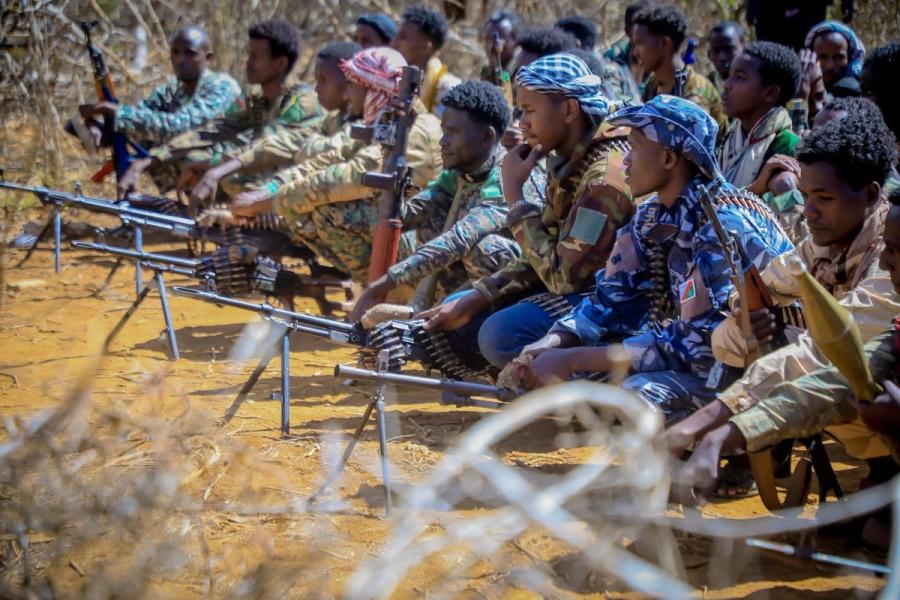
BAIDOA, Somalia — August 25, 2026 — The escalating military confrontation in Baidoa is the result of a months-long struggle over elections, constitutional authority and control of Somalia’s South West State, pitting forces supporting the federal government against fighters loyal to former regional President Abdiaziz Hassan Mohamed “Laftagareen.”
The crisis has moved beyond political statements and competing claims to legitimacy. Both sides have deployed armed forces, and the latest military movements around Baidoa have raised fears that another major battle could erupt days after deadly clashes inside the city.
At the centre of the conflict are two rival political projects. The federal government recognizes Sheikh Aden Mohamed Nur Madobe as the president of South West State, while Laftagareen’s supporters reject the political transition that followed his departure and continue to regard their movement as the legitimate representative of the regional administration.
The Dispute Began Over Elections and Constitutional Changes
The immediate crisis developed from disagreements between Laftagareen’s administration and the federal government over how South West State’s leadership should be elected.
Laftagareen’s camp argued that the regional administration had the constitutional authority to manage its elections without interference from Mogadishu. The federal government opposed the process through which Laftagareen secured another five-year term in March.
The confrontation was also connected to a broader national dispute over constitutional amendments and the distribution of authority between Somalia’s federal institutions and its member states. Several regional leaders have accused President Hassan Sheikh Mohamud’s administration of concentrating political and electoral power in Mogadishu.
The federal government has rejected those accusations and says its political reforms are intended to move Somalia towards direct elections, stronger national institutions and a more accountable political system.
South West State suspended relations with the federal government in March after accusing Mogadishu of interfering in its internal affairs. The decision transformed an electoral disagreement into a direct confrontation between the two administrations.
Federal Forces Took Control of Baidoa
The standoff reached a critical stage on March 30, when Somali National Army troops entered Baidoa and took control of strategic locations in the city.
Laftagareen announced his resignation shortly after the federal takeover and left Baidoa. Many residents had already fled, while some humanitarian organizations suspended their operations amid fears of fighting.
The federal government said its forces had been welcomed into the city and accused the former regional administration of creating political instability. Laftagareen’s supporters, however, viewed the takeover as an attempt by Mogadishu to remove an elected regional leader through military pressure.
The episode exposed one of the central weaknesses of Somalia’s federal system: political disputes between Mogadishu and regional administrations can quickly become military confrontations because both levels of government maintain armed forces and competing security structures.
Aden Madobe’s Election Created Rival Claims to Legitimacy
A new regional political process was organized following Laftagareen’s departure. On June 10, South West lawmakers elected Sheikh Aden Madobe president after he received 88 of 90 votes cast.
President Hassan Sheikh Mohamud welcomed the result, while supporters of the new administration presented the election as the beginning of a political transition intended to reunify and stabilize South West State.
However, opposition figures disputed the credibility of the vote. Former South West President Sharif Hassan Sheikh Aden boycotted the election, while Laftagareen’s supporters rejected the entire process as being controlled by the federal government. Dawan Africa reported the result and the objections raised against the election.
The competing claims have left South West State with a government operating from Baidoa under federal protection and an armed opposition movement retaining support and military positions outside the city.
For the federal government, defending Aden Madobe’s administration is essential to preserving the political transition it recognizes. For Laftagareen’s camp, regaining Baidoa would overturn that transition and restore its political influence.
August Fighting Marked a Dangerous Escalation
The unresolved political dispute erupted into large-scale violence on August 17, when Laftagareen-aligned fighters launched coordinated attacks on federal positions and entered parts of Baidoa.
The Somali Defence Ministry said government troops repelled the attack and killed about 30 opposition fighters. Residents reported seeing casualties from both sides as federal forces regained control of the city.
At least four civilians were killed, while 98 people were wounded, including women and elderly residents, according to medical officials cited by the Associated Press.
The confrontation was the most intense fighting in Baidoa since the federal takeover in March. Reuters reported that government troops eventually pushed the opposition forces out of the city.
The fighting demonstrated that Laftagareen’s movement retained the personnel and weapons necessary to mount a coordinated assault despite losing administrative control several months earlier.
It also showed that the federal government’s control of Baidoa depends heavily on the continued presence of national forces, including the Somali National Army’s 60th Division.
Renewed Mobilization Raises Fears of Another Battle
Local reports that Laftagareen-aligned forces are establishing positions around Baidoa have revived fears of another attempt to enter the city. Reports that Mogadishu has sent additional weapons to federal forces have added to those concerns, although the federal government has not publicly detailed any new arms shipment.
The buildup suggests that neither side believes the crisis has been settled. Federal troops are reinforcing the city, while Laftagareen’s forces appear determined to maintain military pressure from surrounding areas.
Without negotiations, even a limited confrontation could trigger wider fighting. Baidoa contains federal soldiers, regional security personnel, armed political groups and international peacekeepers, making any battle particularly dangerous for civilians.
Political Fighting Could Benefit Al-Shabaab
The crisis is unfolding while Somali forces are already fighting Al-Shabaab across southern and central Somalia.
Deploying national and regional forces against one another risks diverting personnel, weapons and attention away from counterterrorism operations. Political divisions could also create security gaps that Al-Shabaab may exploit to expand its movement or attack weakened positions.
The struggle for Baidoa therefore has consequences beyond control of the regional presidency. It could undermine security coordination across Bay and Bakool, two regions where Al-Shabaab continues to operate and control rural territory.
Civilians Face the Greatest Risk
Baidoa is home to hundreds of thousands of people displaced by conflict, drought and food insecurity. Many depend on humanitarian assistance and live in overcrowded settlements with limited access to healthcare, clean water and adequate food.
A July assessment cited by Reuters found that one in four children in Baidoa’s displacement camps was severely malnourished.
Renewed fighting could force more families to flee, interrupt humanitarian operations and place additional pressure on hospitals already struggling with shortages of medicine and equipment.
The August battle demonstrated how quickly political conflict can affect civilians. Bullets and explosions reached residential areas, casualties overwhelmed medical facilities and fear spread across a city already facing a severe humanitarian emergency.
Dialogue Remains the Only Sustainable Solution
Federal forces may be able to retain control of Baidoa, while Laftagareen’s fighters may continue to threaten the city from surrounding areas. Neither outcome would resolve the underlying disagreement over elections, regional autonomy and political legitimacy.
A durable settlement would require negotiations involving the federal government, Aden Madobe’s administration, Laftagareen’s representatives and other political and community leaders from South West State.
Without an inclusive political agreement, Baidoa risks remaining divided between a federally supported administration inside the city and an armed opposition operating outside it.
The crisis is ultimately not only a contest between Aden Madobe and Laftagareen. It is a test of whether Somalia can resolve disputes within its federal system through negotiation—or whether political disagreements will continue to be settled through military force.