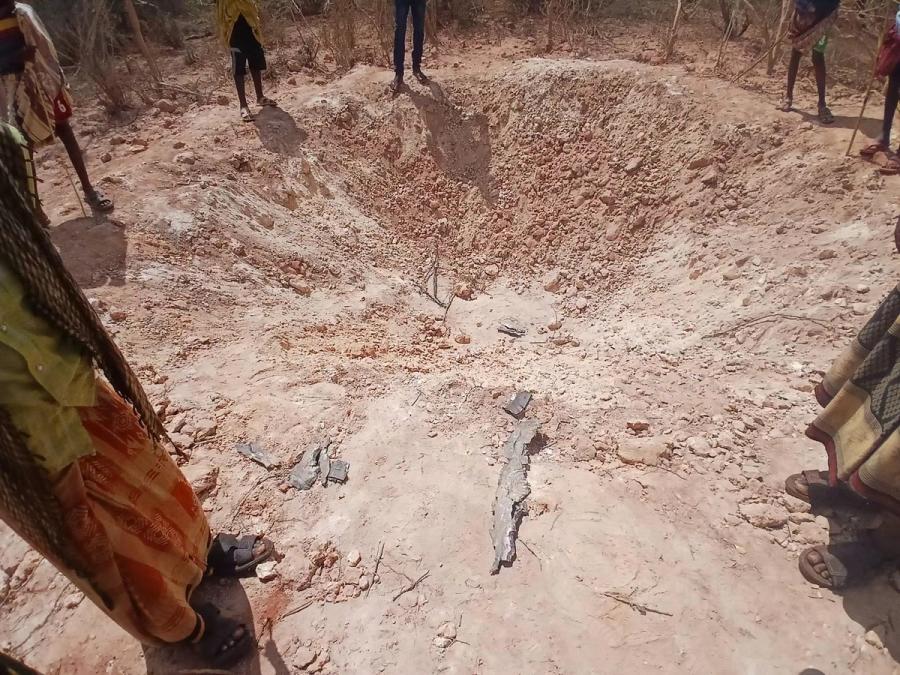
MOGADISHU, Somalia, September 15, 2026. A heavy airstrike was reported overnight in Ceel-Muud, north of Baidoa, targeting an area where forces aligned with former South West State president Abdiaziz Hassan Mohamed Laftagareen are believed to be based. The number of people killed or injured was not immediately known, and the reports could not be independently verified.
Residents and local sources said several missiles struck the Ceel-Muud area around midnight on Monday. The location is north of Baidoa, the regional capital of South West State, where political and security tensions have intensified between rival camps in recent weeks.
Information about the immediate impact of the reported strike remained limited on Tuesday. There was no confirmed casualty figure, and no verified information on whether military positions, vehicles, homes or other sites were hit.
Local accounts alleged that Turkish aircraft carried out the strike. However, Turkey had not issued a public statement on the reports at the time of publication, and there was no immediate comment from Somalia’s federal government or the South West State authorities in Baidoa.
The reports come amid a broader dispute involving forces loyal to Laftagareen and authorities aligned with Sheikh Aden Madobe, the Speaker of Somalia’s House of the People. Laftagareen’s supporters have accused their rivals and the federal government of using outside security support in the political confrontation.
Casualties and Humanitarian Impact
The extent of damage in Ceel-Muud was not immediately clear. Local residents said they heard multiple explosions, but there were no independently confirmed reports of civilian or military casualties.
The lack of confirmed information reflects the difficulty of reporting from areas affected by armed tensions and restricted movement. Ceel-Muud is located outside Baidoa, where competing armed groups maintain a presence and where access for journalists and independent monitors is limited.
Community leaders and residents have called for clarity on the reported strike, particularly over whether civilians were in or near the affected area. No medical facility or local authority had released casualty information by Tuesday morning.
If civilian areas were affected, the incident could deepen fears among communities already displaced by insecurity and political conflict in parts of South West State.
Government Response
There was no immediate official response from the Turkish government, the Somali federal authorities or the administration in Baidoa regarding the reported airstrike.
Turkey is a major security partner of Somalia and has supported the federal government through military training, equipment and counterinsurgency cooperation. Its role has increasingly become a point of contention in South West State’s political crisis, with Laftagareen-aligned figures alleging that Turkish support has been used against their forces.
Authorities aligned with Sheikh Aden Madobe have previously accused rival forces of contributing to insecurity around Baidoa. Laftagareen’s camp, meanwhile, has said its forces are resisting what it describes as political and military pressure from Mogadishu and its allies.
The reported Ceel-Muud strike follows earlier allegations that Turkish aircraft targeted areas in South West State where civilians were present. Those allegations led to demonstrations against Turkey in some villages and suburbs around Baidoa.
The claims have not been independently confirmed, and Turkish officials have not publicly accepted responsibility for the alleged strikes.
Tensions rose after the removal of Laftagareen from Baidoa and the emergence of a rival administration backed by figures allied with Aden Madobe. Laftagareen and his supporters have maintained influence in areas outside the regional capital, including locations where their forces are reported to be stationed.
The dispute has added to security concerns in a region already facing the threat of al-Shabaab, displacement, weak local services and recurring humanitarian pressures.
Any confirmed civilian harm could increase pressure on all parties to explain the circumstances of the strike and allow independent investigation. It could also prompt further protests in areas where anger over alleged foreign military involvement has already been reported.
The reported strike highlights how the South West State political dispute is increasingly being shaped by military activity and allegations of foreign involvement. Even without confirmed details, such reports can fuel distrust between rival camps and make political dialogue more difficult.
For civilians, uncertainty over airstrikes adds another layer of risk in communities already affected by conflict and displacement.