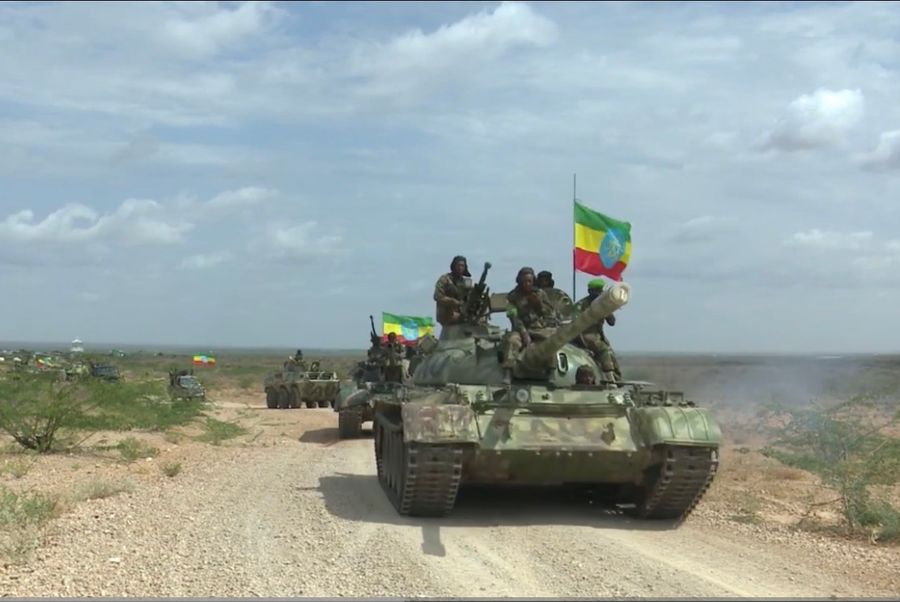
MOGADISHU, Somalia — August 12, 2026 — Ethiopia has reportedly asked the African Union to accelerate the withdrawal of some of its troops serving in Somalia, an unexpected request that could force AUSSOM to revise the sequence and timing of its planned troop reductions, according to sources familiar with the discussions.
The reported request has not been officially confirmed by Ethiopia, the African Union, AUSSOM or Somalia’s federal government. The exact number of Ethiopian soldiers involved and the proposed withdrawal date also remain unclear.
Sources familiar with the matter said AU officials were reviewing how an accelerated Ethiopian departure would affect the mission’s wider transition plan, including the order in which troop-contributing countries reduce or remove their forces.
Before the reported Ethiopian request, planners had been examining reductions involving Uganda’s contingent and the completion of the remaining Burundian troop withdrawal, according to the same sources.
Uganda maintains the largest contingent in AUSSOM, while Ethiopian forces operate mainly in parts of Bay, Bakool, Gedo, Hiiraan and other areas of southern and central Somalia.
Any change affecting Ethiopia’s deployment would require the AU, Somalia and troop-contributing countries to reassess base security, supply routes and the capacity of Somali forces to assume responsibility for areas currently protected by Ethiopian troops.
Buurhakaba Base Transferred
The reported request follows the transfer of a major military base in Buurhakaba district in Somalia’s southwestern Bay region.
On August 8, Ethiopian troops serving under AUSSOM formally handed technical control of the Buurhakaba forward operating base to the Somali National Army’s 60th Division, according to statements and local media reports.
Ethiopian forces had maintained a presence at the base since 2014. that Somali troops had assumed responsibility for security in the district after nearly 12 years of Ethiopian deployment.
Some reports said the Ethiopian contingent continued withdrawal preparations after the formal handover. No fighting or casualties were reported during the transfer.
Ethiopian forces are also expected to leave additional positions in southern Somalia, although neither AUSSOM nor Ethiopian authorities have published a timetable or identified all the bases that may be transferred.
Buurhakaba is strategically located on the main road linking Mogadishu and Baidoa. Al-Shabaab operates in rural areas surrounding several towns in Bay region, making the security of roads and military supply lines a continuing concern.
AUSSOM Withdrawal Plan Under Review
AUSSOM began operations on January 1, 2025, replacing the African Union Transition Mission in Somalia. Its mandate includes supporting Somali forces against Al-Shabaab, protecting major population centres and transferring security responsibilities to Somali institutions.
The mission’s original operational plan envisaged a gradual drawdown leading to a final departure in December 2029. Withdrawals were expected to be determined by Somalia’s security conditions and joint technical assessments
That timetable is now under pressure.
At an extraordinary summit in Kampala on July 31, leaders and representatives from Somalia and AUSSOM troop-contributing countries called for an “orderly, coordinated and phased exit” from Somalia.
The Kampala communiqué requested continued international logistical support for another 18 to 24 months while Somali security institutions are strengthened and responsibility for military bases is transferred.
The summit also ordered military commanders to prepare a plan for intensified operations against Al-Shabaab and urged Somalia to expand local and mobile forces capable of holding recovered territory.
Ethiopia’s reported request would add another layer of difficulty to that process by potentially bringing forward the departure of troops stationed in areas where Somali forces remain dependent on AU logistical and military support.
Funding Crisis Threatens Mission
AUSSOM is facing a severe financial and operational crisis after the United States said it would oppose continued United Nations logistical support for the mission beyond December 31, 2026.
The United Nations Support Office in Somalia provides food, fuel, medical assistance, transport and other essential services to African Union forces.
A July 1 United States diplomatic note informed the AU that Washington would not support extending those operations into 2027. The United States said it would not oppose renewal of AUSSOM’s mandate if the mission continued without UN logistical or operational assistance.
The decision places the future of the nearly 12,000-member mission in doubt. Diplomatic sources told that AUSSOM would struggle to remain operational unless another partner replaced the UN support system.
The Kampala summit directed foreign ministers from troop-contributing countries to establish a joint task force and organize a donor conference aimed at securing predictable financing during the transition.
The African Union is expected to seek clarification from Ethiopia about the size, location and timing of any accelerated troop withdrawal.
AU and Somali military planners would then need to decide whether Somali forces can immediately assume control of Ethiopian positions or whether other AUSSOM contingents must temporarily cover them.
No official announcement has been made about which Ethiopian base could be transferred next. AUSSOM has also not explained whether the reported request would change the wider withdrawal timetable agreed at the Kampala summit.
A faster Ethiopian withdrawal could create security gaps if Somali forces lack the personnel, equipment or logistical support needed to protect transferred bases. Such gaps could allow Al-Shabaab to increase attacks on towns, military installations and important supply routes.