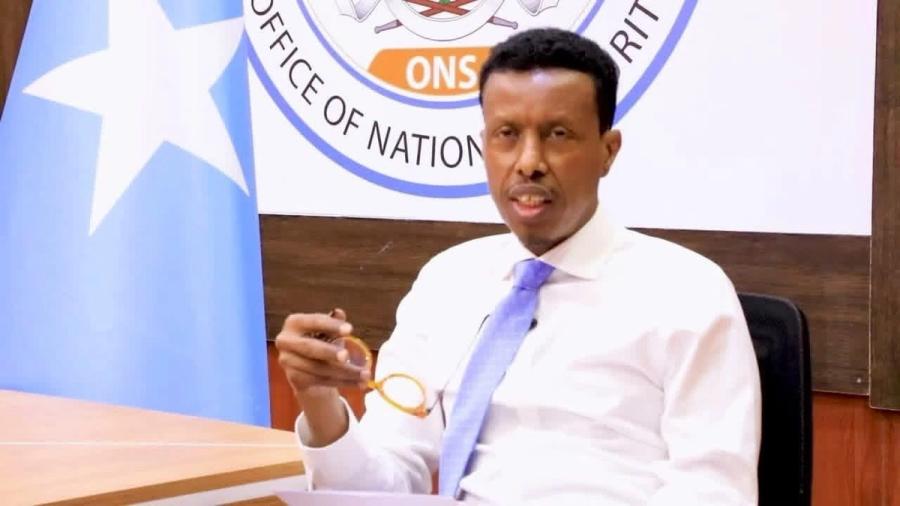
MOGADISHU, Somalia — July 27, 2026 — A former National Security Adviser to Somali President Hassan Sheikh Mohamud is facing renewed public debate over earlier statements about the government’s fight against Al-Shabaab, after the militant group remains active in areas close to Mogadishu despite previous assurances that it could be defeated by 2024.
The former adviser made the comments during an interview with VOA Somali while serving in the government, saying that Al-Shabaab could be eliminated and that there would be no remaining Al-Shabaab fighters in Somalia by July 2024. He also reportedly said “mark my words” while making the prediction and argued that the United Nations Transitional Assistance Mission in Somalia (UNTMIS) would not be needed after December 2024.
However, in 2026, Al-Shabaab continues to operate in several parts of Somalia, including areas closer to the capital. Security sources and local residents have reported the group’s continued presence and activities in locations such as Hawaadley and Basra towns in the Middle Shabelle and Lower Shabelle areas, respectively, increasing security concerns around Mogadishu.
The former adviser, who is now an opposition figure, has taken a different position regarding Somalia’s security situation. He has warned that the withdrawal of international peacekeeping forces could create security risks and argued that Al-Shabaab remains a serious threat that cannot easily be defeated.
The shift in his public statements has sparked debate among Somali political observers, with critics pointing to the contrast between his position while serving in government and his current views as an opposition politician.
While in office, he presented a more optimistic assessment of the government’s ability to defeat Al-Shabaab and reduce the need for international security support. After leaving government, he has emphasized the continued importance of foreign military assistance, including the role of peacekeeping forces operating in Somalia.
Al-Shabaab has been fighting Somalia’s federal government for more than a decade and continues to carry out attacks, maintain territorial influence, and challenge government authority in parts of the country.
The Somali government, supported by international partners and African Union forces, has conducted military operations aimed at weakening the group and expanding state control. Despite several military campaigns, Al-Shabaab has remained capable of carrying out attacks in rural areas and major cities, including Mogadishu.
The role of international forces in Somalia has been a major political and security issue. The African Union Transition Mission in Somalia (ATMIS), which replaced the African Union Mission in Somalia (AMISOM), has supported Somali forces in operations against Al-Shabaab while gradually transferring security responsibilities to Somali institutions.
Debates over foreign troop withdrawals have continued as Somalia works to strengthen its own security forces and reduce dependence on international military support.
Security Situation Around Mogadishu
The continued presence of Al-Shabaab-linked activities near Mogadishu has remained a major concern for Somali authorities and residents. Areas surrounding the capital have historically been strategically important because of their proximity to government institutions, major roads, and economic routes.
According to local residents and security sources, Al-Shabaab has maintained influence in some rural communities near Mogadishu despite government operations aimed at removing the group from those areas.
The situation has raised questions about the pace of Somalia’s security transition and whether Somali forces have sufficient capacity to independently manage threats without international assistance.
Somali government officials have repeatedly said that security forces are capable of confronting Al-Shabaab and have highlighted military operations that have resulted in the recovery of areas previously controlled by the group.
Officials have also acknowledged that Al-Shabaab remains a security challenge and have called for continued support from international partners during the transition period.
The government has not publicly responded specifically to the former adviser’s changing statements but has maintained that defeating Al-Shabaab requires a combination of military operations, intelligence efforts, and community cooperation.
The debate over the former adviser’s statements reflects wider disagreements in Somalia over the country’s security progress and the future role of international forces. The continued activity of Al-Shabaab near Mogadishu shows that the group remains a significant challenge despite years of military pressure.
For civilians living near conflict areas, continued insecurity affects daily life, movement, and economic activities. Communities near areas such as Hawaadley and Basra remain closely affected by security developments and government operations.
The disagreement also highlights the political dimension of Somalia’s security debate, where assessments of progress against Al-Shabaab often differ depending on whether individuals are serving in government or acting from the opposition.