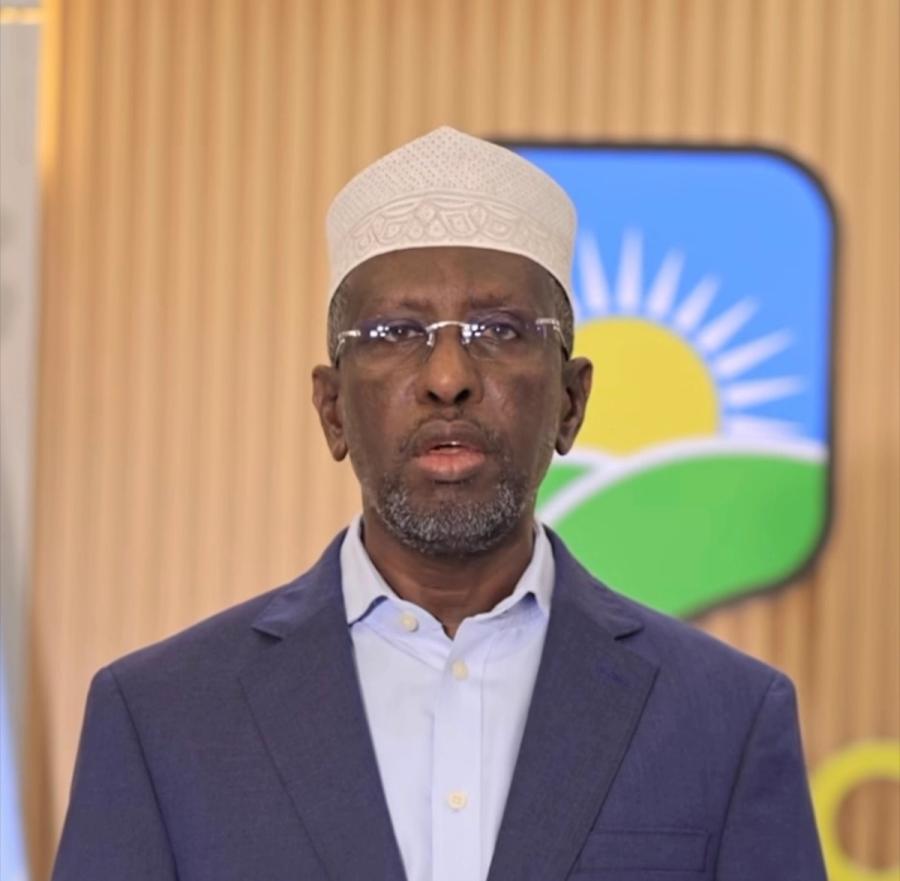
MOGADISHU, Oct. 11, 2026 — Former Somali President Sheikh Sharif Sheikh Ahmed has warned of serious consequences over alleged plans by Villa Somalia to attack his political camp, while urging President Hassan Sheikh Mohamud to negotiate an agreement on elections.
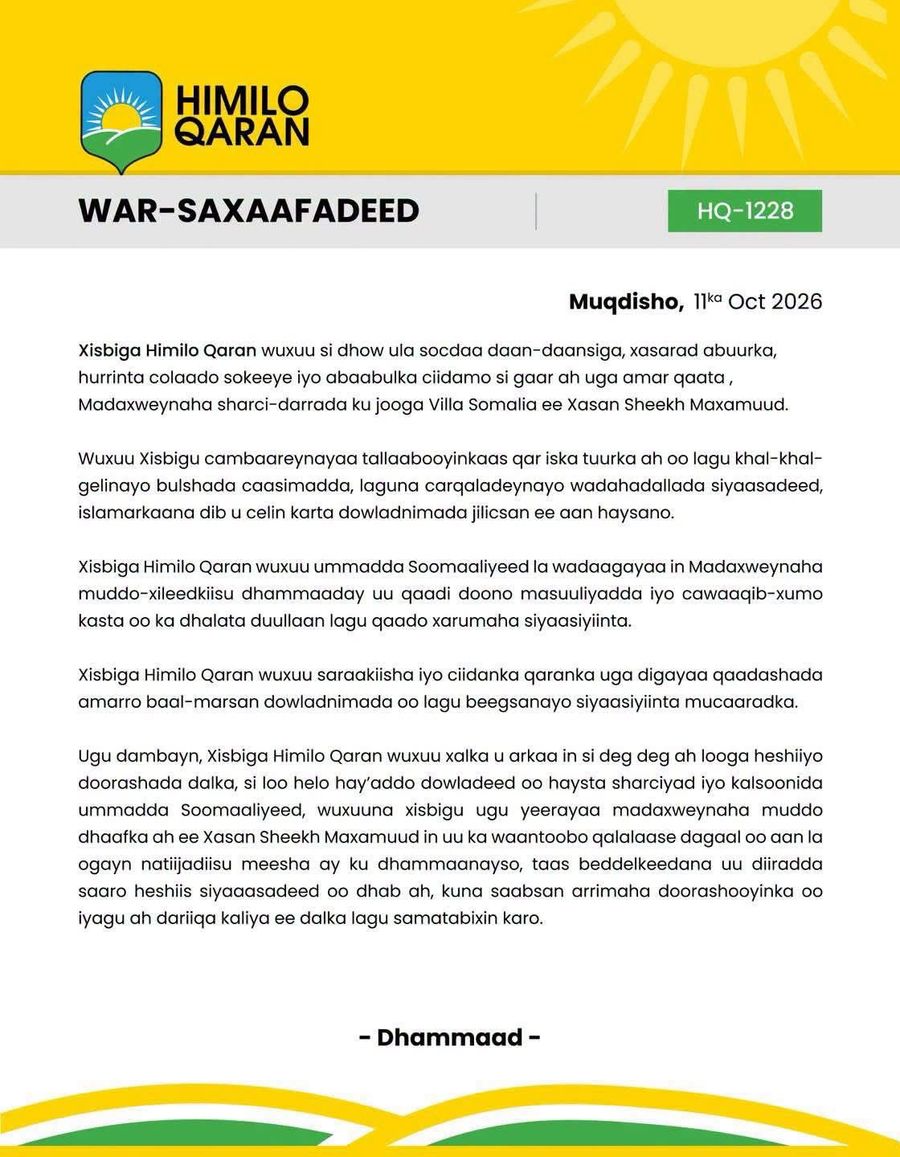
Himilo Qaran, the opposition party led by Sharif, issued a statement on Sunday accusing Mohamud of mobilising forces personally loyal to him and pursuing actions that could provoke armed confrontation in Mogadishu.
The party said the president would bear responsibility for the consequences of any assault on opposition politicians’ offices. It warned that military action against political rivals could destabilise the capital, undermine negotiations and further weaken Somalia’s fragile institutions.
Sharif has called for an electoral framework agreed through negotiations. His camp also accused Mohamud of seeking to accelerate a process similar to elections held in Baidoa, Dhusamareb and Jowhar, arguing that national elections require broader political agreement.
That comparison reflects the opposition’s criticism of the government’s approach. The October statement itself focused on alleged military mobilisation, the president’s disputed legitimacy and the need for an urgent electoral settlement.
Himilo Qaran said it was closely following what it described as provocation, efforts to create unrest and preparations for conflict. It condemned those actions as reckless and warned that residents of Mogadishu could face the consequences of another political confrontation.
The party urged military commanders and members of the national security forces to reject orders targeting opposition politicians that it said would violate the principles of state governance.
Its warning placed particular emphasis on the responsibility of security personnel when handling political disputes. The party argued that national forces should not be used to pursue partisan objectives or intimidate opponents.
Himilo Qaran also challenged Mohamud’s authority, describing his presidential term as having expired and accusing him of remaining in office without legal legitimacy.
The government has defended its electoral and constitutional reforms as a means of strengthening democratic institutions and introducing direct voting. Opposition leaders have questioned their legitimacy, timing and implementation without an inclusive political agreement.
The latest warning follows earlier violence involving government forces and opposition supporters in the capital.
Reuters reported on June 4 that government troops and opposition-allied militias exchanged fire in Mogadishu ahead of planned demonstrations. Residents reported property damage and civilian displacement. Sharif, who served as president from 2009 to 2012, said government forces had attacked his home.
On June 5, the information ministry said security forces had restored order and removed opposition militias. Residents disputed the disarmament claim, attributing the halt in fighting to mediation by clan elders. The ministry accused Sharif and former Prime Minister Hassan Ali Khaire of placing civilians at risk by deploying militias in residential areas.
Those competing accounts illustrate the mistrust surrounding the use of armed forces in Somalia’s political disputes. The earlier fighting provides background to Sunday’s warning but does not establish that the newly alleged attack preparations are taking place.
The electoral disagreement has also repeatedly complicated negotiations between the federal leadership and opposition politicians.
BAIDOA Online reported on May 15 that talks at Mogadishu’s Halane compound collapsed after disagreements over the president’s mandate and the electoral model. Sharif and Puntland President Said Abdullahi Deni represented opposition participants, while Mohamud and Deputy Prime Minister Salah Ahmed Jama attended for the government.
Following those talks, the federal government reaffirmed its commitment to direct elections and said consultations remained open. Opposition representatives sought recognition that the previous mandate had expired before proceeding with negotiations on an agreed framework.
Regional elections have become another point of contention. In September, Garowe Online reported, citing sources, that Mohamud wanted federal election discussions to follow regional votes in Galmudug and Hirshabelle. Opponents expressed concern that this sequencing could delay a national agreement.
In South West State, the election of Aden Madobe faced objections from rival candidates over fairness and transparency. Geeska reported that former regional president Sharif Hassan Sheikh Aden withdrew, alleging an uneven contest and questioning Madobe’s continued position as federal parliament speaker. These objections were distinct from Sharif Sheikh Ahmed’s latest warning.
Political tensions have also produced armed conflict outside Mogadishu. Reuters reported in August that federal troops fought forces loyal to former South West President Abdiaziz Hassan Mohamed Laftagareen in Baidoa, a city hosting large numbers of displaced people. The defence ministry said its troops were responding to an attack.
In Sunday’s statement, Himilo Qaran presented negotiations as the way to prevent further confrontation. It called for an urgent electoral agreement that would produce institutions possessing legal legitimacy and public confidence.
The party urged Mohamud to abandon actions that could lead to fighting with unpredictable consequences and concentrate on substantive political dialogue over elections.