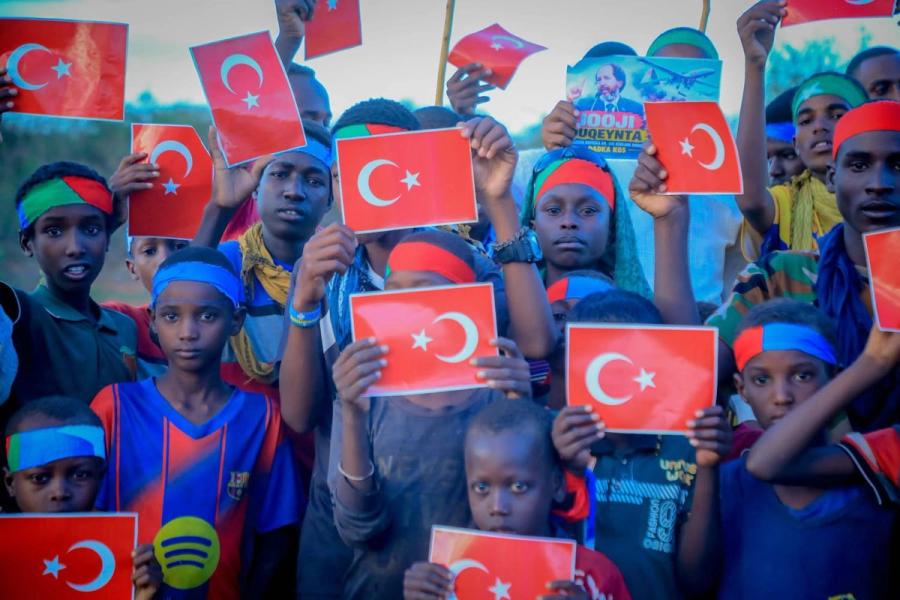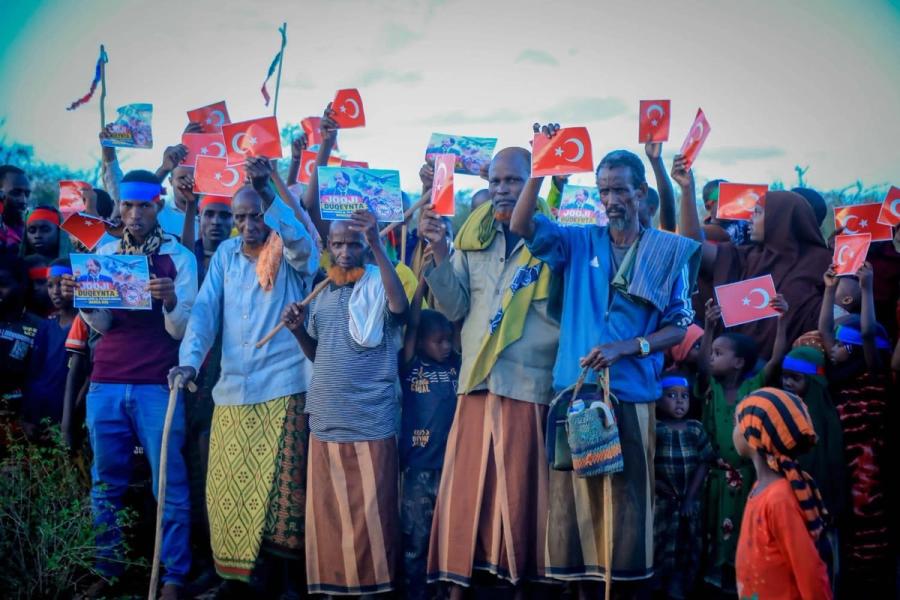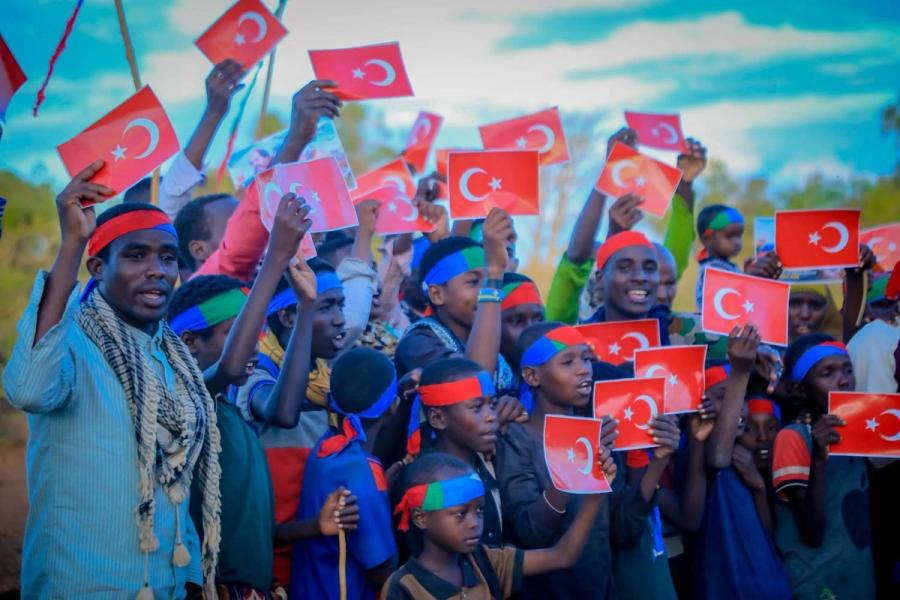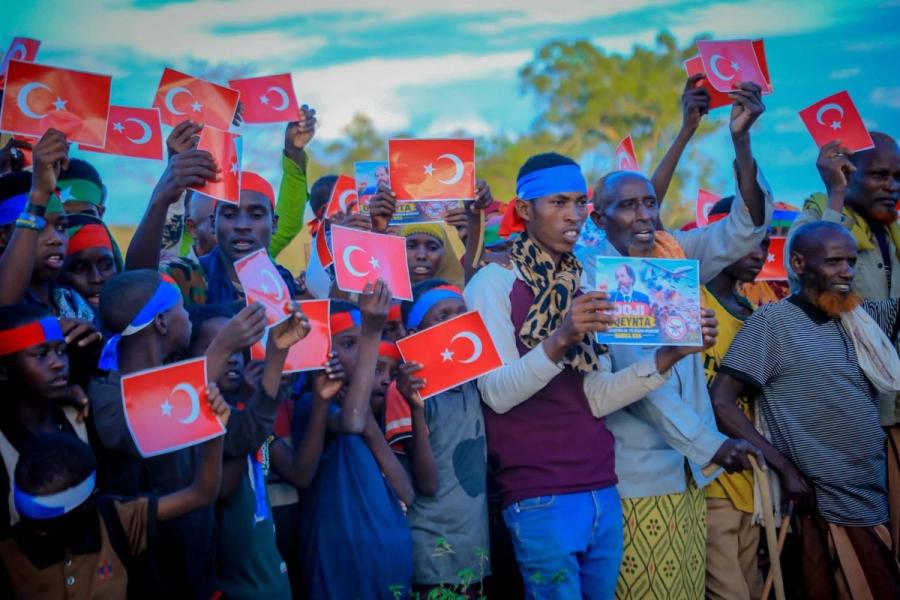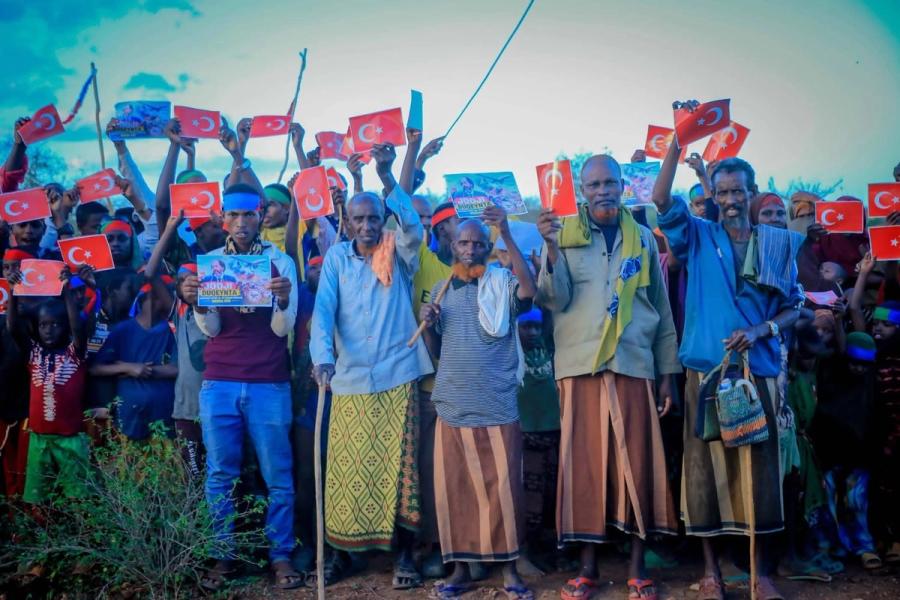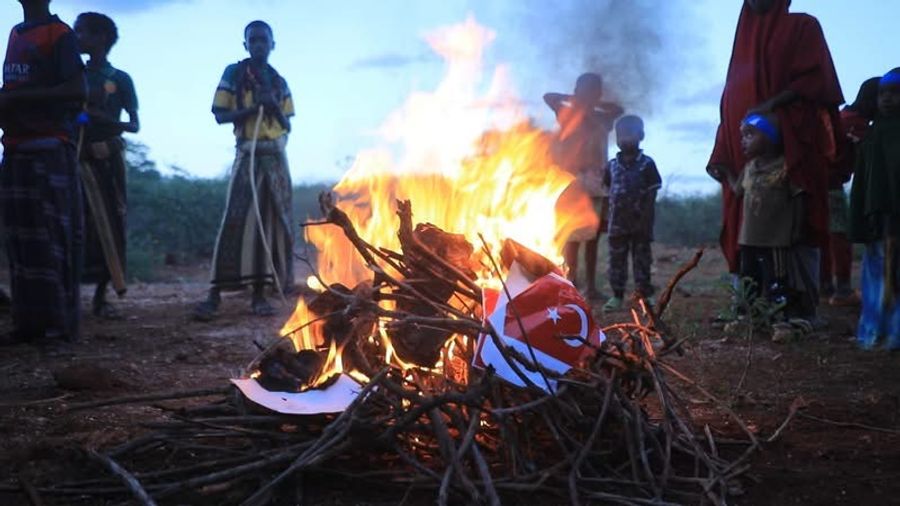
BAIDOA, Somalia — September 13, 2026 — Residents of Harta Qaanle demonstrated on Sunday against what they described as repeated airstrikes on communities in Somalia’s South West State, burning a Turkish flag as anger mounted over alleged civilian exposure to aerial attacks amid the region’s deepening political conflict.
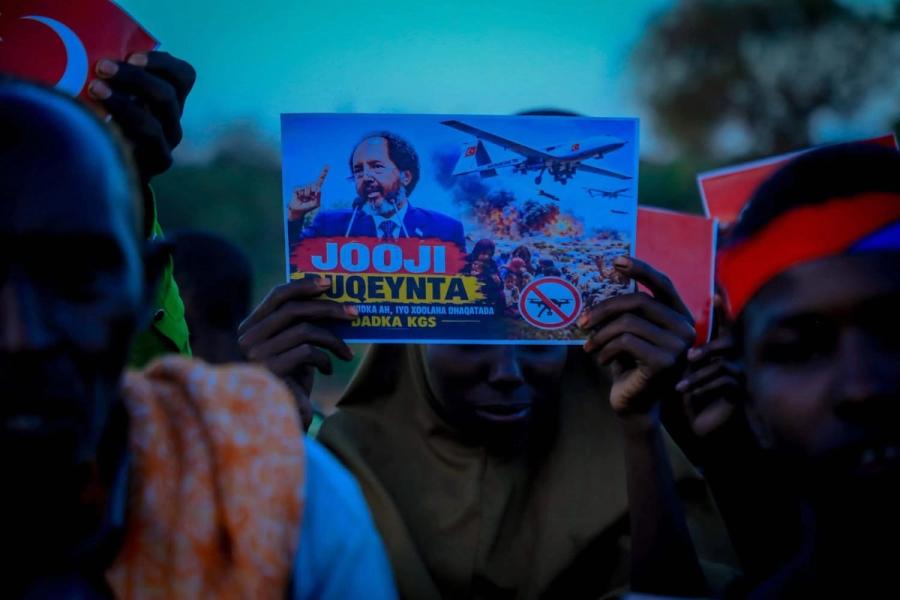
The protesters assembled in an open area of Harta Qaanle carrying placards condemning the bombardments and demanding that military operations affecting civilian communities be halted.
Photographs from the demonstration showed residents, including children, standing near a burning Turkish flag. Protesters used the act to express their belief that Turkey was involved in the reported strikes.
Harta Qaanle was recently hit by missiles, according to local residents, eyewitnesses and community leaders. They did not provide independently verifiable information identifying the aircraft involved, the intended target or the military authority that ordered the attack.
No confirmed casualty figures or comprehensive damage assessment from the reported strike were immediately available. It was also unclear whether armed fighters or military positions were present near the affected area at the time.
Residents called for an independent investigation to establish who carried out the attack and whether civilians or civilian property were harmed. They also demanded greater protection for communities living near areas where military operations are being conducted.
Somalia’s federal government, the authorities controlling Baidoa and the Turkish government had not issued immediate public responses addressing the Harta Qaanle protest or the specific allegations raised by demonstrators.
Competing political claims
The protests come amid a continuing struggle over political authority in South West State between the federal government-backed administration in Baidoa and supporters of former regional President Abdiaziz Hassan Mohamed “Laftagareen.”
Laftagareen maintains that he remains the state’s legitimate president and has accused federal forces and the administration aligned with Aden Madobe of unlawfully taking control of Baidoa. His camp also alleges that Turkey is providing military support to the federal government, which backs Aden Madobe.
The Aden Madobe-aligned administration claims authority over Baidoa and has accused forces supporting Laftagareen of threatening the security and stability of the regional capital. The competing allegations made by the two Somali sides have not been independently verified.
Federal forces took control of Baidoa on March 30 after Laftagareen resigned, according to Baidoa online . Laftagareen and his supporters have since disputed the legitimacy of the new political arrangement and continued to claim authority over South West State.
The confrontation has repeatedly turned violent. Fighting in and around Baidoa in August reportedly killed at least four civilians and wounded 98 others. Fresh clashes on September 3 left one civilian dead and sent 71 wounded people, including 15 women, to Bay Regional Hospital, according to medical officials cited by the AP.
Somalia’s Defence Ministry said government forces were responding to an attack by Laftagareen-aligned fighters and alleged that Al-Shabaab was involved. That allegation was not independently confirmed, while Laftagareen’s camp has rejected claims linking its forces to the armed group.
Turkey’s expanding military role
Turkey is one of Somalia’s closest security partners and operates the TURKSOM military training facility in Mogadishu. Ankara has trained Somali troops and supplied military equipment while supporting federal operations against Al-Shabaab.
Turkey’s direct combat role became more visible in 2026. Somalia’s Defence Ministry said Turkish F-16 aircraft participated in strikes against alleged Al-Shabaab targets in Lower Shabelle in June. The ministry said the operation killed about 35 militants
Opposition groups and regional figures have recently accused Turkey of allowing its military capabilities to be used in Somalia’s internal political disputes. Ankara and the federal government have not publicly confirmed those accusations.
The demonstration shows how Somalia’s political conflict is increasingly intersecting with public concern over foreign military involvement. Turkey’s acknowledged participation in counterterrorism operations means allegations surrounding unidentified airstrikes can quickly fuel anger, even when responsibility has not been established.
The burning of the Turkish flag also signals possible damage to public perceptions of one of Somalia’s most influential international partners. If allegations of political involvement remain unanswered, opposition to foreign military assistance could grow beyond Harta Qaanle and complicate security cooperation between Mogadishu and Ankara.