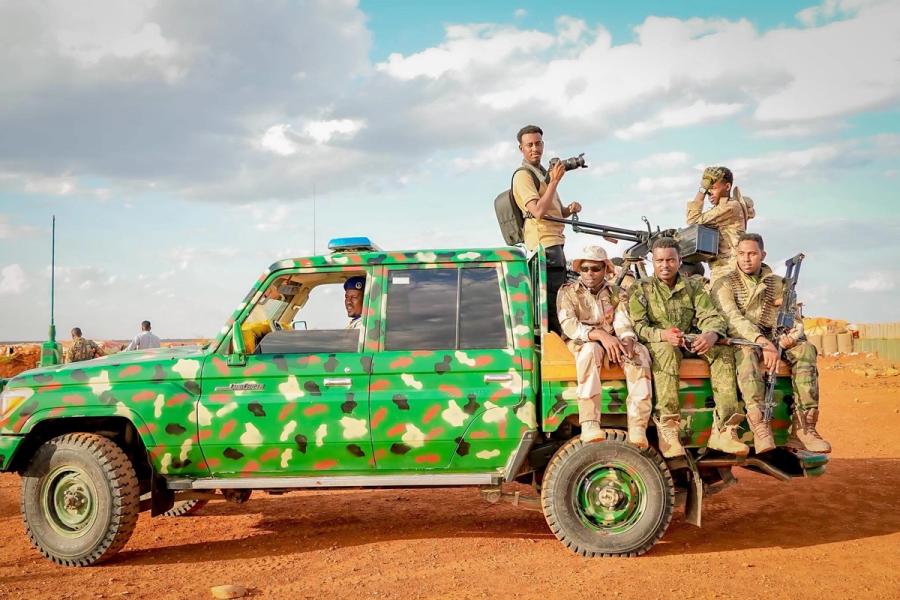
BAIDOA, Somalia — June 30, 2026 — Heavy fighting continued in Baidoa for a second consecutive night between forces aligned with the Southwest State administration backed by Somalia’s federal government and fighters loyal to former Southwest President Abdiaziz Hassan Mohamed Laftagareen, according to local residents and security sources.
Residents in several neighborhoods of Baidoa reported hearing sustained gunfire, explosions, and exchanges of heavy weapons fire as clashes intensified across parts of the town. The latest violence has heightened tensions in the regional capital and raised concerns about the potential for a prolonged conflict.
According to local residents, fighting resumed late Monday and continued into Tuesday, with rival forces battling in and around strategic areas of Baidoa.
Witnesses said heavy weapons were used during the clashes, although the exact locations of all confrontations could not be independently verified. Several residents reported remaining indoors as sporadic gunfire echoed across the city.
Security sources said forces loyal to the current Southwest administration and fighters supporting Lafta Gareen were involved in the confrontation. However, neither side immediately released an official statement detailing casualties or military gains.
Local community leaders expressed concern that continued fighting could disrupt daily life and force civilians to flee affected neighborhoods if the violence persists.
Casualties and Humanitarian Impact
No official casualty figures were immediately available.
Residents and local sources reported that the fighting had created fear among civilians,
Security analysts cautioned that prolonged urban fighting could increase risks to civilians and place additional pressure on already stretched humanitarian services in the region.
The confrontation follows a disputed political transition in Southwest State that has divided political leaders, security forces, and local communities.
According to supporters of Lafta Gareen, tensions escalated after Somalia’s federal government removed the former Southwest president from office and supported the installation of Sheikh Adan Mohamed Nur Madobe as the new leader of the regional administration.
Supporters of the current administration reject that characterization and maintain that the political process was conducted through legitimate mechanisms.
Following the leadership dispute, forces loyal to Lafta Gareen reportedly established positions in areas on the outskirts of Baidoa. Local residents and security sources said those forces subsequently received support from allies both within and outside the city.
Leaders aligned with Lafta Gareen have repeatedly stated their intention to regain control of Baidoa, while the current administration has vowed to maintain authority over the regional capital.
The political disagreement has increasingly taken on a military dimension in recent months, creating fears that the crisis could undermine stability in one of Somalia’s most important federal member states.
Government Response
Federal authorities in Mogadishu had not issued a detailed public statement on the latest fighting by Tuesday evening.
Regional officials also had not released comprehensive information regarding the scale of the clashes, casualty figures, or efforts to de-escalate the situation.
Community elders and civil society representatives have previously called on both sides to pursue dialogue and avoid further violence in densely populated areas.
Security observers say the coming days could prove critical in determining whether the fighting remains localized or develops into a broader confrontation across Southwest State.
Local residents reported that both sides continued to maintain positions around key areas of Baidoa, suggesting that tensions remain high despite calls for restraint.
Any renewed political negotiations could help reduce the risk of further clashes, but there was no immediate indication that talks between the rival camps were underway.
Baidoa serves as the administrative center of Southwest State and remains one of Somalia’s most strategically important cities. Instability in the city could affect governance, security operations, and public services across the wider region.
The conflict also highlights ongoing tensions between Somalia’s federal government and regional political actors. Disputes over leadership and authority have historically contributed to political crises and security challenges in several federal member states.
For civilians, continued fighting raises concerns about safety, displacement, and disruptions to economic activity. Businesses, transport networks, and public institutions could face increasing pressure if hostilities continue.