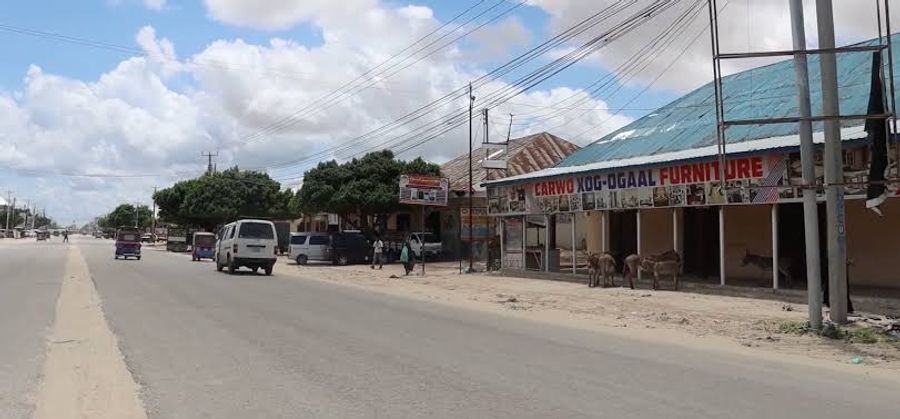
MOGADISHU, Somalia — August 16, 2026 — Former Somali Prime Minister Hassan Ali Khaire has condemned what he described as 16 illegal checkpoints on the Mogadishu-Afgooye road, warning that repeated payments demanded from farmers and traders are damaging agricultural businesses and disrupting the movement of food into the capital.
Khaire raised the allegations on Saturday night, saying farmers carrying fruit, vegetables and other produce from Lower Shabelle were being charged at numerous roadblocks before reaching markets in Mogadishu.
“It is unfortunate that there are 16 checkpoints between Afgooye and Mogadishu where Somali farmers are being extorted,” Khaire said in remarks circulated by Somali media. His statement did not identify the groups or agencies operating the individual checkpoints.
Residents and transporters have separately claimed that the number of unauthorized roadblocks along the route may be as high as 19. They allege that some of the collected payments are not registered with the federal Ministry of Finance or relevant local administrations.
The precise number of checkpoints, their operators and the amount of money collected could not be independently verified.
Farmers report mounting losses
According to residents familiar with the route, vehicles transporting agricultural products are required to make payments at several points between Afgooye and Mogadishu.
Farmers and traders say the accumulated charges reduce their earnings and increase the cost of delivering produce to the capital. Perishable goods are particularly vulnerable because delays at multiple checkpoints can cause fruit and vegetables to deteriorate before reaching consumers.
Khaire said the repeated demands had caused some farmers to lose their products. He called for the removal of unauthorized checkpoints and measures to protect agricultural communities from extortion.
The Mogadishu-Afgooye corridor is one of southern Somalia’s most important commercial roads. It connects the capital with farming communities in Lower Shabelle, a fertile region that supplies bananas, vegetables, maize and other food products to Mogadishu.
Disruptions along the road can therefore affect farmers, transport operators, market traders and consumers.
Residents allege political protection
Some residents alleged that politically connected individuals and government officials benefit from the checkpoints. They claimed that complaints submitted to government institutions had produced little action because some checkpoint operators were protected by influential figures.
Those allegations could not be independently confirmed, and the residents did not publicly identify the officials they accused of involvement.
Residents also claimed that the number of roadblocks had increased since the current federal administration took office. No publicly available government data was immediately found to confirm whether the number has risen during that period.
The federal government had not issued an immediate public response to Khaire’s comments or the allegations made by residents. It also remained unclear whether all the disputed roadblocks were operated by official security units, local authorities, clan militias or other armed groups.
Checkpoint economy
Illegal and informally administered checkpoints have affected commerce and civilian travel in Somalia for decades. Roadblocks are operated by various actors, including government forces, local authorities, allied militias and Al-Shabaab, although control and payment arrangements differ considerably across locations.
A 2023 study by the Rift Valley Institute, the International Peace Information Service and the Danish Institute for International Studies documented 204 checkpoints across Somalia between October 2022 and March 2023. The study found that 77% were controlled by government actors or allied militias, while 23% were operated by Al-Shabaab.
The research also found that checkpoint charges disproportionately affected agricultural products and other low-value bulk cargo. According to the study, fees along agricultural feeder roads were three times higher per tonne than charges imposed on imported manufactured goods and export commodities.
Researchers warned that repeated road payments can make domestically produced food more expensive than imported goods arriving through ports. They also found that checkpoints frequently become sources of confrontation and violence.
The historical findings do not independently confirm the current number of checkpoints between Mogadishu and Afgooye, but they provide broader context for complaints from farmers and transporters using the corridor.
Khaire’s intervention is expected to increase pressure on the federal government and Lower Shabelle authorities to investigate the roadblocks.
Any official inquiry would need to determine which agencies or armed groups control the disputed checkpoints, whether the payments have legal authorization and where the collected money is deposited.
Residents have called on the government to dismantle illegal roadblocks and publish clear information about any officially approved transport taxes. They also want authorities to establish a complaint system that protects farmers and drivers from retaliation.
No investigation or checkpoint-removal operation had been publicly announced by Sunday.
Repeated checkpoint charges threaten the commercial link between Lower Shabelle’s farms and Mogadishu’s markets. When transportation expenses rise, farmers can lose income while traders pass additional costs to consumers, contributing to higher food prices.
The allegations also raise questions about government accountability. If payments are being collected outside official financial systems, the practice could weaken public revenue controls and deepen distrust of state institutions.