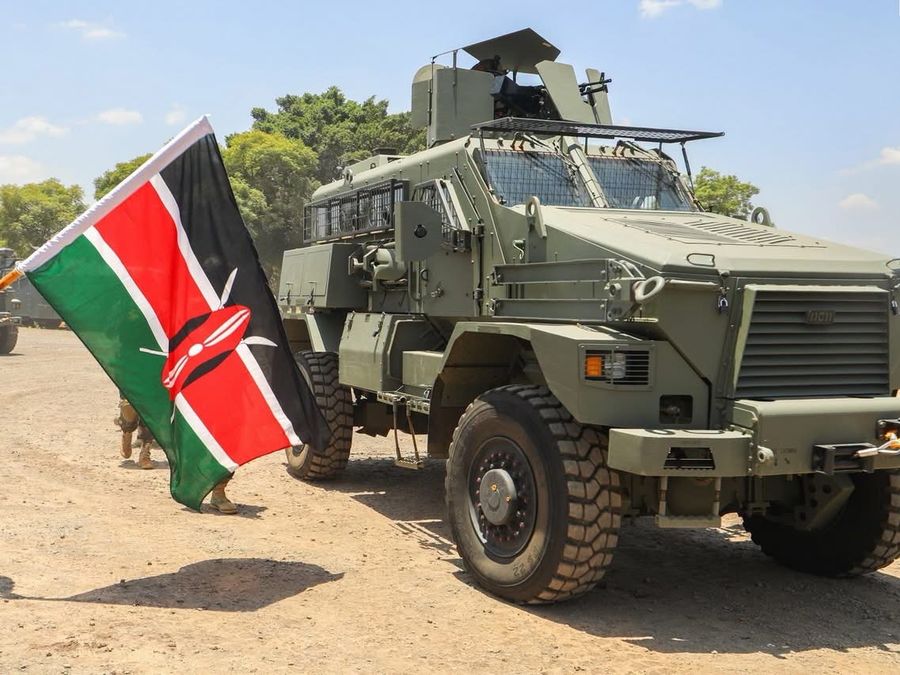
MOGADISHU, Somalia — August 4, 2026 — Kenya is preparing to deploy additional police officers and specialised security units along its border with Somalia following a series of deadly attacks blamed on the Al-Qaeda-linked militant group Al-Shabaab, with Mandera County emerging as the centre of the latest violence.
The planned reinforcement is expected to increase surveillance, expand ground patrols and strengthen operations aimed at preventing militants from crossing into Kenya from neighbouring Somalia.
Security agencies are likely to focus on vulnerable routes, remote settlements and government installations across Mandera, Garissa and Wajir counties, where militants have repeatedly targeted security personnel, public transport vehicles and civilians.
Available reports have not specified how many additional officers will be deployed or when the operation will begin. Kenyan authorities have also not publicly detailed which specialised units will participate in the reinforcement.
The decision follows the killing of five Kenyan security personnel during a suspected Al-Shabaab attack near Wantey Dam in Mandera County on July 28.
According to a police report cited by Reuters, a Special Operations Group patrol encountered suspected Al-Shabaab fighters in the area. Four police officers and one police reservist were killed during the fighting. A reinforcement vehicle was later destroyed by an improvised explosive device, although no additional casualties were reported.
The attack was one of the deadliest incidents involving Kenyan security forces near the Somalia border in recent months.
Series of Attacks in Mandera
On July 24, suspected Al-Shabaab militants attacked the Fino security camp in Lafey sub-county. Kenyan police said officers engaged the attackers and forced them to retreat before they could overrun the facility.
Fino had previously come under attack on June 12, when armed assailants fired rocket-propelled grenades and machine guns at a Special Operations Group camp.
Security officials said Kenyan officers returned fire during a gun battle lasting about 25 minutes. Three officers were injured, while the attackers withdrew from the area.
In another incident on June 8, two men were shot dead and a woman was seriously wounded when about 10 heavily armed assailants raided Elgolicha village in Mandera County.
Police said they believed the attackers had crossed into Kenya from Somalia before carrying out the raid. No group immediately claimed responsibility.
On May 9, at least six people were killed when gunmen ambushed a passenger vehicle near Beer-Awayon village along the Mandera-Arabia road.
Xinhua reported that 10 people were injured when suspected Al-Shabaab fighters opened fire on the 14-seat public transport vehicle. Kenyan media reports cited lower injury figures, but all accounts confirmed that six passengers were killed.
The violence began early in the year. On January 14, an improvised explosive device detonated near the Kulun border point in Mandera, killing two members of Kenya’s National Police Reserve and injuring two others.
Police reports said the device had been planted about 100 metres inside Kenyan territory along the Mandera-Bulla Hawa border area. Responsibility for the explosion was not independently established.
Kenyan security agencies have responded with intelligence-led operations targeting suspected militant camps and infiltration routes.
On July 14, authorities said 11 suspected Al-Shabaab fighters were killed during an operation against a militant hideout near the Esagur Cutline area along the Kenya-Somalia border.
According to the Kenya News Agency, security officials said the militants were part of a larger group believed to be preparing attacks against settlements in northeastern Kenya. The reported militant casualties could not be independently verified.
The latest border reinforcement is expected to build on those operations by increasing the permanent security presence in areas where armed groups can use remote roads, informal crossing points and difficult terrain to evade patrols.
Al-Shabaab has fought for years to overthrow Somalia’s internationally recognised federal government and establish its rule based on the group’s strict interpretation of Islamic law.
United Nations experts have described Al-Shabaab as the most immediate threat to peace and stability in Somalia and the wider region, particularly Kenya.
According to a U.N. report, Al-Shabaab averaged about six attacks a month in Kenya during 2026, mainly in Mandera and Lamu counties. The attacks included roadside bombings, raids, kidnappings and assaults against security installations.
Kenya first sent troops into Somalia in October 2011 under Operation Linda Nchi. Its forces were later incorporated into successive African Union missions supporting Somali government forces against Al-Shabaab.
Kenyan troops continue to serve in Somalia under the African Union Support and Stabilisation Mission in Somalia, known as AUSSOM, including in areas near Dhobley and Kismayo in Jubaland state.
Al-Shabaab has portrayed attacks in Kenya as retaliation for Nairobi’s military involvement in Somalia and has repeatedly demanded the withdrawal of Kenyan troops.
The effectiveness of the proposed deployment will depend on whether additional personnel are supported by reliable intelligence, armoured vehicles, aerial surveillance and cooperation from communities living near the border.
Kenyan authorities are also expected to increase searches, checkpoints and patrols along roads used by police, traders and passenger vehicles.
Security agencies have not announced how long the reinforcement will remain in place. Operations are likely to continue as police pursue suspects linked to the July attacks and investigate possible support networks operating inside northeastern Kenya.
The repeated attacks show that Al-Shabaab retains the ability to cross or operate near the Kenya-Somalia border despite years of counterterrorism operations. The group has used roadside bombs, small armed units and coordinated assaults to strike patrols and isolated security facilities.