MOGADISHU, Somalia, September 24, 2026
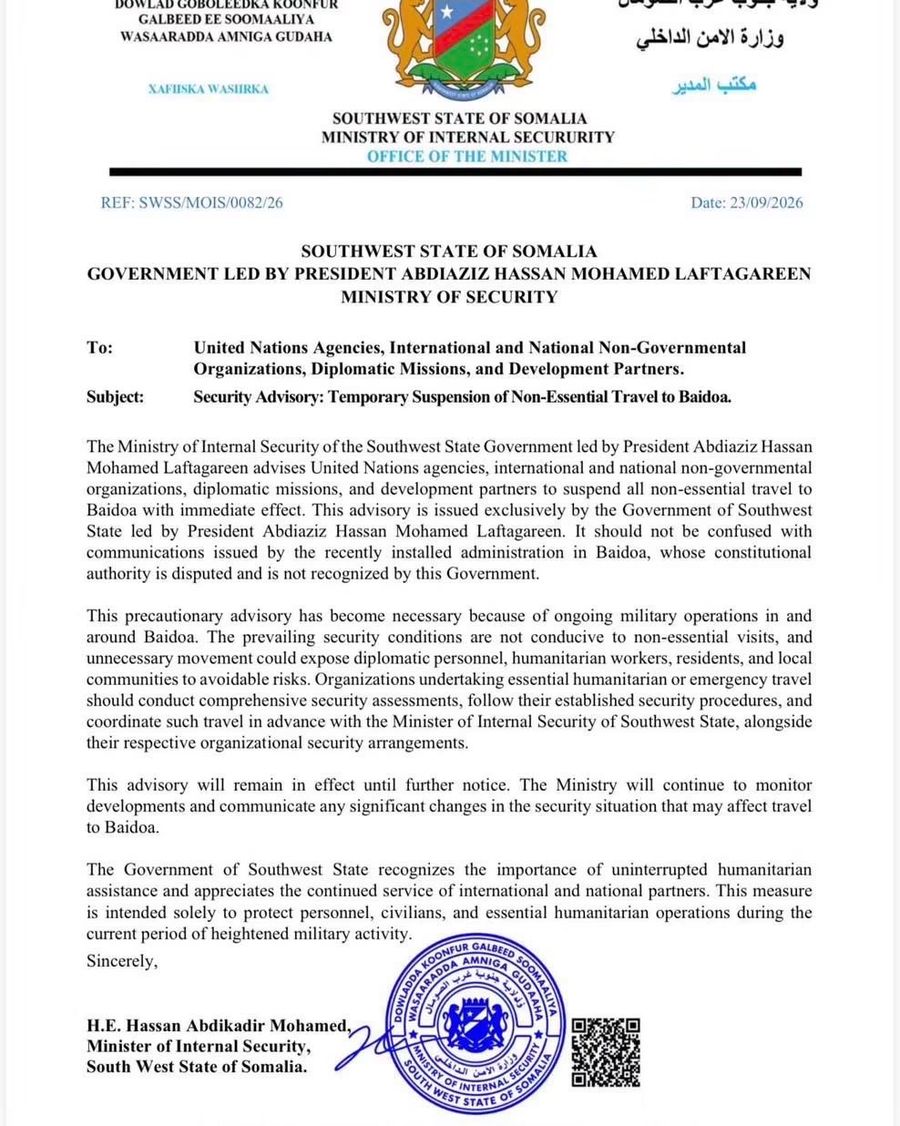
The South West State administration aligned with Abdiaziz Hassan Mohamed Laftagareen has advised United Nations agencies, humanitarian organisations, diplomatic missions and development partners to suspend non-essential travel to Baidoa, citing heightened military activity and security risks in and around the regional capital.
In a security notice dated September 23, the administration’s Ministry of Internal Security said the advisory applies to UN agencies, international and local non-governmental organisations, diplomatic missions, development partners and other institutions planning non-essential visits to Baidoa.
The administration said the measure was intended to reduce risks to aid workers, diplomatic personnel, local residents and surrounding communities during what it described as a period of heightened military activity.
“The prevailing security conditions are not conducive to non-essential visits,” the ministry said in the notice. It warned that unnecessary movement could expose personnel and civilians to avoidable danger.
The advisory does not cover essential humanitarian or emergency missions. However, the ministry urged organisations conducting such travel to complete thorough security assessments, follow established procedures and coordinate their plans in advance with relevant authorities.
The Laftagareen-aligned administration said it would issue further updates if there were significant changes to the security situation affecting movement to Baidoa.
The notice followed a reported visit to Baidoa by senior World Food Programme officials earlier on Tuesday. The Laftagareen administration said the visit highlighted continuing concerns over security and politics in the city, which is South West State’s administrative capital and a major humanitarian centre in southern Somalia.
Neither the WFP nor other UN agencies had immediately issued a public statement on the travel advisory. The warning reflects the position of the Laftagareen-aligned administration, which is contesting the authority of the administration currently operating in Baidoa.
Humanitarian Operations and Travel Restrictions
The ministry said it recognised the importance of uninterrupted humanitarian assistance in Baidoa and surrounding areas, where large numbers of people displaced by drought, conflict and food insecurity depend on aid.
It said the advisory was a precautionary measure designed to protect essential relief operations while reducing exposure to potential violence.
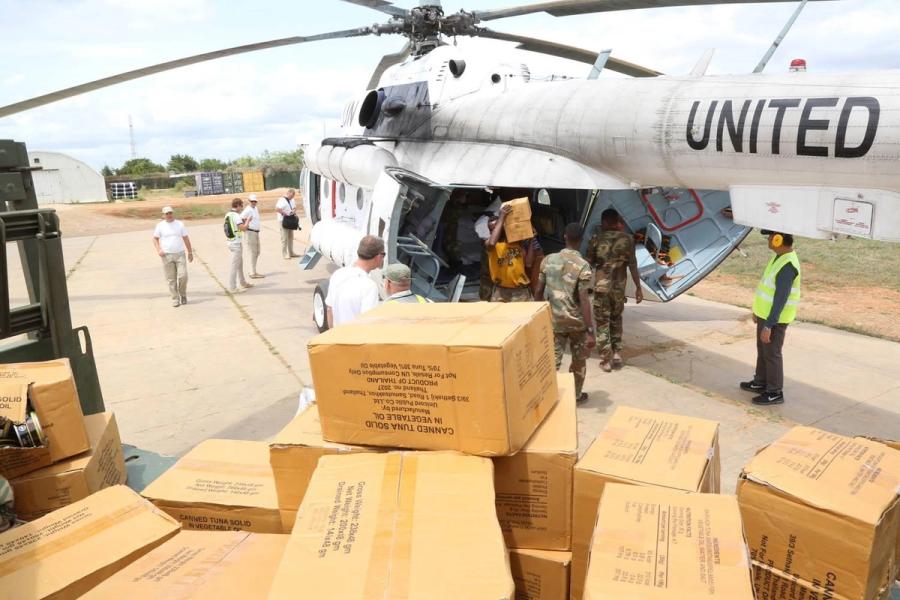
Baidoa hosts a large displaced population and serves as a central base for humanitarian agencies operating across Bay, Bakool and other parts of southern Somalia. Any prolonged disruption to aid workers’ access or movements could affect the delivery of food assistance, health services, nutrition programmes and protection support.
The administration urged humanitarian organisations to maintain coordination with security actors and local authorities before undertaking essential missions. It did not specify whether the advisory would affect scheduled aid flights, road movements or operations inside the city.
No fresh clashes were reported in the security notice. However, the warning comes after repeated fighting and military deployments around Baidoa in recent months, as political tensions over the leadership of South West State developed into an armed confrontation.
Dispute Over Authority in Baidoa
The Laftagareen-aligned administration said its travel notice should not be confused with communications issued by the recently installed administration in Baidoa.
Laftagareen, who led South West State from 2018, stepped down after federal forces took control of Baidoa in March amid a deepening dispute with Mogadishu over political authority, constitutional changes and the regional electoral process.
Sheikh Aden Mohamed Nur, widely known as Aden Madobe, was later installed as the leader of a new South West State administration with support from the federal government. Laftagareen and his supporters have rejected that arrangement and continue to claim political legitimacy in the region.
The rival claims have created two competing centres of authority. The administration in Baidoa is backed by federal security forces, while Laftagareen-aligned forces and officials maintain influence in areas outside the city.
The dispute has complicated security coordination and created uncertainty for civilians, aid agencies and businesses operating in the region.
Federal authorities have previously accused Laftagareen-aligned fighters of working alongside Al-Shabaab during attacks on Baidoa. Laftagareen’s camp has denied the allegations and said its supporters are involved in a political and security dispute, not an alliance with the militant group.
Recent Fighting Raises Security Concerns
Baidoa has experienced several rounds of fighting since federal forces entered the city in March. On August 17, federal troops drove opposition fighters out of Baidoa after intense clashes, according to residents and officials cited by Reuters. The violence killed and injured civilians and combatants, though authorities and local sources gave differing accounts of the toll.
Fighting also erupted on the outskirts of Baidoa on September 3 between government forces and militias aligned with Laftagareen, according to The Associated Press. Bay Regional Hospital said it received 71 wounded people, including women, and one civilian who had died, while officials did not provide a final verified casualty count.
The clashes prompted residents to flee parts of the city amid gunfire and explosions. Federal forces later increased patrols in key areas, while political efforts to resolve the broader dispute have yet to produce a lasting settlement.
The security situation is also affected by the continuing threat from Al-Shabaab, which remains active in rural parts of southern and central Somalia and has carried out attacks against Somali security forces, African Union forces and civilians.
Baidoa’s importance as a political centre and humanitarian hub means that instability there can have consequences beyond the city. The area hosts hundreds of thousands of people displaced by conflict and climate-related shocks, making safe access for aid agencies a critical concern.
The current crisis emerged from a wider disagreement between South West State authorities and Somalia’s Federal Government over constitutional reforms and the balance of power between Mogadishu and federal member states.
Laftagareen’s administration announced in March that it was severing ties with the federal government, shortly before federal forces took control of Baidoa. He then announced his resignation, although his supporters have since continued to challenge the legitimacy of the administration installed in the city.
The dispute has become one of the most serious political and security challenges facing Somalia’s federal system in 2026. It has also raised concern that armed confrontations among political actors could create further openings for Al-Shabaab.
International partners have consistently called for dialogue between Somali political actors, while humanitarian organisations have stressed the need to protect civilians and safeguard aid operations in conflict-affected areas.
The Laftagareen-aligned administration said its advisory will remain in force until further notice. It did not set a date for review or identify specific areas around Baidoa where military activity had increased.
The travel advisory underscores how the contest for authority in South West State is directly affecting humanitarian access and civilian security. Even when aid operations remain formally exempt, security warnings can slow movement, increase operational costs and limit the ability of agencies to reach vulnerable communities.
Baidoa is one of Somalia’s most important humanitarian centres. Disruption there could have consequences across southern Somalia, particularly for displaced families reliant on food, health and nutrition assistance.
The competing statements from rival South West State authorities also show the practical challenges facing international organisations operating in politically divided areas. Agencies must navigate security risks while maintaining impartial engagement with all relevant actors.