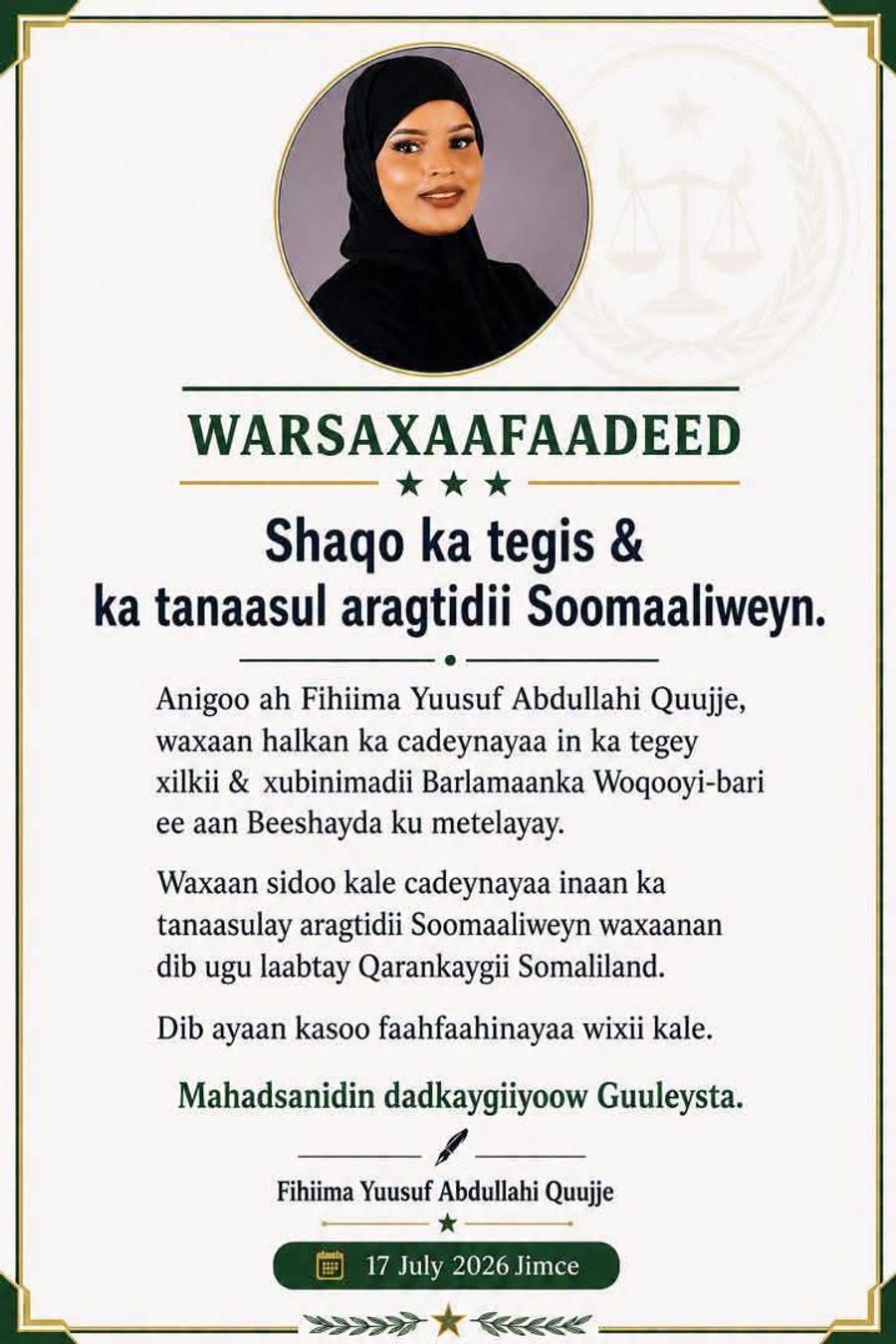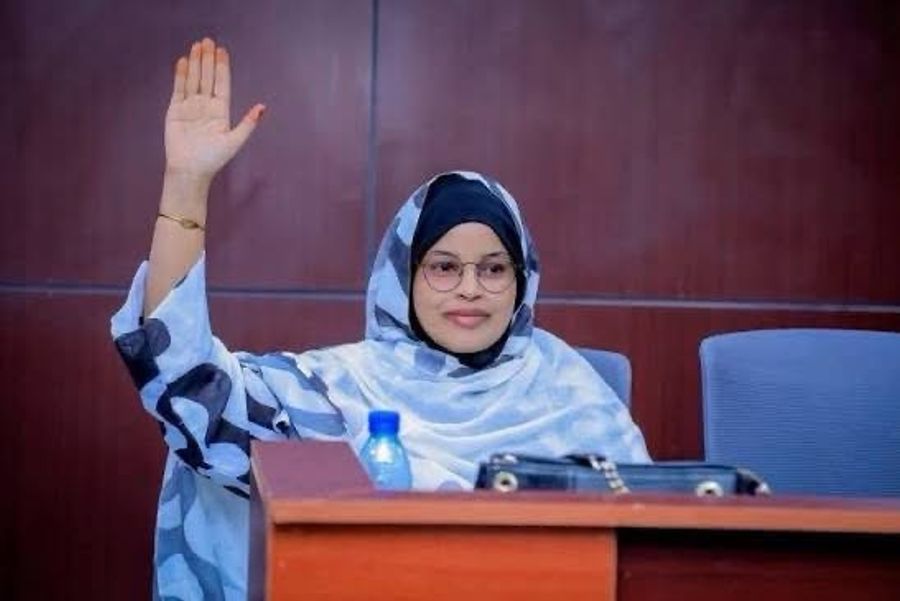
MOGADISHU, Somalia — July 17, 2026 — An influential lawmaker from the Woqooyi Bari (WQB) administration, Fahiima Quuje, has defected to Somaliland, according to local media reports and independent sources, triggering an emergency parliamentary session expected to consider her removal from office. The move marks a significant political shift for a figure who became widely known during the 2023 Las Anod conflict.
Fahiima Quuje, a member of the Woqooyi Bari regional assembly, has announced that she has left the Woqooyi Bari administration and aligned herself with Somaliland, according to local media reports and sources familiar with the matter.
Independent sources said Quuje established contact with senior Somaliland officials two days before her reported move. The reasons behind her decision have not been publicly disclosed, and neither Quuje nor Somaliland authorities have issued a detailed explanation regarding the change in political allegiance.
The development has prompted an immediate political response within the Woqooyi Bari administration.
Lawmakers have been notified to attend an extraordinary emergency session on Saturday, where parliament is expected to discuss Quuje’s political future and possible disciplinary measures.
According to sources familiar with the preparations, legislators are expected to debate stripping Quuje of her parliamentary seat and all associated rights following her public announcement that she has left the administration and aligned herself with Somaliland.
Sources also said Quuje is currently in Addis Ababa, Ethiopia. Authorities within the Woqooyi Bari administration are reportedly seeking to complete parliamentary procedures concerning her status before she proceeds to Hargeisa.
Officials have not publicly commented on the proposed measures, and the parliamentary agenda has yet to be officially released.
Government Response
The Woqooyi Bari administration has not issued a formal public statement detailing its response beyond notifying lawmakers of the emergency parliamentary session.
According to sources close to the administration, the meeting is expected to determine whether Quuje should retain her parliamentary membership after publicly announcing her departure from the administration.
No official decision has yet been announced.
Fahiima Quuje emerged as one of the better-known political figures during the 2023 conflict in Las Anod, where months of fighting took place between Somaliland forces and local community fighters.
During the conflict, Quuje publicly criticized Somaliland’s involvement in the region and became associated with the political movement supporting the local administration in Las Anod.
Videos circulated widely on social media during the fighting appeared to show Quuje participating alongside local fighters. While the footage gained significant public attention, its circumstances were not independently verified by multiple sources at the time.
The conflict ultimately ended with Somaliland forces withdrawing from Las Anod after months of intense fighting against local forces.
Since then, political tensions have remained high across the disputed regions, where competing administrations continue to assert authority and influence.
Quuje’s reported decision to join Somaliland represents a dramatic reversal from the political positions she held during and after the conflict.
What Happens Next
Attention is now focused on Saturday’s emergency parliamentary session.
Lawmakers are expected to determine whether Quuje should be formally removed from the Woqooyi Bari Parliament and whether additional administrative or legal measures will follow.
Meanwhile, observers are watching for any official statement from Somaliland regarding Quuje’s reported arrival and potential political role.
Neither side has announced whether discussions have taken place concerning any future position for Quuje within Somaliland.
The political landscape in northern Somalia remains shaped by unresolved disputes over governance and territorial control.
Las Anod has remained at the center of those tensions since the 2023 conflict, which significantly altered the security and political balance in the region.
Political defections between rival administrations are uncommon and often generate strong reactions because they can influence local political alignments and public perceptions.
Quuje’s reported defection comes amid continued political maneuvering by competing administrations seeking to strengthen their influence across disputed territories.
The development also follows months of shifting alliances involving political figures, military officials and local leaders across northern Somalia, highlighting the fluid nature of regional politics.
Fahiima Quuje’s reported defection carries political significance because of her public profile during the 2023 Las Anod conflict. Her decision to align with Somaliland marks a notable departure from the positions that made her widely known in the region.
The planned emergency parliamentary session suggests the Woqooyi Bari administration intends to respond through institutional measures rather than leaving the matter unresolved. Any decision to remove her from office could establish a precedent for handling similar political defections.
The development also reflects continuing competition for political influence in northern Somalia, where questions over governance and territorial authority remain unresolved. Political shifts involving prominent figures can affect relationships between rival administrations and shape future negotiations.