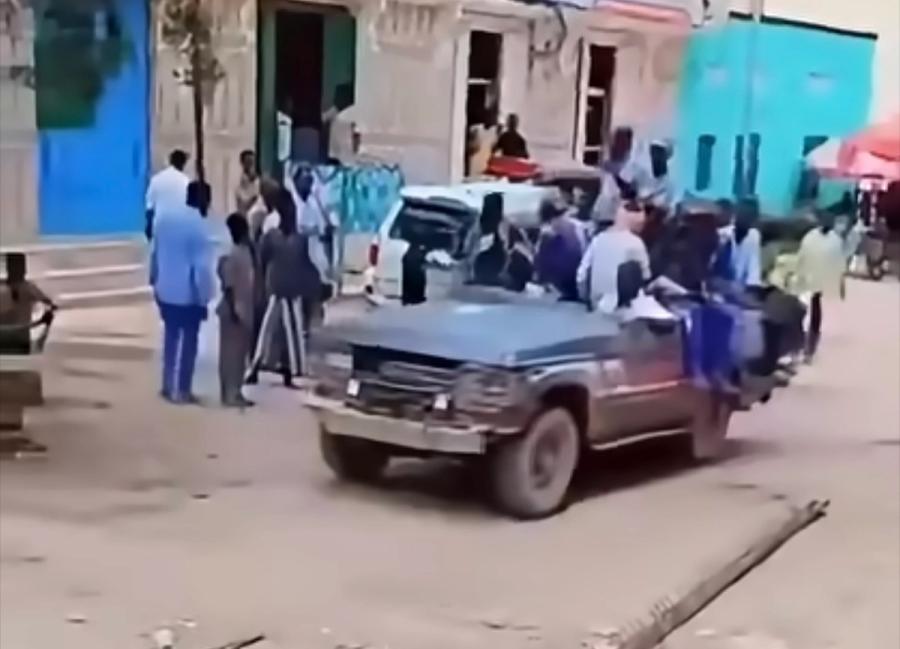
BELEDWEYNE, Somalia, November 1, 2026 — Hawadle Macawisley fighters have reportedly withdrawn from several frontline positions near Matabaan and Buuloburde and headed toward Beledweyne, raising concerns that the worsening political dispute in Hiiraan could undermine operations against Al-Shabaab.
Local reports indicate that community defence units have left some positions outside the two districts, while other contingents are considering similar movements from the Jalalaqsi sector.
The reported movements come amid mounting tensions between influential Hawadle leaders, the federal government and the Hirshabelle administration over political representation, regional appointments and the outcome of Hirshabelle’s recent leadership election.
Although the withdrawals could weaken frontline defences, they do not establish that government forces have abandoned Matabaan or Buuloburde, or that Al-Shabaab has captured either town.
Fighters converge on Beledweyne
The developments follow an increased presence of armed Macawisley fighters in Beledweyne, where units entered parts of the Lama-Galay government compound on Friday without reported fighting.
The compound houses regional administrative offices and military facilities. Fighters established positions around the administration buildings, while Somali National Army personnel retained control of the military section.
Additional deployments were reported near the Liqliqato Bridge and outside Ugas Khalif Airport, reflecting the widening geographical reach of the political standoff.
The mobilisation has become closely associated with a dispute over the leadership of Hiiraan’s regional administration. Dismissed governor Mohamed Hussein Mohamed Arab has rejected his removal, while his appointed successor, Muse Salad Weheliye, has operated from the military section of the same compound.
The presence of rival officials and armed forces within one administrative complex has created a sensitive situation, even though no clashes were reported during the fighters’ entry.
Hirshabelle election fuels tensions
At the centre of the confrontation is a longstanding disagreement over how political authority should be shared within Hirshabelle, which brings together Hiiraan and Middle Shabelle.
Hirshabelle lawmakers re-elected Ali Abdullahi Hussein Guudlaawe as president on October 24 in Jowhar. He secured 81 votes against 13 for challenger Nur Ilmi Halane, while Abdifatah Hassan Afrah was elected vice president.
Sections of the Hawadle political and traditional leadership opposed proceeding with the electoral process without a negotiated settlement addressing Hiiraan’s demands.
Their objections concern political representation, the allocation of senior leadership positions and what they regard as insufficient consultation over decisions affecting the region.
Before the election, Hawadle elders and politicians in Beledweyne insisted that voting should not proceed in Hiiraan without an agreement. Some elders also announced restrictions on visits by Hirshabelle officials through local airports.
However, the community remains politically divided. Other Hawadle figures supported Guudlaawe and participation in the process, underscoring the absence of a single position shared by all its political leaders.
Governor’s removal adds to grievances
The dismissal of Mohamed Hussein Mohamed Arab introduced another point of confrontation between Beledweyne and the Hirshabelle leadership.
His removal followed public criticism of how revenue from Beledweyne’s livestock market was distributed. Hirshabelle authorities said the appointment of his replacement followed a recommendation from the interior ministry.
Some Hiiraan political figures and traditional leaders have also advocated establishing an administration separate from Hirshabelle. Such proposals remain contested and should not be confused with the creation of a formally recognised federal member state.
Reported Al-Shabaab agreement raises questions
The frontline movements have attracted additional attention because of an agreement Al-Shabaab announced with some Hawadle elders in Mahaas earlier in October.
Reports concerning the meeting described an arrangement intended to end hostilities. A statement circulated through media affiliated with the militant group reportedly included restrictions on Macawisley recruitment, operations and shelter in areas covered by the agreement.
However, important questions remain unanswered, including which communities the participants represented, the extent of their authority and whether the reported provisions have been implemented.
There is insufficient evidence to describe the arrangement as an agreement endorsed by the entire Hawadle community.
Similarly, the latest withdrawals cannot be conclusively linked to that arrangement. Establishing such a connection would require confirmation from the commanders involved or other independently verifiable evidence.
Political rhetoric strains relations
Controversy has also surrounded remarks attributed to Prime Minister Hamza Abdi Barre concerning alleged cooperation or agreements with Al-Shabaab.
Reports of those remarks have intensified debate about the distinction between accusations against particular individuals and allegations directed at an entire community.
The dispute is particularly sensitive because Hawadle Macawisley fighters have played a prominent role in operations against Al-Shabaab, including the community mobilisation that helped drive the government-backed offensive launched in Hiiraan in 2022.
Security partnership faces pressure
The immediate concern is whether vacated positions will be reinforced and whether the political confrontation will draw additional fighters away from frontline duties.
If withdrawals continue without replacement forces, Al-Shabaab could gain opportunities to expand its movement, threaten supply routes and pressure rural communities. These remain potential consequences rather than confirmed battlefield gains.