Sunday, June 7, 2026 (Baidoa Online) — Iran has launched multiple waves of ballistic missiles toward Israel on Sunday, marking a major escalation in a conflict that has now entered its 100th day. The Israeli military confirmed that missiles were fired from Iran, with air defence systems activated across northern Israel, including in the Haifa region, as sirens sounded and civilians were ordered to shelter.
Israel Strikes Dahieh, Crossing Iran's Red Line
For the first time since ceasefire understandings with Lebanon were announced, Israeli forces struck Hezbollah headquarters in Beirut's Dahieh district on Sunday, following rocket fire from Lebanon into northern Israel. Prime Minister Benjamin Netanyahu and Defence Minister Israel Katz issued a joint statement confirming the strikes, saying the IDF "struck terrorist headquarters in the Dahieh district of Beirut in response to Hezbollah fire toward Israeli territory." Israel notified Washington before the strikes took place, according to sources cited by Israeli media.
The attack on Dahieh carried weight beyond its immediate military impact. Iran had issued an explicit public warning that any expansion of Israeli strikes into that area would trigger direct retaliation. The IRGC's top joint military command had stated clearly: "We had previously warned that if the crimes in the Dahiyeh area of Beirut expand, we will attack targets in the occupied territories." Israel struck anyway, crossing what Tehran had designated as an unambiguous red line.
Iran Responds: Watch the Skies
The response from Tehran was swift. Senior Iranian parliamentarian Ebrahim Rezaei, a member of parliament's national security committee, wrote on X that Iran "will give a decisive and painful response to the Zionist regime's attack on Dahieh" and told followers to "watch the skies" over Israel. Iran's Parliament Speaker and chief negotiator Mohammad Bagher Ghalibaf echoed that warning, writing that Israel "neither adheres to the ceasefire nor believes in dialogue" and had shown it "only understands the language of force." Ghalibaf stated Iran "will not only halt the path of negotiations, but we will also be in direct confrontation with the enemy."
Hours later, the IRGC launched multiple waves of ballistic missiles toward Israel. Sirens sounded across northern Israel as the barrage was intercepted. Two ballistic missiles were confirmed successfully shot down over northern Israeli territory, with no immediate casualties reported in those initial strikes. Schools nationwide were cancelled and the Home Front Command issued emergency restrictions, limiting public gatherings and ordering civilians to remain near shelters.
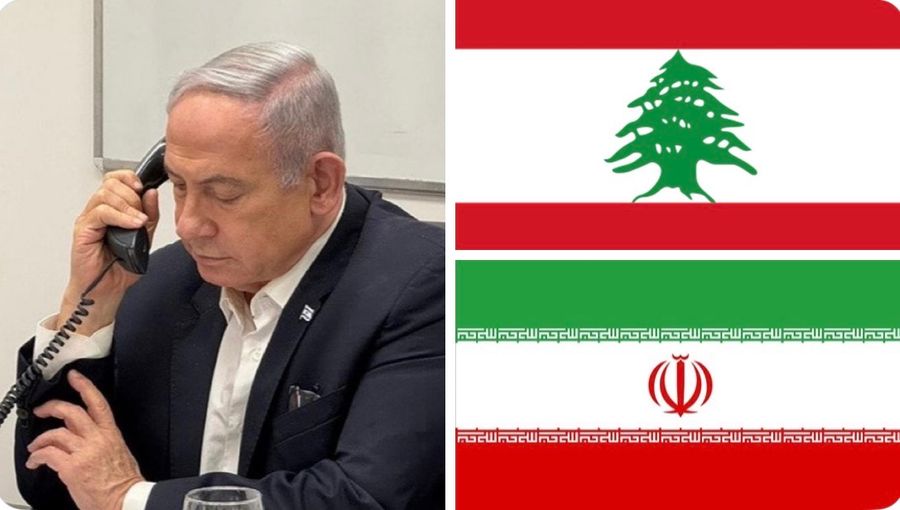
In a pointed diplomatic signal, Iranian Foreign Minister Seyed Abbas Araghchi posted an image on X showing the Iranian and Lebanese flags side by side, without any accompanying text. The wordless post by the country's top diplomat was widely interpreted as a formal declaration of solidarity with Lebanon and a signal that Tehran views the defence of Beirut as inseparable from its own confrontation with Israel.
Israel Warns Tehran Will Burn
On the Israeli side, the mood inside the security cabinet was one of open defiance. Senior Israeli officials, according to regional media reports, warned that Tehran itself must face consequences for the missile barrage. One senior official was quoted as declaring that "Tehran must burn" in response to Iran's strikes, signalling that Israel is considering striking deep inside the Iranian capital as a next step. The statement reflects the hardline faction within Netanyahu's government that has long sought to escalate against Iran regardless of ceasefire arrangements.
A Fragile Ceasefire in Ruins
Sunday's escalation comes on day 100 of the US-Israel war on Iran, a conflict that began in late February 2026 with massive joint American and Israeli strikes targeting military, government and infrastructure sites inside Iran. A fragile ceasefire took effect in early April but was never fully honoured, with both sides repeatedly violating its terms. US-Iran negotiations held in Pakistan in April failed to produce a peace deal. The latest events now threaten to collapse whatever remained of the diplomatic track entirely. Sources cited by ABC News indicated US President Donald Trump was angered by Israel's escalation in Lebanon, viewing it as a threat to his administration's ongoing negotiations with Tehran.
Lebanon has paid an especially heavy price throughout the conflict. Israeli airstrikes have killed more than 1,530 people in Lebanon, including over 100 women and 130 children, according to Lebanese health authorities. More than one million people have been displaced. Beirut's southern suburbs have been struck repeatedly, and Sunday's strikes represent the most significant attack on Dahieh since the ceasefire understandings were announced.
A World on Edge: Economic and Global Stakes
The conflict, now in its 100th day, has its roots in a long-running confrontation over Iran's nuclear programme, its regional influence through proxy forces, and the unresolved crisis in Gaza. What began as a targeted military operation has escalated into a sustained war involving the United States, Israel, Iran, Hezbollah, and armed groups across Lebanon, Iraq and the Gulf.
The economic consequences have been felt globally. Oil prices have surged to levels not seen since the 2022 energy crisis, driven by repeated disruptions to shipping lanes through the Strait of Hormuz, through which approximately 20 percent of the world's oil supply passes. Food commodity prices have risen sharply as energy and logistics costs climb, disproportionately affecting poorer nations, including countries across the Horn of Africa and South Asia. Global markets have been rattled by each escalation, with investors bracing for further shocks.
Analysts warn that if this conflict is not contained or brought to a negotiated end in the coming days, the consequences for the world will be severe. A full-scale Israeli strike on Tehran, combined with further Iranian missile salvos and the potential for wider US military involvement, risks triggering a regional war of a scale the Middle East has not seen in decades. Energy supply chains, global shipping, diplomatic channels and civilian populations across the region all hang in the balance. The next 48 hours, observers say, may prove decisive.