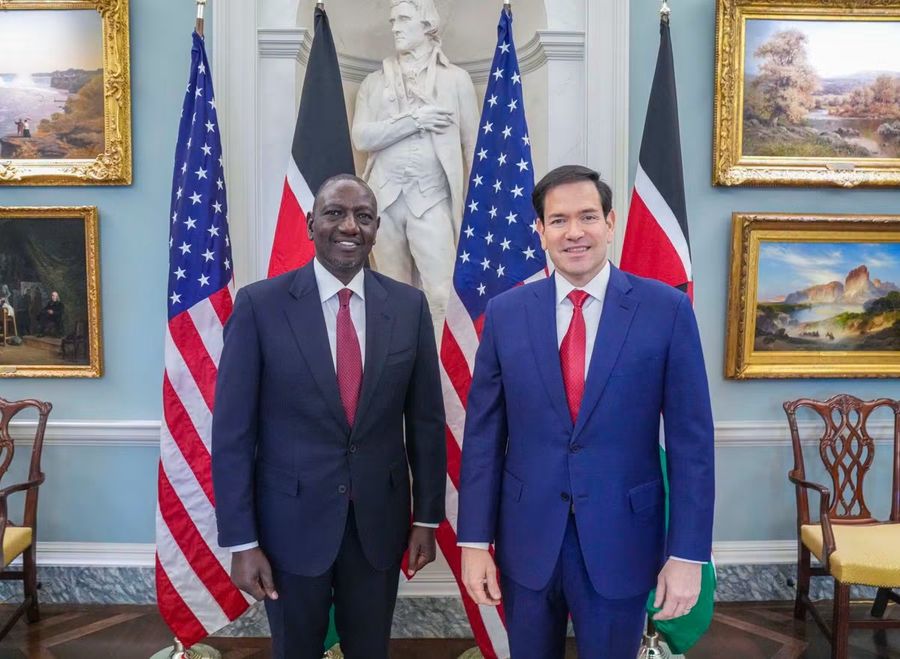
MOGADISHU, Somalia, September 25, 2026. United States Secretary of State Marco Rubio has discussed Somalia with Kenyan President William Ruto during a telephone call, according to the Kenyan presidency, as Somali President Hassan Sheikh Mohamud was in the United States for the United Nations General Assembly and reported meetings with senior American officials.
The call has drawn attention in Somalia because it involved a discussion of the country’s political and security situation with Kenya’s president while Hassan Sheikh was also in the United States. Somali officials have said the president was expected to travel to Washington for engagements with senior US officials, including Rubio, although no joint official readout of such a meeting had been released at the time of publication.
The Kenyan presidency said the conversation between Ruto and Rubio covered Somalia, Haiti and Sudan, among other matters. The official Kenyan website published a notice confirming a telephone discussion between the two leaders, but the available notice did not provide a detailed account of the Somalia portion of their exchange.
The discussion came as regional and international leaders gathered in the United States around the annual UN General Assembly, a period when bilateral meetings and diplomatic contacts often take place alongside multilateral events.
Officials at Somalia’s presidency have said Hassan Sheikh was due to hold talks in Washington with senior US figures. It was not immediately clear whether a meeting between the Somali president and Rubio had taken place, or when any official statement on their reported engagement would be issued.
The Kenyan presidency’s reference to Somalia reflects Kenya’s longstanding role in regional diplomacy and security matters affecting its northeastern neighbour. Kenya has troops operating under the African Union mission in Somalia and has repeatedly been involved in regional efforts concerning Somalia’s security, refugee issues, trade and political dialogue.
Diplomatic officials commonly discuss third countries with regional partners when security operations, mediation efforts, peacekeeping missions or cross-border concerns are involved. Kenya remains a key regional actor in Somalia because of its security role, its long land border with Somalia and its involvement in efforts against the militant group Al-Shabaab.
Kenya’s Regional Role
Kenya has remained central to international discussions on Somalia for more than a decade. Nairobi has hosted Somali political talks, supported humanitarian and refugee initiatives, and maintained a significant security interest in developments in southern and central Somalia.
Kenyan forces have served in Somalia as part of African Union-led military arrangements aimed at supporting Somali security forces against Al-Shabaab. Kenya’s government has also regularly raised concerns about cross-border attacks, militant activity and the movement of refugees between the two countries.
The United States has worked closely with Kenya on regional security issues, including counterterrorism and efforts to stabilise conflict-affected countries in East Africa. That relationship has made Ruto an important interlocutor for US officials on developments that affect the Horn of Africa.
The Kenyan presidency said Rubio and Ruto also discussed Haiti and Sudan. Kenya has a direct operational role in Haiti through its leadership of the Multinational Security Support mission, which was deployed to help Haitian authorities address widespread gang violence and insecurity.
Sudan, meanwhile, has been at the centre of regional and international diplomacy since conflict began between the Sudanese Armed Forces and the Rapid Support Forces in April 2023. Kenya has taken part in regional efforts to support dialogue on Sudan, while the United States has pressed for a ceasefire and humanitarian access.
Somalia’s Security and Political Challenges
Somalia continues to face serious security challenges, including a sustained insurgency by Al-Shabaab, which controls or exerts influence in parts of rural southern and central Somalia.
The federal government has relied on support from international partners in its campaign against the group, including security assistance, training, intelligence cooperation and support for the African Union mission. Somalia’s leadership has repeatedly appealed for predictable international funding for security institutions and for the African Union’s stabilisation operations.
Hassan Sheikh, speaking at international forums in recent days, has emphasised progress in rebuilding Somali institutions and security forces while also calling for continued international assistance. Somalia has argued that it cannot yet manage all security responsibilities alone, particularly as foreign military support and African Union mission financing remain under pressure.
Political differences between Mogadishu and some federal member states have also complicated the security environment. Disputes over elections, constitutional changes, resource sharing and local authority have periodically strained relations between the federal government and regional administrations.
These political tensions are likely to feature in international contacts on Somalia, especially as foreign partners seek to support security operations while encouraging dialogue among Somali political actors.
Questions Over Washington Engagements
Some Somali political analysts described the timing of Rubio’s call with Ruto as diplomatically insensitive, arguing that discussing Somalia with Kenya’s president while Hassan Sheikh was in Washington could be viewed as a slight to Somalia’s head of state. They said the move risks reinforcing public perceptions that foreign powers rely on regional leaders to discuss Somali affairs rather than engaging Mogadishu directly.
The significance of the Rubio-Ruto call will depend on any further details released by either government. A fuller official account could clarify whether the Somalia discussion focused on security cooperation, African Union mission funding, political reconciliation, border security or another regional matter.
Kenya and Somalia have had a complex relationship shaped by security cooperation, trade, migration and periodic diplomatic disagreements. The two countries restored diplomatic relations after previous disputes, including a prolonged maritime boundary case that was decided by the International Court of Justice in 2021.
Despite those differences, Kenya has remained a major regional partner for Somalia. It hosts a large Somali diaspora and has played a prominent role in efforts to counter Al-Shabaab and support regional stability.
Somalia’s international engagement has increased since the country secured debt relief milestones and joined the East African Community. The government has also sought greater international investment, security support and diplomatic backing as it works to strengthen federal institutions.
The country’s political and security challenges mean that discussions about Somalia are frequently held in regional capitals and international forums. Such discussions often involve neighbouring states because of their direct exposure to instability, displacement and militant violence.
The Rubio-Ruto call highlights Kenya’s continued influence in international discussions about Somalia. Kenya’s military, diplomatic and humanitarian involvement means Washington is likely to consult Nairobi on Somali developments, particularly when regional security is under pressure.