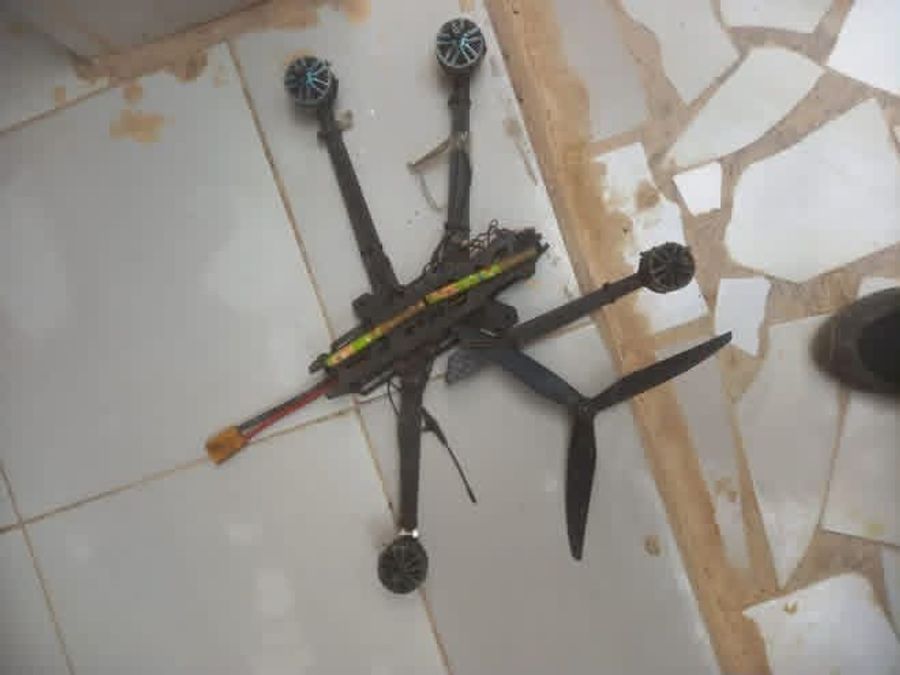
MOGADISHU, Somalia — June 20, 2026 —Questions are growing over the accountability of reported kamikaze drones held by Somalia’s federal government after security sources alleged that an unspecified number of loitering munitions removed from military storage during recent fighting in Mogadishu were never returned. The claims, which have not been independently verified, have raised concerns that some of the weapons could have entered Somalia’s illicit arms market and potentially reached armed groups, including Al-Shabaab.
According to Somali security sources, hundreds of loitering munitions, commonly referred to as kamikaze or suicide drones, were reportedly taken from government weapons depots before clashes between federal security forces and fighters aligned with opposition politicians in the Barmuudo and Marinaayo areas of Mogadishu.
The sources said only a limited number of the drones were confirmed to have been destroyed during the fighting. They alleged that the whereabouts of the remaining drones remain unknown after the operation concluded.
No official inventory records, operational reports or other documentary evidence have been made public to support the reported figures. The Somali federal government has not issued a public statement addressing the specific allegations or confirming whether any drones remain unaccounted for.
The allegations remain unverified, and there is no publicly available evidence confirming that any missing drones have been diverted or transferred to armed groups.
Claims Raise Fears of Diversion
Security officials familiar with the matter told local sources that weaknesses in weapons tracking and post-operation accounting may have allowed some of the small attack drones to leave government custody.
According to the same sources, individuals described as African Union intelligence officers have expressed concern that some of the drones may have been sold through illicit markets in Mogadishu before potentially reaching opposition-aligned fighters or militant organizations, including Al-Shabaab.
No evidence has been publicly presented to substantiate those claims, and neither the African Union nor Somali authorities have publicly confirmed such assessments.
Security analysts note that even relatively small loitering munitions can pose a serious threat because they are portable, comparatively inexpensive and capable of striking personnel, military vehicles or defensive positions with little warning.
Clashes in Mogadishu
The allegations follow armed confrontations in early June when federal security forces exchanged fire with armed groups aligned with opposition politicians in the Howlwadaag and Abdiasis districts of Mogadishu.
The violence damaged homes, disrupted daily life and forced some residents to flee affected neighborhoods.
Former Prime Minister Hassan Ali Khaire accused government forces at the time of deploying drones, anti-tank weapons and other heavy weapons in densely populated civilian areas.
Reuters reported that it could not independently verify those allegations.
The federal government rejected accusations of wrongdoing, stating that security forces had restored order while accusing opposition groups of putting civilians at risk during the confrontation.
Questions Over Future Drone Procurement
Separate government sources have also alleged that the United States opposed a Somali proposal to purchase up to 25,000 additional kamikaze drones from potential suppliers in Türkiye, Egypt, Azerbaijan, Algeria and Serbia.
According to the sources, concerns over weapons registration, secure storage, inventory management and end-use monitoring were among the reasons behind the reported U.S. objections.
Neither the United States nor the Somali government has publicly confirmed those specific claims.
International partners have consistently emphasized the importance of accountability mechanisms for military equipment supplied to Somalia as part of ongoing security assistance programs.
International Response
Following the June clashes, the United States, the United Nations, the African Union and other international partners urged Somali political leaders to resolve their disputes peacefully.
The U.S. Embassy described the violence as reckless and called for restraint.
The African Union and regional organizations also urged dialogue to reduce tensions and prevent further instability.
The Somali government later said security forces had restored order in the capital.
Somalia has significantly expanded its use of drones and other advanced technologies as part of military operations against Al-Shabaab in recent years.
Security experts say loitering munitions have become increasingly important because they allow operators to identify and strike targets with greater precision than conventional artillery in some situations.
At the same time, analysts stress that such systems require strict controls, including detailed inventories, secure storage, operator authorization and post-mission accounting to prevent diversion.
Somalia continues to face challenges in strengthening oversight across its fragmented security institutions while combating illicit arms trafficking networks operating inside the country.
The issue has become more sensitive as international partners continue supporting Somalia’s security sector modernization while expecting stronger accountability for military equipment.
If verified, reports that government-controlled loitering munitions cannot be fully accounted for would raise significant concerns about weapons management within Somalia’s security institutions. Effective inventory controls are widely regarded as essential to preventing advanced military equipment from entering unauthorized hands.
The allegations also highlight the broader challenge of securing increasingly sophisticated weapons in a country where illicit arms trafficking remains a persistent security concern. Even without confirmation that any drones have been diverted, uncertainty surrounding their whereabouts could prompt calls for tighter oversight and independent accountability measures.
Analysts also say the controversy could affect international confidence in Somalia’s security sector if concerns over end-use monitoring and weapons accountability remain unresolved. International partners have repeatedly linked military assistance to improvements in institutional oversight and responsible management of defense equipment.