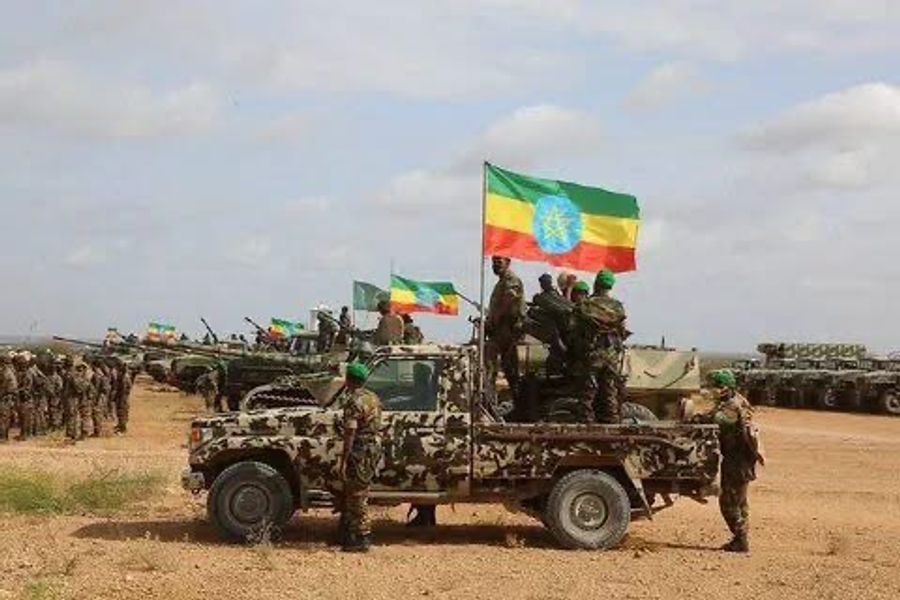
MOGADISHU, Somalia — August 11, 2026 — Al-Shabaab has repeatedly exploited security gaps created by withdrawals or redeployments of foreign troops in Somalia, retaking towns and military positions previously held by Ethiopian, Kenyan and African Union forces, according to a review of reported territorial changes stretching from 2009 to 2025.
The pattern has been particularly pronounced following Ethiopian withdrawals, including a series of reversals in central and southwestern Somalia in 2016. Kenyan troop movements have also been followed by Al-Shabaab advances in parts of Gedo and Lower Jubba, while the militant group moved into Xawaadley in Middle Shabelle after Burundian African Union troops evacuated their base because of flooding in June 2025.
The cases highlight a persistent challenge for Somalia and its international security partners: preventing areas cleared of Al-Shabaab from falling back under militant influence when foreign troops leave or forward operating bases are closed.
Ethiopian Withdrawals Followed by Major Territorial Reversals
Some of the earliest examples came during Ethiopia’s military withdrawal from Somalia in 2009.
Islamist insurgents reported to include Al-Shabaab returned to Bardhere in Gedo on January 19, 2009, after Ethiopian troops and allied Somali forces withdrew. A week later, on January 26, Al-Shabaab captured Baidoa, the capital of Bay region, following Ethiopia’s broader withdrawal from Somalia.
The pattern resurfaced in March 2013 when Al-Shabaab entered Hudur, also known as Xudur, in Bakool after Ethiopian forces unexpectedly withdrew toward El Barde.
In December 2014, militants captured Wabho in Galgaduud after Ethiopian and Somali forces pulled out without a major battle.
Adan Yabal in Middle Shabelle was another example. Al-Shabaab returned to the town in June 2016 after Somali and Ethiopian-backed African Union forces withdrew shortly after having recaptured it.
A larger series of reversals followed later that year.
Al-Shabaab retook Moqokori in Hiraan in September 2016 after Ethiopian forces withdrew. Around the same period, militants were reported to have moved into Budbud in Galgaduud following the departure of Ethiopian troops, although reporting did not establish a precise date for the takeover.
On October 11, 2016, Al-Shabaab entered Ceel Cali, also known as El Ali, in Hiraan after hundreds of Ethiopian troops withdrew. Reports later said militants executed residents accused of cooperating with foreign forces.
Halgan in Hiraan fell to Al-Shabaab on October 23, within hours of the withdrawal of an Ethiopian contingent serving under the African Union mission.
Three days later, Al-Shabaab entered Tiyeglow in Bakool after Ethiopian and Somali government forces withdrew toward Hudur.
By early November, reports indicated that Al-Shabaab had also returned to Rab Dhuure, Bur Dhuxulne and Garas Weyne in Bakool and Galcad in Galgaduud following Ethiopian troop movements.
The series of withdrawals in late 2016 represented one of the most concentrated periods of territorial reversal linked to the departure of foreign troops, with reports at the time identifying as many as nine locations retaken by Al-Shabaab.
Another significant withdrawal occurred in April 2017, when Al-Shabaab entered Ceel Buur in Galgaduud after Ethiopian troops and a smaller Somali government contingent left the town.
Kenyan Withdrawals in Southern Somalia
Kenyan troop redeployments have also been followed by Al-Shabaab advances, particularly in Gedo and Lower Jubba.
On January 26, 2016, Kenyan troops left positions around Ceel Cadde in Gedo, 11 days after Al-Shabaab carried out a devastating assault on a Kenyan AMISOM base there. Militants subsequently moved back into the area.
The same day, Al-Shabaab entered Badhadhe in Lower Jubba following the departure of Kenyan and allied Somali forces. Contemporary reports said Kenyan officials described the troop movement as an operational maneuver rather than a broader withdrawal.
Bardhere in Gedo was reported to have fallen back under Al-Shabaab influence in September 2017, several days after Kenyan troops withdrew.
In March 2019, Al-Shabaab entered Fafahdun after Kenyan AMISOM forces vacated their position. Later that month, militants reportedly retook Busar without significant fighting after the final Kenyan contingent withdrew.
Giriley in Gedo provides a more complicated example. Kenyan ATMIS troops handed their position to Jubaland forces during the African Union drawdown in June 2023. Al-Shabaab attacked and captured the position on July 13, although Somali forces were reported to have recovered it the following day.
Xawaadley Evacuation Shows Continuing Risk
The pattern remained visible during the transition to the African Union Support and Stabilisation Mission in Somalia, or AUSSOM.
In June 2025, Burundian AUSSOM troops evacuated their forward operating base at Xawaadley in Middle Shabelle because severe flooding had made the position untenable.
AUSSOM officially confirmed on June 3 that the Burundian contingent had been safely evacuated because of heavy flooding. The mission said all troops and crew were moved to another military base and reported no casualties during the evacuation.
Al-Shabaab fighters subsequently entered Xawaadley, according to reports from the area, again demonstrating how quickly militants can seek to exploit a newly vacated military position.
The circumstances differed from a conventional military withdrawal because the Burundian evacuation was triggered by flooding rather than an Al-Shabaab assault or a planned territorial handover.
Mahaas Shows a Different Type of Territorial Loss
Mahaas in Hiraan fell to Al-Shabaab on July 27, 2025, but the circumstances were different from towns taken immediately after a foreign troop withdrawal.
Al-Shabaab launched a coordinated attack involving explosions and a ground assault before Somali federal forces and allied Ma’awisley fighters withdrew, according to residents and local officials cited by The Associated Press.
Ethiopian troops had previously vacated Mahaas, but their departure did not immediately result in an Al-Shabaab takeover. The militant capture therefore represents a later battlefield reversal rather than a direct post-withdrawal seizure.
Mahaas had been under government control for more than a decade and had served as an important forward position for operations against Al-Shabaab in Hiraan and neighboring Galgaduud.
Foreign troops have played a central role in Somalia’s campaign against Al-Shabaab for nearly two decades. Ethiopian forces have operated both independently and as part of African Union missions, while Kenya and Burundi have maintained substantial contingents in southern and central Somalia.
These forces helped Somali troops capture and hold major population centers, but maintaining control after military operations has repeatedly proved difficult.
Al-Shabaab often operates in rural areas surrounding government-held towns, allowing its fighters to threaten roads, isolate military positions and return when security forces abandon or reduce their presence.
The historical record also shows that foreign troop withdrawal does not automatically lead to permanent Al-Shabaab control. Some locations have changed hands repeatedly, while others have been recovered by Somali or allied forces shortly after militant advances.
The repeated territorial reversals show that capturing a town and holding it are separate military challenges. A withdrawal can create an immediate security gap when Somali forces or local authorities are unable to deploy quickly enough to replace departing foreign troops.
The history of Ethiopian withdrawals is particularly significant. The concentration of Al-Shabaab advances following troop movements in 2016 showed how simultaneous or closely spaced withdrawals from several positions can allow militants to regain territory without having to defeat large foreign contingents in direct combat.
For Somalia, the central challenge remains the transfer of security responsibility. As African Union forces reduce or reorganize their presence, the ability of Somali federal and regional forces to secure evacuated bases, protect supply routes and maintain permanent administration will determine whether territorial gains can be sustained.
For civilians, repeated changes of control can bring additional risks, including displacement, disrupted trade and transportation, and retaliation against residents suspected of cooperating with opposing forces. The record of towns changing hands therefore remains relevant as Somalia and its international partners consider future troop deployments, base closures and security handovers.
Somalia’s security transition will continue to depend on whether national and regional forces can assume responsibility for positions previously protected by foreign contingents without creating gaps that Al-Shabaab can exploit.
Past withdrawals suggest that coordinated handovers, sufficient replacement forces and secure supply routes are likely to be central to preventing another cycle in which towns are captured, abandoned and subsequently retaken.
The experience from Bardhere and Baidoa in 2009 through Halgan and Tiyeglow in 2016 and Xawaadley in 2025 shows that the period immediately following a troop departure can be particularly sensitive.
As Somalia continues transferring greater security responsibility to its own forces, preventing Al-Shabaab from filling those vacuums will remain one of the most important tests of whether military gains against the group can be sustained.