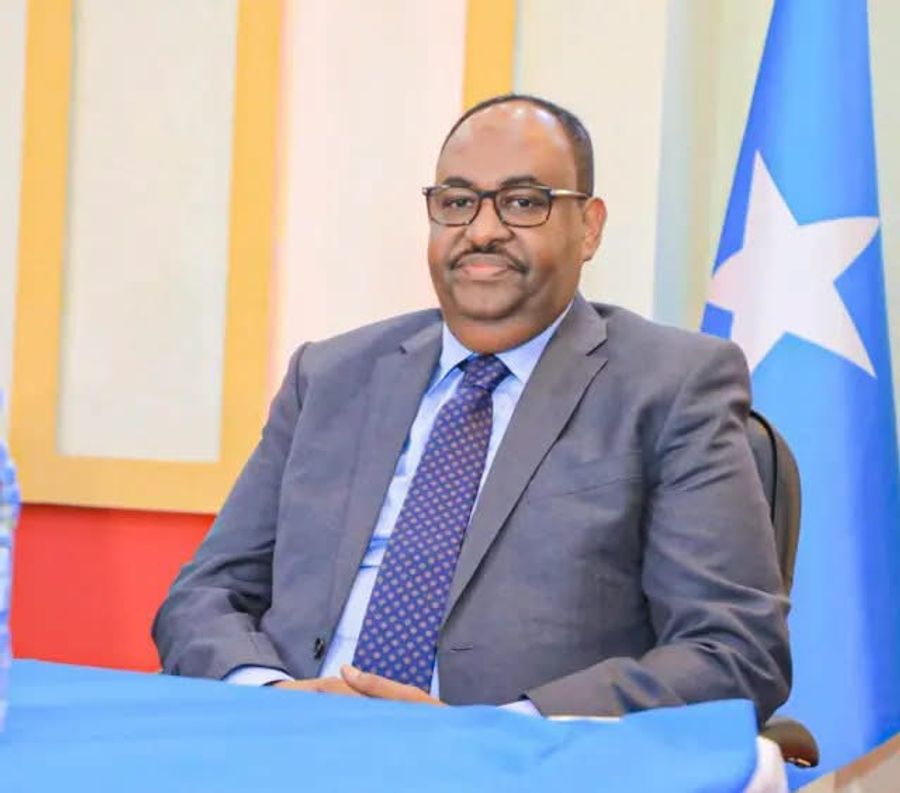
GAROWE, Puntland, Somalia — October 25, 2026
Puntland President Said Abdullahi Deni has called for an inclusive national dialogue to address Somalia’s deepening political crisis, accusing President Hassan Sheikh Mohamud’s administration of undermining the country’s federal system, abandoning political consensus and pursuing a disputed electoral process without sufficient agreement among key stakeholders.
Addressing the Puntland House of Representatives during the opening of a parliamentary session, according to an account of his remarks, Deni warned that Somalia’s state-building process was facing serious challenges that could further weaken national unity and political stability.
The Puntland leader accused the federal government of failing to achieve meaningful progress in negotiations with political stakeholders while proceeding with an election timetable and framework opposed by Puntland, Jubaland and several opposition groups.
His remarks come amid widening disagreements over constitutional amendments, federal power-sharing arrangements and the legitimacy of Somalia’s planned parliamentary and presidential elections.
Deni Accuses Federal Government of Abandoning Political Consensus
In his address, Deni argued that Somalia’s political leadership had failed to preserve the principles of consultation and cooperation that underpin the country’s federal system.
He accused President Hassan Sheikh Mohamud of allowing political negotiations to collapse and rejecting proposals for an electoral process based on broad national agreement.
According to Deni, decisions concerning Somalia’s political future should not be imposed by a single institution or administration without meaningful participation from federal member states and other stakeholders.
The Puntland president also expressed concern about growing frustration among residents of Puntland over what he described as the lack of progress in Somalia’s prolonged state-building process.
He acknowledged that many people in Puntland had become disappointed with the direction of national governance and the repeated failure to resolve fundamental constitutional disagreements.
Deni pledged that his administration would consult the public before making major decisions affecting Puntland’s political future.
He assured residents that his government would not pursue significant political measures without informing them, seeking their views and obtaining public support.
Puntland Calls for National Salvation Dialogue
One of the central messages of Deni’s address was his call for a broad Somali political conference aimed at finding a negotiated solution to the country’s institutional disputes.
Puntland urged political leaders, federal member states, opposition figures and other national stakeholders to participate in an inclusive consultation process.
The proposed dialogue would focus on restoring political consensus, resolving disagreements over elections and identifying a mutually acceptable framework for Somalia’s governance.
Deni indicated that Puntland would undertake its own public consultations to determine how the administration should respond to developments at the national level.
The call reflects Puntland’s longstanding position that Somalia’s political disputes should be settled through negotiation rather than unilateral constitutional or electoral decisions.
However, the practical arrangements for such a conference, including its location, participants and timetable, have not been established.
Dispute Over Somalia’s 2027 Elections
Deni’s comments come after Somalia’s National Independent Electoral and Boundaries Commission announced a timetable for parliamentary and presidential elections in 2027.
The federal government supports a transition toward direct elections under a multiparty political system, arguing that electoral reforms are necessary to move Somalia beyond its longstanding indirect voting arrangements.
Under the previous system, parliamentary representatives were selected through clan-based processes, while federal lawmakers elected the president.
Puntland, Jubaland and opposition groups have challenged the legal and political foundations of the revised electoral framework, particularly constitutional amendments approved without their agreement.
The disagreement is not solely about whether Somalis should vote directly. It also concerns the constitutional basis of elections, the participation of federal member states and the safeguards required to ensure a credible process.
President Hassan Sheikh Mohamud’s administration maintains that its constitutional and electoral reforms provide a legal framework for advancing the country’s democratic transition.
Opponents argue that elections conducted without sufficient political agreement could deepen existing divisions.
Puntland Condemns Drone Attacks and Alleged Federal Interference
Beyond electoral disputes, Deni raised serious concerns about security developments, including drone strikes, instability in contested areas and the alleged use of security forces for political purposes.
Puntland condemned what it described as the deployment of military resources in ways that threaten communities, damage public property and undermine stability.
Deni also accused the federal government of supporting armed elements and activities intended to destabilize Puntland.
These allegations remain contested and require independent verification. The account of his speech did not establish evidence linking specific armed groups or security incidents to federal authorities.
Security disagreements between Garowe and Mogadishu have increasingly accompanied the broader political dispute, with Puntland insisting that its institutions retain responsibility for internal security under Somalia’s federal arrangements.
Deni Announces Security Operations in Cal Madow and Cal Miskaad
Turning to Puntland’s internal security, Deni announced that security operations had been conducted in mountainous areas, particularly the Cal Madow and Cal Miskaad ranges.
He said preparations were underway for broader operations intended to eliminate terrorist threats and strengthen government control in affected areas.
The mountainous terrain has long presented security challenges, with militant organizations exploiting remote locations and difficult geography.
Deni also claimed that Puntland security forces had dismantled armed networks allegedly established with outside political support, alongside groups associated with piracy.
Independent confirmation of the specific operations, their results and the alleged connections of the armed networks was not immediately available.
The Puntland president further announced restrictions on unauthorized weapons possession, warning that individuals attempting to undermine public security would face enforcement measures.
He emphasized that maintaining peace and preventing armed destabilization remained central priorities for his administration.
Puntland Parliament Warns Over Future of Federalism
The Speaker of the Puntland House of Representatives also expressed concern about Somalia’s political direction, arguing that the country’s federal principles and established consultation mechanisms were being disregarded.
The speaker questioned whether Puntland’s population could legitimately be expected to participate in political arrangements they had neither approved nor helped shape.
He urged Puntland’s executive leadership to present realistic policy options and communicate openly with residents about the choices facing the administration.
The remarks underscored the institutional concern within Puntland over the relationship between federal authority, regional autonomy and political representation.
Somalia Faces Renewed Pressure for Political Compromise
Puntland’s latest position adds to growing pressure for negotiations between Somalia’s federal leadership and political stakeholders opposed to the current electoral framework.
The administration has previously sought international attention for its concerns, including through appeals to the United Nations Security Council regarding governance, security and political dialogue.
With the federal electoral timetable advancing and major disagreements unresolved, questions remain about how Somalia can organize a nationally accepted political process.
Deni’s proposed consultations could become another forum for addressing those differences, although their outcome will depend on participation, political compromise and agreement on constitutional principles.