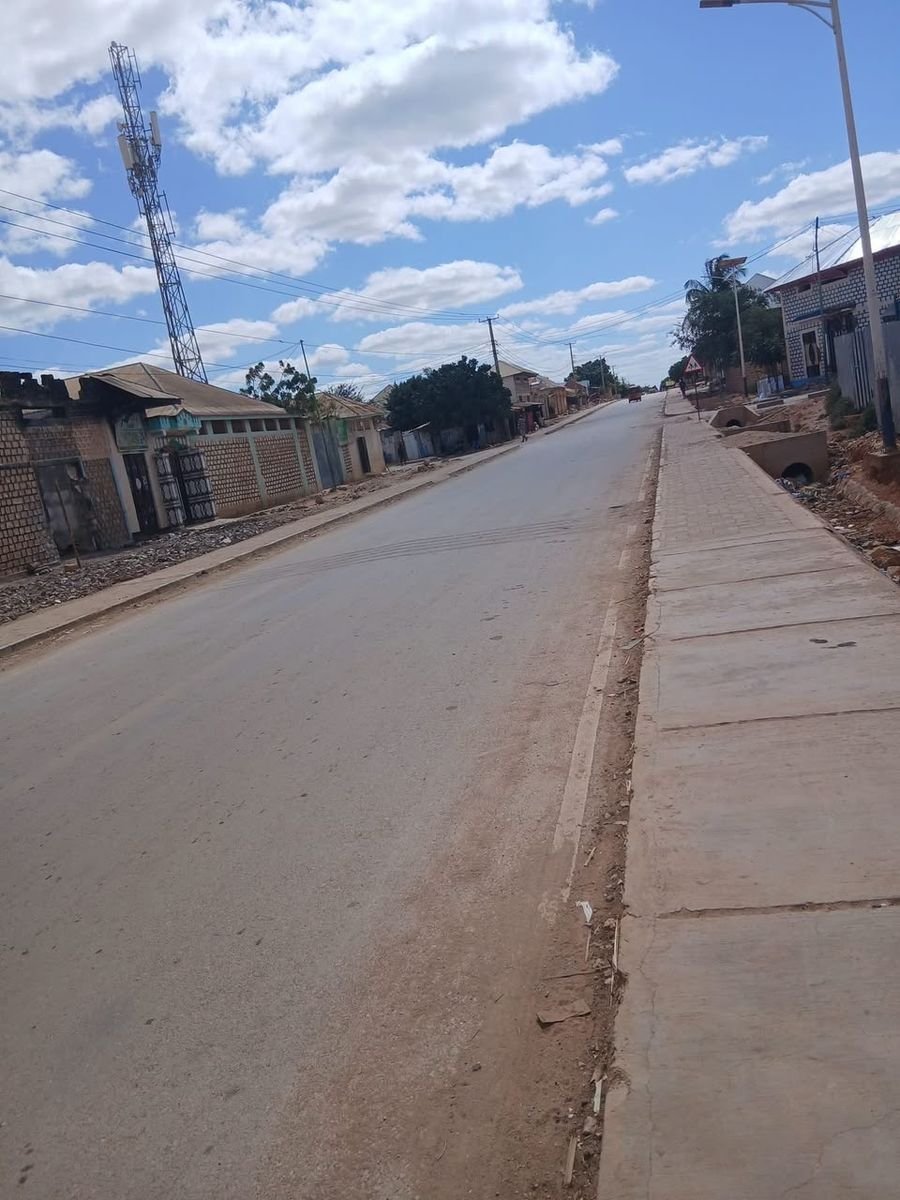
BAIDOA, Somalia — August 25, 2026 — Residents have fled five neighborhoods inside Baidoa as Darwish forces aligned with former South West State President Abdiaziz Hassan Mohamed Laftagareen advance toward parts of the city, according to local sources, raising fears of another confrontation with federal government troops.
The affected neighborhoods are Mursal, Al-Faras, Ban-Qiyaam, Xanaano and Jidka 30-ka, all located within Baidoa.
Local sources said the areas were now largely deserted, with only a watchman remaining in each neighborhood. The number of displaced residents and their current locations were not immediately known.
Residents began leaving after receiving information that Laftagareen-aligned forces were moving toward several parts of Baidoa, according to community sources. Families fear the advancing troops could encounter federal forces deployed across the city, triggering renewed fighting in residential areas.
The strength, positions and immediate objectives of the Darwish forces could not be independently established. It was also unclear whether they intended to enter the neighborhoods, establish new positions or pressure federal troops controlling Baidoa.
Neither the federal government nor commanders aligned with Laftagareen had issued an immediate statement addressing the latest reported movements at the time of publication.
Federal forces remained deployed at strategic locations in Baidoa following months of political and military confrontation with supporters of the former regional president.
Fear of Renewed Fighting
The civilian departures come days after intense fighting erupted in Baidoa on August 17, when armed groups aligned with Laftagareen attacked federal government positions from several directions.
Federal troops later pushed the opposition fighters out of the city and restored control, according to government statements and accounts from residents. The federal Defence Ministry said the attackers used vehicles loaded with explosives during the assault.
At least four civilians were killed and 98 people were wounded, including 28 women, according to Dr. Abdikafi Omar Mohamud, head of the emergency department at Bay Regional Hospital.
Federal and regional officials released different figures for combatant deaths. Those figures could not be independently verified. The fighting also overwhelmed hospital services and exposed residents to stray bullets and heavy weapons fire.
The federal government alleged that Al-Shabaab members participated in the attack alongside Laftagareen-aligned fighters. South West security officials said bodies and prisoners recovered after the battle included suspected members of the militant group. Independent evidence proving coordination between the two forces has not been made public.
The latest reported advance has revived fears that fighting could return before residents and medical facilities have recovered from the previous confrontation.
Humanitarian Impact
No new casualties were reported in connection with the troop movements, but the evacuation of five neighborhoods points to growing civilian concern.
Families are leaving primarily because of fears that residential areas could become battlefields if Laftagareen-aligned forces move farther into Baidoa. The August 17 clashes demonstrated the risks faced by civilians when political and military confrontations reach populated districts.
It was not immediately clear whether the displaced families had moved to other parts of Baidoa or left the city. No official assessment of their needs had been released.
The displacement could place additional pressure on Baidoa, which already hosts hundreds of thousands of people uprooted by drought, food insecurity and conflict in southern Somalia. Many depend on humanitarian assistance for food, shelter and healthcare.
Renewed fighting could disrupt aid deliveries, restrict civilian movement and prevent medical workers from reaching communities requiring assistance.
The crisis is rooted in a dispute between Somalia’s federal government and Laftagareen’s former South West administration over elections, constitutional changes and the division of authority between Mogadishu and the federal member states.
Federal troops took control of Baidoa on March 30 after the South West administration announced that it was suspending ties with the federal government. Laftagareen resigned shortly afterward, days after securing a disputed new term through an indirect regional election.
Many residents fled Baidoa before the March takeover because they feared clashes between federal and regional forces. Some humanitarian organizations suspended operations, while a local elder described the city as resembling a ghost town.
Laftagareen-aligned forces remained active in rural areas around Baidoa after his resignation. Smaller confrontations were reported before the major August assault, indicating that the federal takeover had not ended the political or military contest.
Baidoa has previously suffered deadly political violence. At least 11 people were killed during demonstrations and clashes following the December 2018 arrest of regional presidential candidate Mukhtar Robow.
Government Response
Federal authorities had not announced new security measures or confirmed whether additional troops would be deployed to the affected neighborhoods.
There was also no public information on whether local elders or political representatives had begun mediation aimed at stopping the advancing forces and preventing another battle.
Attention will focus on whether the Laftagareen-aligned forces continue toward central Baidoa, establish positions inside the affected neighborhoods or withdraw following negotiations.
More residents could leave if the forces advance or if federal troops reinforce their positions. Any confrontation inside the city would create serious risks for civilians and could interrupt humanitarian operations.
The reported abandonment of five neighborhoods shows how quickly military movements can trigger displacement in a city still recovering from recent violence. Even without new fighting, fear alone is disrupting civilian life.
The advance also suggests that Laftagareen’s resignation and the federal takeover of Baidoa did not resolve the underlying dispute. Continued armed mobilization could prolong instability and divert government forces from operations against Al-Shabaab.
Baidoa is both South West State’s administrative capital and a major humanitarian center. Another battle could affect permanent residents, displaced communities, medical facilities and humanitarian organizations serving vulnerable families across the Bay region.