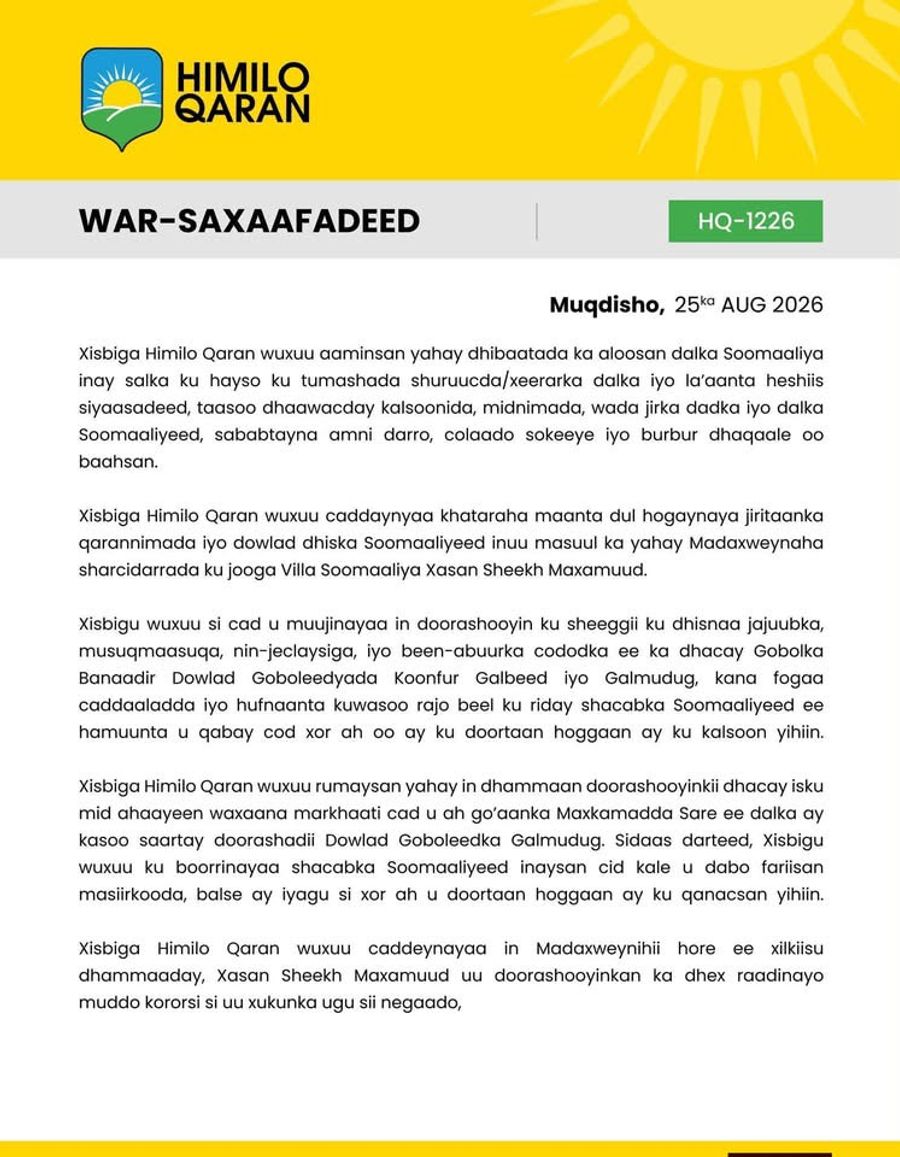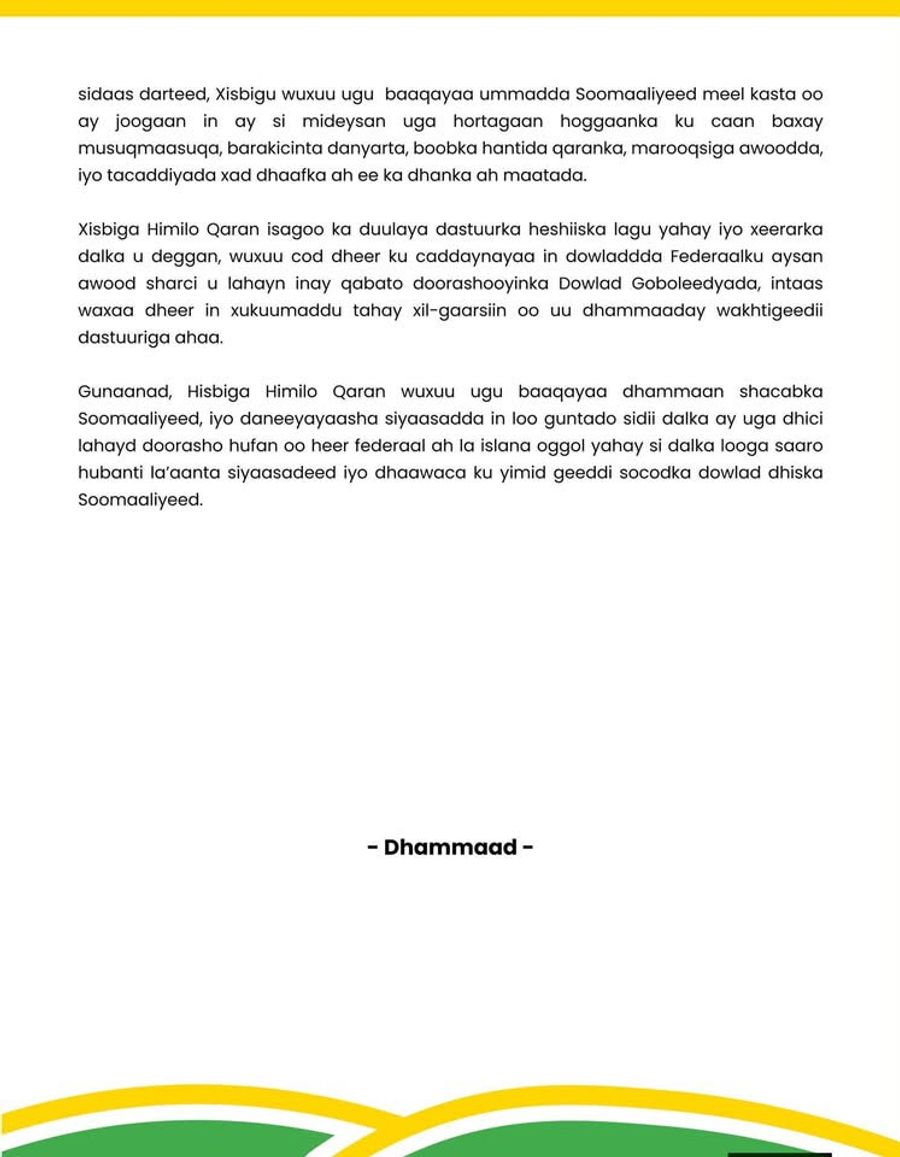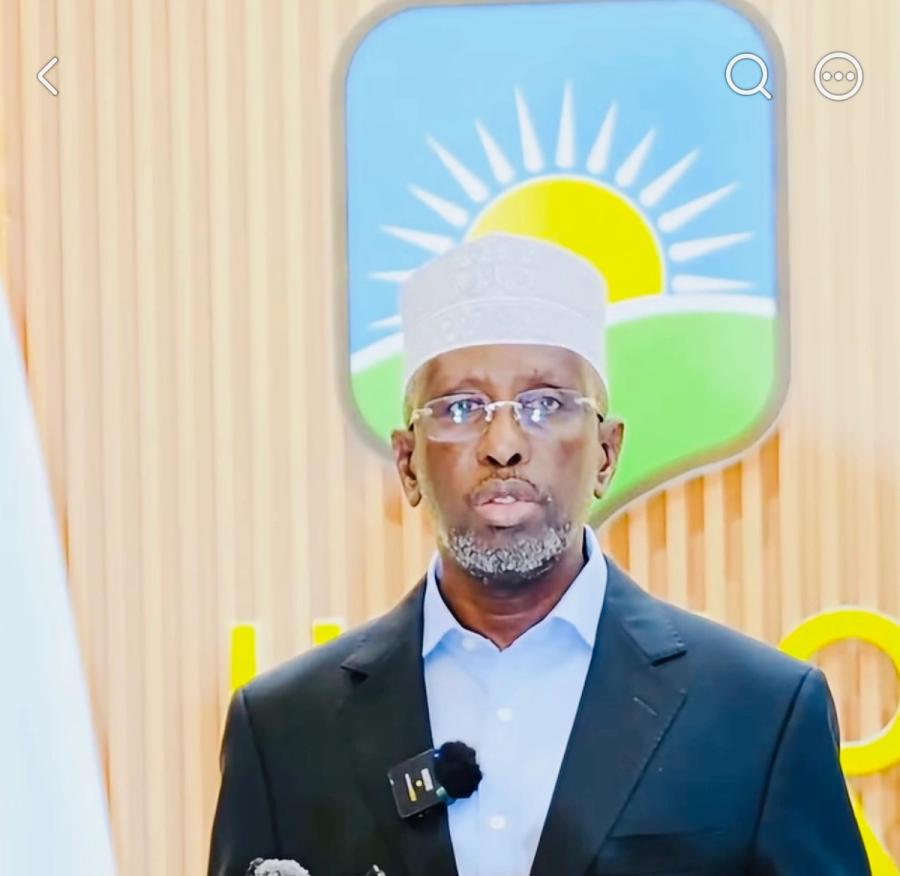
MOGADISHU, Somalia — August 26, 2026 — Somalia’s opposition Himilo Qaran Party has warned that the country faces a deepening political crisis and called on citizens and political leaders to unite behind an inclusive electoral process, accusing President Hassan Sheikh Mohamud’s administration of corruption, constitutional violations and efforts to monopolise power.
In a statement issued Tuesday, the party, led by former President Sharif Sheikh Ahmed, said Somalia’s state-building process and national unity were under threat because of political disagreements, disputed elections and the absence of a broadly accepted national accord.
Himilo Qaran alleged that the federal administration had displaced vulnerable communities, misappropriated public property, committed abuses against civilians and concentrated political authority. The party did not provide detailed evidence for every allegation, and the claims could not be independently verified.
“The difficulties facing Somalia today stem from violations of the country’s constitution and laws, as well as the absence of a political agreement,” the party said.
It blamed President Mohamud for what it described as declining public trust, weakening national cohesion, insecurity, internal confrontation and growing economic hardship.
There was no immediate response from the Somali presidency or the federal government to the party’s accusations. Federal officials have previously defended the administration’s electoral programme as an effort to replace Somalia’s clan-based indirect voting system with universal suffrage.
Disputed Electoral Processes
Himilo Qaran criticised elections conducted or proposed in the Banadir region and the South West and Galmudug federal member states, describing the processes as illegitimate, non-inclusive and insufficiently transparent.
The party said the elections had failed to meet public expectations that Somali citizens would be able to vote freely and select leaders they trusted. It argued that a credible direct election must offer genuine political competition and operate under rules accepted by the country’s main political stakeholders.
Himilo Qaran cited the Federal Supreme Court’s decision concerning Galmudug as support for its objections.
On Monday, the Supreme Court annulled the results of the combined Galmudug parliamentary and local council elections held on July 30. The court ruled that the voting had not complied with Somalia’s Constitution and electoral law, leaving the results without legal validity and ordering that the process be repeated.
The decision represented a setback for the electoral model promoted by the federal administration. Somalia’s state news agency reported that the judges reached the ruling after reviewing arguments and evidence presented by the parties to the case.
Himilo Qaran urged citizens not to allow political institutions or individual leaders to determine their future without public consent. It called for a credible electoral system through which Somalis could directly choose their representatives.
Dispute Over Federal Authority
The opposition party rejected the federal government’s authority to organise elections inside federal member states, arguing that such intervention violates the Constitution, established political agreements and laws governing Somalia’s federal system.
It also accused President Mohamud of pursuing the contested electoral programme to prolong his stay in office. The presidency has rejected opposition claims that the president is serving beyond his lawful mandate.
The dispute centres partly on constitutional amendments approved by Parliament in March. Government supporters say the amendments extended the terms of federal institutions from four to five years. Opposition groups dispute that interpretation and argue that the changes cannot lawfully extend the mandates of officials already in office.
President Mohamud maintains that his mandate remains valid until 2027. Himilo Qaran and other opposition groups argue that his original four-year term ended on May 15, 2026, and that the federal administration should therefore operate only in a caretaker capacity.
The party said a caretaker administration lacks the legal authority to organise elections in federal member states or make far-reaching decisions affecting the country’s political transition.
Somalia’s provisional Constitution and the interpretation of recent amendments remain subjects of sharp political disagreement. No nationally accepted settlement has yet resolved the competing claims.
Somalia has struggled for years to complete its transition from indirect, clan-based elections to a one-person, one-vote system. Disagreements over constitutional amendments, election management and the division of authority between Mogadishu and federal member states have repeatedly delayed that transition.
Tensions intensified in early 2026 when opposition lawmakers resisted proposed constitutional changes they believed could extend federal mandates. A parliamentary session in January descended into scuffles and was suspended after lawmakers disputed the procedure used to introduce the amendments.
Political tensions later contributed to armed confrontations in Mogadishu. In June, government troops and armed groups associated with opposition politicians clashed in parts of the capital, forcing some residents to flee. Somali authorities said order was restored, while international partners called for dialogue.
The crisis has revived memories of Somalia’s 2021 electoral confrontation, when an attempted mandate extension led to armed mobilisation and street fighting in Mogadishu before political negotiations produced an indirect election.
Himilo Qaran called on citizens, political parties, federal and regional leaders and other stakeholders to support an inclusive agreement governing the next federal election.
Any settlement would likely require negotiations on the electoral timetable, voter registration, the authority of the national electoral commission, the role of federal member states and the legal status of the current federal institutions.
The Supreme Court’s Galmudug ruling may also force election authorities to reconsider how future regional votes are organised and whether existing procedures comply with constitutional and electoral requirements.
The statement increases pressure on President Mohamud to seek a political agreement before proceeding with further elections. Without wider participation, disputed votes could deepen divisions between the federal government, opposition organisations and federal member states.
The dispute also carries security and humanitarian risks. Previous political confrontations have diverted security forces, interrupted commerce and displaced civilians at a time when Somalia continues to confront Al-Shabaab, drought and severe humanitarian needs.