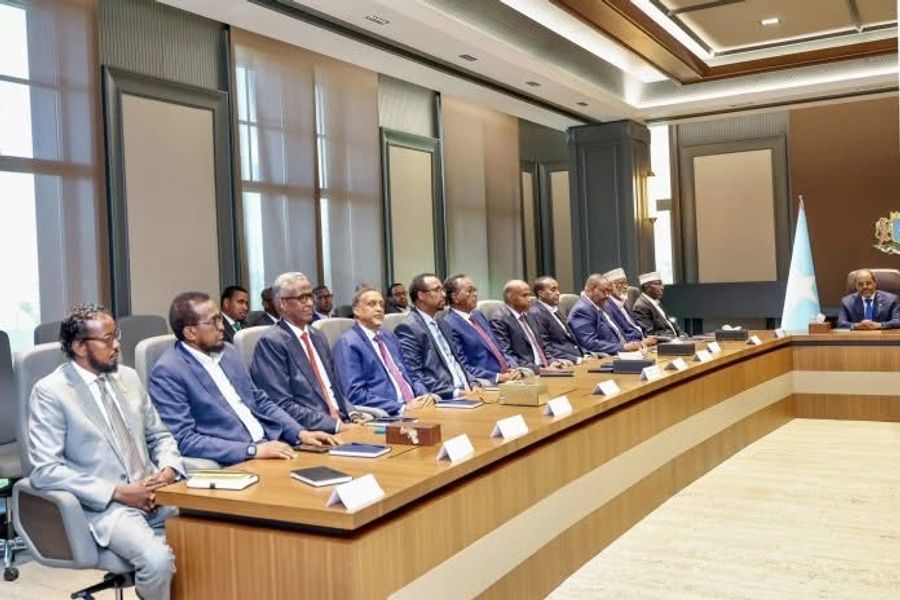
MOGADISHU, Somalia — July 9, 2026 — Representatives of Somalia’s federal government and opposition groups met face-to-face for the first time on Thursday as technical committees convened inside Mogadishu’s airport compound to begin discussions on the country’s political transition and electoral framework, in talks facilitated by four leading Western diplomatic partners.
Somali Government and Opposition Launch First Technical Election Talks
The meeting, held at a hotel within the secure perimeter of Mogadishu’s Aden Adde International Airport, marked the first formal encounter between technical delegations representing Villa Somalia and opposition-aligned political groups under the Future Forum initiative.
According to political sources familiar with the discussions, the dialogue is being facilitated by representatives of four major Western partner countries that are serving as mediators between the two sides. The meeting is focused on narrowing differences over Somalia’s electoral model and the management of the country’s political transition.
Officials have not publicly released details of the agenda, but participants say the discussions are expected to concentrate on competing proposals for organizing Somalia’s next elections.
Delegations representing Puntland and Jubbaland are participating in the technical discussions alongside representatives from the Future Forum, while officials from the Federal Government are presenting the government’s position.
According to sources attending the talks, the Future Forum delegation intends to formally present its preferred electoral framework during the meeting.
That proposal reportedly calls for elections involving a broader voter base than previous indirect electoral processes, the establishment of two separate electoral commissions, revised constituency arrangements, and the continued allocation of parliamentary seats under Somalia’s 4.5 clan-based power-sharing formula.
Political sources say the proposal differs from the electoral approach advocated by Villa Somalia, making the technical discussions an important step toward identifying areas of agreement before higher-level political negotiations.
No official agreement was announced immediately following the opening session.
Focus on Somalia’s Political Transition
The meeting comes as Somalia continues efforts to reach political consensus over how future elections should be organized after months of disagreement between the federal government and several political stakeholders.
Election preparations have become one of the country’s most sensitive political issues, with competing visions emerging over electoral administration, voting mechanisms, and constitutional arrangements.
Officials participating in Thursday’s meeting are expected to examine technical aspects of the proposed election models before political leaders decide whether sufficient common ground exists for broader negotiations.
Diplomatic representatives attending the talks are expected to continue facilitating dialogue aimed at reducing political tensions and encouraging compromise between the rival positions.
Government Response
Federal government officials have not publicly disclosed details of their negotiating position following the opening of the meeting.
Likewise, representatives of the Future Forum had not released an official statement immediately after the first session concluded.
Diplomatic sources have also refrained from commenting publicly on the substance of the negotiations, emphasizing instead the importance of continued dialogue among Somali stakeholders.
Political disagreements over Somalia’s electoral framework have intensified in recent months as federal and regional leaders, opposition groups, and other political actors debate how future elections should be conducted.
The Future Forum has consistently advocated for a broader political consensus on electoral arrangements and has called for negotiations involving federal institutions, regional administrations, and opposition representatives.
Puntland and Jubbaland have previously expressed reservations over aspects of the federal government’s electoral proposals, arguing that major political decisions should emerge through inclusive consultation among all stakeholders.
Western partners and other international actors have repeatedly encouraged Somali leaders to resolve electoral disputes through dialogue rather than confrontation, stressing that political stability remains essential for governance, security cooperation, and ongoing state-building efforts.
Thursday’s technical meeting represents the first structured engagement between technical committees representing the opposing political camps since disagreements over the electoral process intensified.
Participants are expected to continue technical consultations in the coming days as negotiators work to identify areas of consensus before any political agreement is presented to senior leaders.
Whether the discussions lead to a compromise on Somalia’s electoral roadmap remains uncertain, with significant differences still separating the competing proposals, according to sources familiar with the negotiations.
Officials have not announced a timetable for concluding the talks or for holding follow-up meetings between senior political leaders.
The launch of direct technical discussions between the federal government and opposition representatives marks a potentially significant development in Somalia’s efforts to resolve long-running disagreements over elections. Although no agreement has been reached, establishing a formal negotiating channel reduces the risk of political deadlock.
The participation of Puntland and Jubbaland alongside federal representatives reflects the importance of securing broad political support for any future electoral framework. A consensus involving federal and regional stakeholders would likely strengthen the legitimacy of the eventual electoral process.
The involvement of leading Western diplomatic partners as facilitators underscores the international community’s continued interest in supporting Somalia’s political stability while encouraging Somali-led dialogue rather than externally imposed solutions.