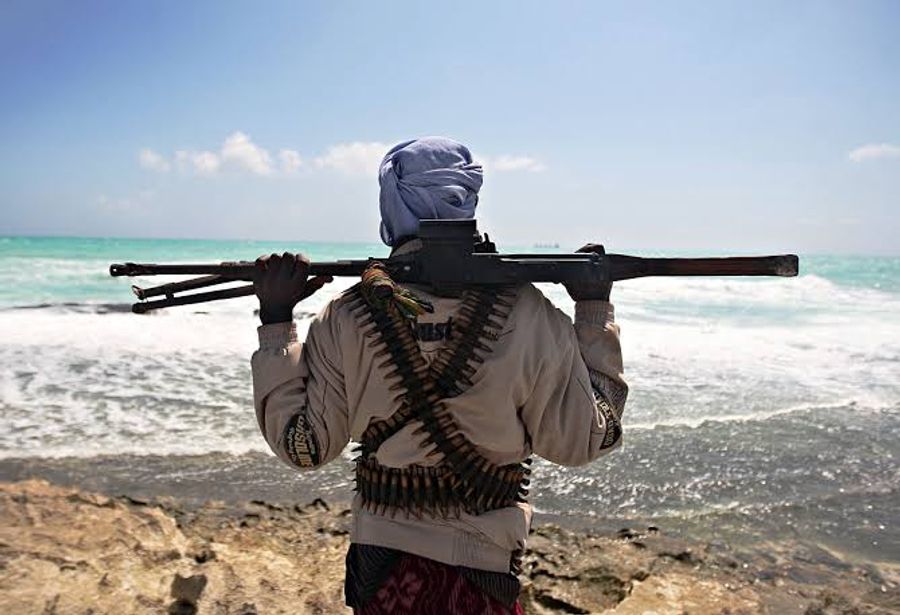
GAROWE , Somalia — August 21, 2026 — Suspected Somali pirates have seized the SIBU 1 oil-products tanker off Yemen and redirected it toward Somalia, maritime authorities said, marking the second reported commercial ship hijacking in the region within days and intensifying concerns over a renewed piracy campaign across the Gulf of Aden and Somali Basin.
The tanker, also identified in shipping records by its former name, Seamull, was travelling west through the Gulf of Aden when it reported being approached by an unauthorized vessel approximately 136 nautical miles east of Al Mukalla, Yemen.
The United Kingdom Maritime Trade Operations, or UKMTO, later confirmed that six armed individuals had boarded the tanker, taken control and changed its course toward Somalia. The agency advised ships operating in the area to exercise caution and report suspicious activity.
The identities of the attackers have not been officially confirmed. Maritime security analysts and Somali regional officials believe, however, that the boarding was carried out by a Somali pirate group.
Crew’s condition remains unknown
Reports indicate that 20 crew members were aboard SIBU 1, including 16 Indian nationals. Their condition and precise location remained unclear on Friday, and there had been no confirmed reports of injuries.
Colonel Mohamed Jama, a senior officer with the Puntland Maritime Police Force, told The New York Times that armed pirates boarded the vessel while it was about 130 nautical miles from Yemen before forcing it toward Somali waters.
UKMTO reported six attackers, while Jama placed the number at seven. The difference could not immediately be reconciled.
Available shipping records identify SIBU 1 as an Eritrean-flagged oil-products tanker built in 2001. Other databases continue to list the ship under its previous identity, Seamull, and associate it with the Palau flag. Maritime publications have reported that the vessel may be using a changed or misleading identity, an issue that has complicated efforts to establish its ownership and recent trading activity.
The tanker has reportedly operated along routes connected to Yemen and the wider regional fuel trade. Some of Yemen’s Red Sea ports are controlled by the Iran-aligned Houthi movement, but no evidence has emerged showing that the ship was operating on behalf of the Houthis.
Second ship seized within days
The seizure followed the hijacking on Monday of the Cameroon-flagged cargo vessel M/V LUTUF near the Puntland coast.
Abshir Hashi Ali, director-general of Galmudug’s Ministry of Ports, said LUTUF had sailed from Turkey and was heading to Mogadishu when it was captured. Somali officials cited by the Associated Press said the ship was carrying weapons, communications devices and other equipment intended for a Turkish military training facility in the Somali capital.
The cargo claim has not been independently confirmed, and Turkish authorities had not publicly commented on the shipment at the time of reporting.
Ten crew members from India, Turkey, Georgia and Serbia were reported to be aboard LUTUF. Their condition also remains unknown. Somali officials said eight armed men seized the vessel near Marraya in Puntland’s Eyl district and moved it toward the Nugaal coast.
Security officials suspect that the attackers used another previously hijacked vessel as a “mother ship” to extend their operating range. This tactic allows pirates to carry smaller attack boats, fuel and supplies far beyond Somalia’s coastline.
Recent maritime reports estimate that Somali pirate groups may now hold as many as six vessels and more than 100 seafarers. The exact total remains difficult to verify because some captured ships are small dhows that may not appear in international shipping databases.
The number of recorded attacks also varies by monitoring organization. Some maritime reports have counted between 15 and 17 significant incidents during 2026, including confirmed hijackings, unsuccessful boardings and suspicious approaches. Analysts describe the current activity as the most concentrated Somali piracy campaign in at least a decade.
Somali piracy reached its modern peak between 2009 and 2011. The International Maritime Bureau recorded 237 attacks attributed to Somali pirates in 2011, while hundreds of seafarers were held for ransom.
Attacks later declined following multinational naval deployments, armed security aboard commercial ships, improved protective measures and operations by Somali regional forces against pirate bases. The Indian Ocean’s designated High Risk Area was removed in January 2023 after years of reduced activity.
The threat began to re-emerge in late 2023. Somali pirates captured the Maltese-flagged bulk carrier MV Ruen in December of that year and later used it as a mother ship. Indian naval forces retook the vessel in March 2024 and rescued its crew.
Pirates also captured the Bangladesh-flagged MV Abdullah in March 2024. The ship and its crew were released after more than a month, reportedly following a multimillion-dollar ransom payment.
A sharper escalation has been recorded in 2026. Maritime risk company Windward documented six significant incidents during a 12-day period between April and May, including four confirmed hijackings.
Analysts have linked the resurgence to reduced international naval coverage, persistent insecurity onshore, economic hardship in coastal communities and competition over marine resources. Naval forces have also faced competing demands arising from Houthi attacks in the Red Sea and wider regional tensions.
Claims that Somali pirate groups have established operational links with Yemen’s Houthis have circulated among analysts and security sources. No government or international maritime authority has publicly produced conclusive evidence establishing such cooperation.
The capture of SIBU 1 demonstrates that suspected Somali pirates can operate far from Somalia’s coastline and strike ships crossing the Gulf of Aden, one of the world’s most important commercial shipping corridors. The use of hijacked vessels as mother ships could significantly enlarge the area at risk.
Repeated hijackings may increase insurance and security costs for ships serving Somali ports. Higher transport costs could eventually affect fuel, food and other imported goods in Somalia, where consumers already face economic pressure.
The immediate priority will be locating the tanker, protecting its crew and preventing the vessel from being used in further attacks. A sustained response may require closer coordination among Somalia’s federal government, Puntland authorities and international naval missions.
The latest incidents suggest Somali piracy has returned as a serious regional security threat, although the scale remains below its 2011 peak. Whether the current wave develops into a prolonged crisis will depend partly on naval deployments, action against coastal support networks and the outcome of efforts to free the ships and crews now being held.