Monday , June 8, 2026 (Baidoa Online) -Somalia is increasingly operating as one of the world’s most dollarized and cashless economies, with the Somali shilling playing a diminishing role in everyday transactions as businesses and consumers rely heavily on U.S. dollars and mobile money platforms.
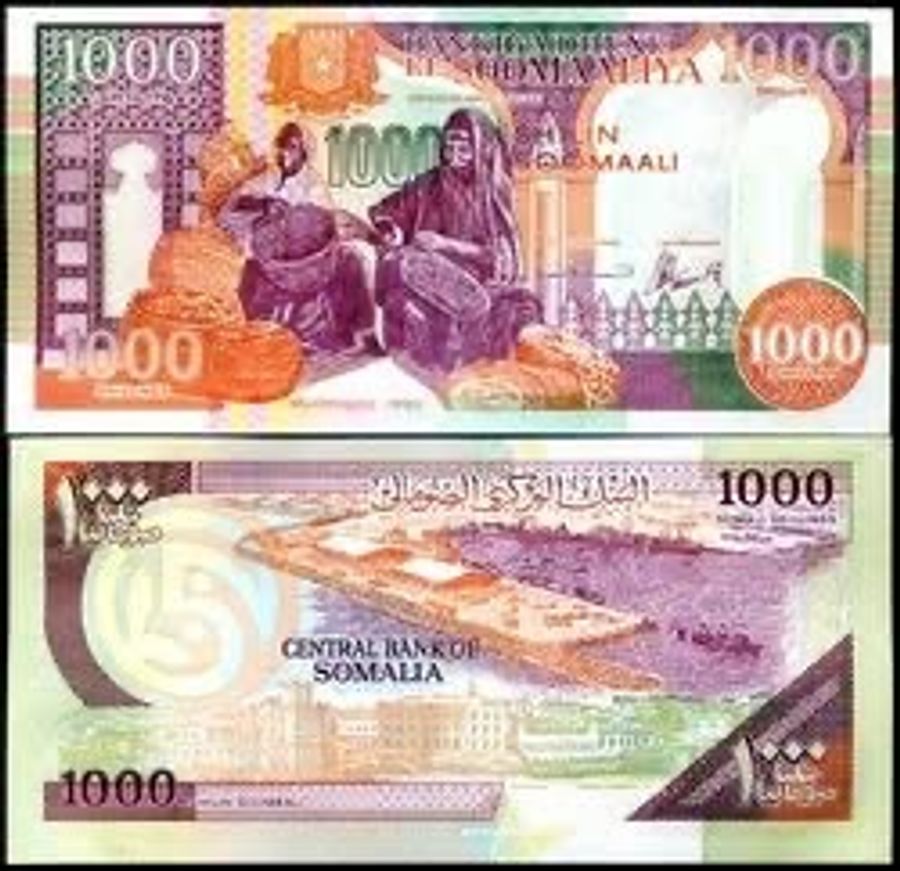
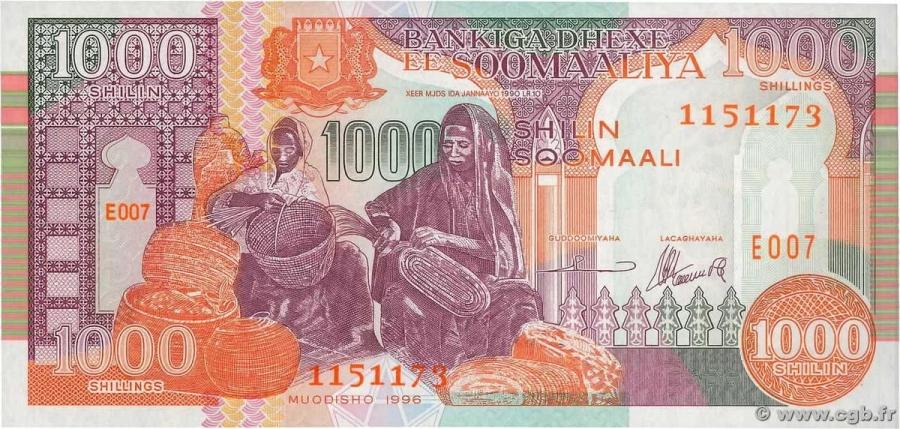
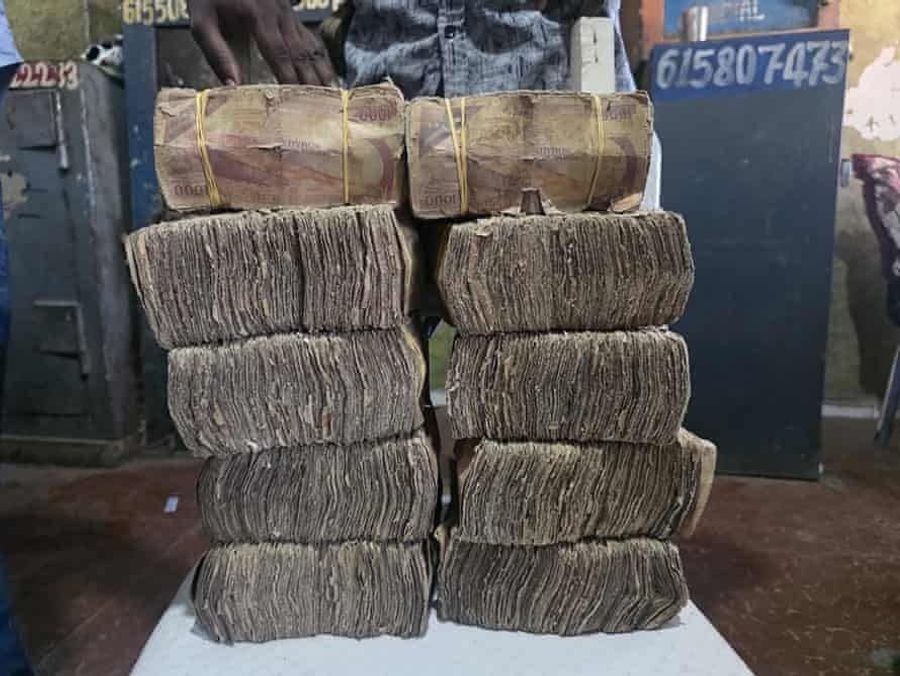
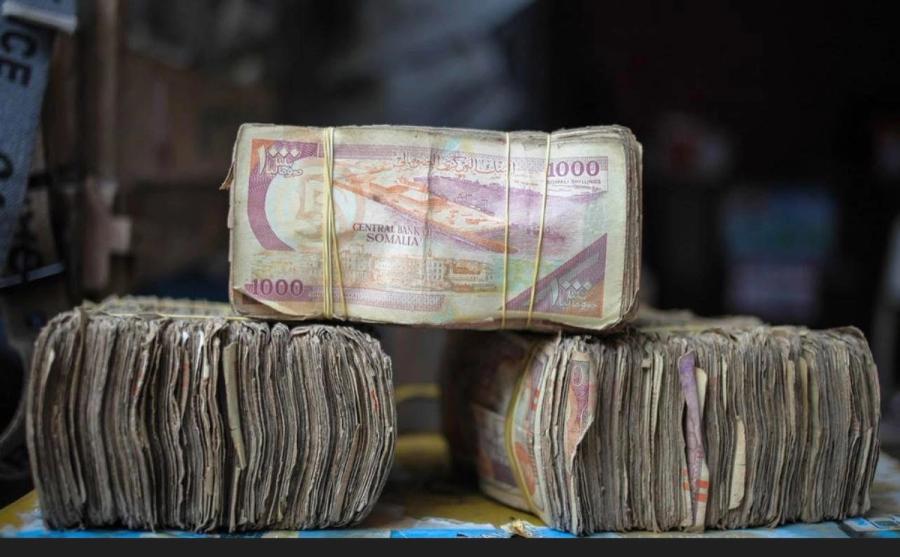
The trend has accelerated in recent months as traders, transport operators, and businesses in parts of Mogadishu have become reluctant to accept the worn-out 1,000 Somali shilling note, which has long been the country’s most widely circulated banknote.
For many Somalis, mobile payment systems such as EVC Plus and eDahab have become the preferred means of conducting business, paying bills, purchasing goods, and transferring money. Transactions ranging from small retail purchases to major commercial payments are now commonly settled electronically and denominated in U.S. dollars.
The Decline of the Somali Shilling
The Somali shilling was introduced as the country’s national currency in 1962 following independence and served as the primary medium of exchange for decades.
However, the collapse of the central government in 1991 severely disrupted monetary institutions. Since then, Somalia has struggled to maintain an effective national currency system. New banknotes were not regularly issued, while counterfeit and unauthorized notes became widespread throughout the country.
Over time, public confidence in the shilling weakened, leading businesses and consumers to seek more stable alternatives.
Rise of the U.S. Dollar
Today, the U.S. dollar functions as the dominant currency for much of Somalia’s economy. Businesses often display prices in dollars, salaries are frequently paid in dollars, and government fees, commercial contracts, imports, and services are commonly settled using the U.S. currency.
Economists describe this phenomenon as “dollarization”—a process in which a foreign currency becomes the primary store of value and medium of exchange within a country. While dollarization can help stabilize prices and reduce inflation risks, it also limits a government’s ability to conduct independent monetary policy.
Mobile Money Revolution
Perhaps the most significant transformation in Somalia’s financial system has been the rapid expansion of mobile money.
Unlike many countries where cash remains dominant, Somalia has developed one of Africa’s most advanced mobile payment ecosystems. Mobile wallets allow users to send and receive money instantly, pay merchants, purchase services, and conduct business transactions without handling physical cash.
The widespread availability of mobile money has enabled millions of Somalis to participate in the economy despite limited access to traditional banking services. It has also reduced the need to carry large amounts of cash and made transactions faster and more secure.
Many payments conducted through mobile platforms are denominated directly in U.S. dollars, further reinforcing the country’s shift away from the Somali shilling.
Challenges for Low-Income Households
While digital payments have improved convenience, the decline of the Somali shilling has created challenges for vulnerable groups.
Many low-income residents, elderly citizens, and people without access to mobile services continue to rely on cash transactions. The rejection of worn-out shilling notes has left some households struggling to purchase basic necessities or access public transportation.
Analysts warn that a fully digital and dollar-based economy may increase inequality if portions of the population remain excluded from electronic financial services.
Government and Central Bank Response
The Central Bank of Somalia has repeatedly announced plans to reform the country’s currency system and introduce redesigned banknotes aimed at restoring confidence in the Somali shilling. Previous proposals included replacing old notes and strengthening safeguards against counterfeiting.
In recent years, authorities have also worked to modernize payment infrastructure through initiatives designed to improve interoperability and strengthen the formal financial sector.
However, large-scale currency reform has faced delays, leaving the U.S. dollar and mobile money systems as the dominant mechanisms for conducting business across much of the country.
A Unique Economic Model
Somalia’s financial system is increasingly viewed as unique: a country with an official national currency that plays only a limited role in everyday commerce, while digital transactions and a foreign currency dominate economic activity.
Today, many Somalis rarely use physical cash. Everyday purchases, utility payments, school fees, transportation costs, and business transactions are often completed through mobile phones using electronic money platforms. In urban areas, it is possible to go days or even weeks without handling a banknote.
As mobile payments continue to expand and confidence in the Somali shilling remains weak, Somalia offers a rare example of how technology, dollarization, and private-sector innovation can reshape a nation’s monetary landscape.
What Went Wrong With the Currency System?
Somalia’s national currency system has struggled for decades due to the collapse of strong monetary institutions and central banking authority after 1991. With limited capacity to regulate money supply, control inflation, or consistently issue trusted banknotes, the Somali shilling gradually lost stability. The circulation of counterfeit and unofficial notes further weakened public confidence, leading many businesses and citizens to reject certain denominations and shift away from the shilling as a reliable medium of exchange.
As trust in the national currency declined, Somalia became heavily dollarized, with the U.S. dollar dominating pricing, salaries, and major transactions across the economy. At the same time, mobile money platforms such as EVC Plus and eDahab rapidly replaced cash in daily life, further reducing the role of the shilling. Today, the country operates with a hybrid system where digital payments and foreign currency drive most economic activity, while the national currency plays only a limited and declining role.
Whether future currency reforms can restore the role of the Somali shilling remains one of the most important economic questions facing Somalia in the years ahead.
Editorial Note:
This report was prepared and published by the editorial team of Baidoa Online.