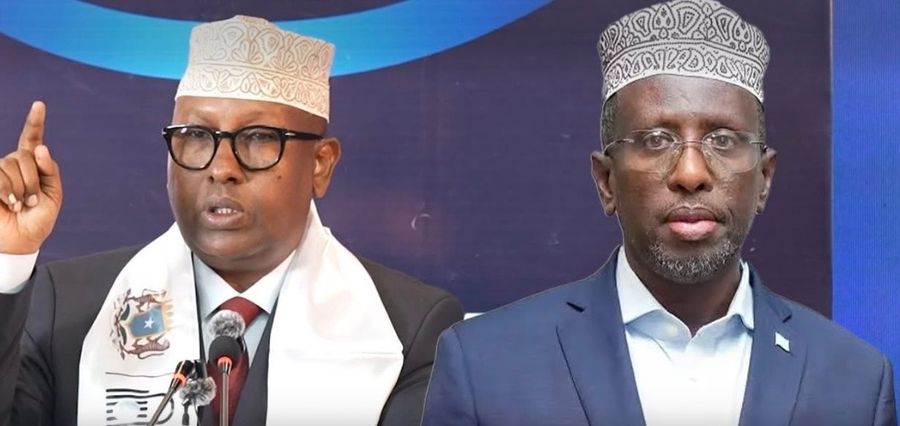
Wednesday, May 20, 2026 -Somalia’s Defence Minister Ahmed Moallim Fiqi has drawn criticism after making remarks about a previous confrontation between opposition figures and security forces in Mogadishu, comments that have fueled renewed political debate in the capital.
The minister’s statement referred to events that occurred on September 24, 2025, when opposition leaders attempted to visit Mogadishu’s Warta Nabadda district. The visit was blocked by security forces, leading to tensions and clashes involving opposition supporters and government security personnel, according to political figures and local observers familiar with the incident.
Speaking during a public event, Fiqi referenced the 2025 confrontation and stated that opposition figures involved should have been “executed” on that day. The comments quickly circulated across social media platforms and political circles, prompting criticism from opposition supporters, civil society representatives, and political commentators.
According to individuals who attended the event and recordings shared online, the minister also accused opposition groups of contributing to instability and attempting to challenge state authority through public demonstrations.
He warned that future efforts to organize protests would not be tolerated, according to participants who heard the remarks.
The comments come at a time of heightened political tension in Mogadishu, where disagreements persist over governance, electoral processes, and the role of opposition movements in the country’s political landscape.
Government officials have not issued any clarification or additional statement regarding the minister’s remarks.
As of Friday evening, there had been no indication that the Ministry of Defence intended to retract or further explain the comments.
Officials from the federal government have repeatedly argued that security measures in Mogadishu are necessary to maintain public order and prevent unrest.
Opposition figures have often countered that such measures risk limiting political freedoms and restricting peaceful political activity.
Opposition and Public Reaction
No formal statement had been issued by major opposition leaders immediately following the latest remarks.
However, political observers and civil society voices expressed concern that the language used by the minister could further increase tensions between the government and opposition groups.
According to community leaders and political analysts, Somalia’s political environment remains sensitive, particularly as discussions continue regarding governance, constitutional issues, and future political arrangements.
Several commentators called for restraint from all political actors, emphasizing the importance of dialogue and peaceful engagement.
Background to the Conflict
The incident referenced by Fiqi dates back to September 24, 2025, when opposition politicians sought to travel to Warta Nabadda district in Mogadishu.
According to opposition representatives at the time, the visit was intended as a political activity. Government security forces blocked the movement, citing security considerations.
The standoff resulted in clashes and heightened political tensions in the capital. Both the government and opposition exchanged accusations regarding responsibility for the confrontation.
The episode became one of several disputes that contributed to growing mistrust between the federal government and opposition groups.
Political observers say reactions to the minister’s remarks are likely to continue in the coming days.
Analysts expect opposition groups, civil society organizations, and government representatives to face increasing pressure to avoid rhetoric that could deepen divisions or provoke further political confrontation.
Whether the Defence Ministry provides clarification or whether opposition leaders formally respond may influence the next phase of the debate.
The controversy highlights the fragile nature of Somalia’s political environment, where statements by senior officials can quickly become national issues.
Political analysts say language perceived as endorsing violence against political opponents can complicate efforts to promote dialogue and consensus among competing political actors.
The remarks also arrive at a time when Somalia continues to confront security challenges, political disagreements, and debates over democratic participation. Maintaining confidence in political institutions remains an important issue for both government authorities and opposition movements.
Observers note that the ability of political leaders to manage disagreements through dialogue rather than confrontation will remain a significant factor in shaping Somalia’s political stability in the months ahead.