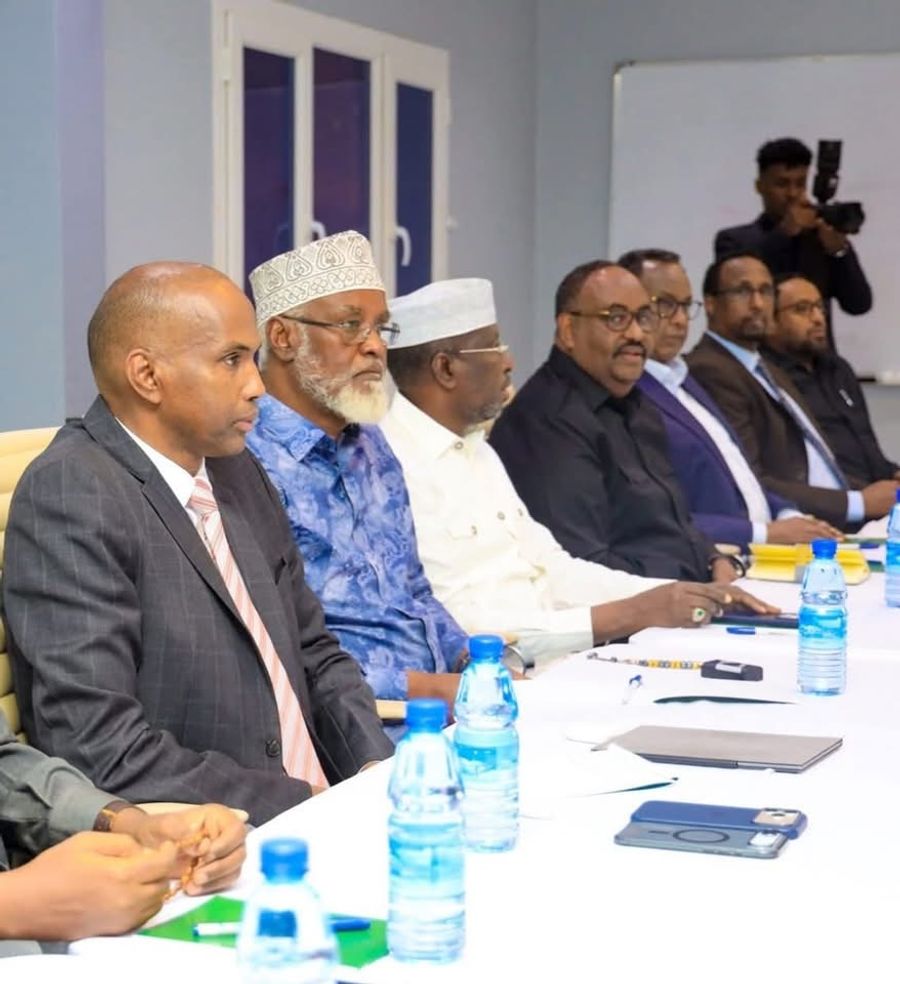
MOGADISHU, Somalia — August 9, 2026 — Western diplomats are working to secure preliminary agreements between Somalia’s Federal Government and the Somali Future Council before their senior leaders meet for expected political talks, according to sources familiar with the diplomatic efforts, as sharp disagreements remain over elections, transitional arrangements and control of the political process.
The diplomatic push is aimed at establishing a minimum common framework before any high-level meeting takes place and increasing the chances that the talks could produce a joint communiqué, the sources said.
People familiar with the discussions said both the Federal Government and the Somali Future Council, known as SFC, have separately submitted their core demands to mediators.
The proposals reveal significant differences over President Hassan Sheikh Mohamud’s remaining period in office, the authority of any new electoral committee and whether responsibility for managing the political process should remain primarily with the Federal Government or be shared with opposition leaders and other stakeholders.
At the same time, the apparent willingness of both sides to discuss the creation of a committee could provide a possible starting point for negotiations, although they remain divided over its mandate, composition and authority.
Diplomats Seek Agreement Before Leaders Meet
According to sources briefed on the process, Western ambassadors and other international partners want negotiators to settle some of the most contentious issues before bringing senior leaders from the Federal Government and the Future Council together.
The effort reflects concerns that another meeting without sufficient preparation could end without an agreement.
International partners have previously participated in efforts to bridge political differences between the Somali government and its opponents, but major disputes over elections and political representation have remained unresolved.
Sources said mediators are now seeking to identify issues on which the parties can reach preliminary agreement and potentially use them as the basis for a joint statement following a future meeting.
No final agreement had been announced, and neither side had publicly confirmed all the proposals described by the sources.
Future Council Calls for Transitional Arrangement
According to sources familiar with the SFC position, the opposition grouping wants President Hassan Sheikh Mohamud to acknowledge that Somalia has entered a transitional political period and agree to establish a temporary body responsible for key aspects of elections and security.
The Future Council argues that delays in completing the electoral process have made such an arrangement necessary and that major responsibilities should no longer remain solely under the Federal Government.
The SFC proposal calls for a jointly established committee involving representatives selected by both the Federal Government and the Future Council, with participation from civil society.
That body would discuss the electoral model, possible political compromises and arrangements for managing the transition, according to the sources.
The opposition grouping is also seeking a clearly defined electoral timetable.
Sources familiar with its proposal said the SFC wants the parties to agree on an election framework before the end of 2026, with the process conducted within an agreed timetable and overseen under the proposed transitional arrangement.
The Future Council has questioned whether institutions currently controlled by the Federal Government can independently manage the process, according to people familiar with its position.
Those assertions represent the opposition’s political position and have not been independently verified.
Federal Government Rejects Broader Transitional Mandate
The Federal Government has presented a significantly different proposal, according to sources familiar with its submission.
The government opposes giving the Future Council authority over electoral matters involving federal member states where Villa Somalia has already supported or recognized political processes, the sources said.
The Federal Government is instead prepared to consider a committee focused primarily on discussing the model for upcoming elections.
Under the government proposal described by the sources, the Federal Government would retain the central role in establishing the body and determining the process for its formation, while representatives from different sectors of society could participate.
That position would leave the broader management of government responsibilities, security and the political transition under existing federal institutions rather than transferring those powers to a temporary joint mechanism.
The Federal Government has not publicly released a detailed response confirming the full proposal described by the sources.
Dispute Centers on Powers of Proposed Committee
The emerging debate over a committee could become one of the most consequential issues in the negotiations.
While both camps appear willing to discuss some form of new body, their understanding of what that institution should do remains substantially different.
The Future Council is seeking what sources describe as a temporary transitional committee with responsibilities extending beyond negotiations over the electoral model. Its proposed mandate would include aspects of election management, the political transition and national security arrangements.
The Federal Government, by contrast, is resisting the creation of a body that could assume responsibilities currently exercised by constitutionally established federal institutions.
Its proposal would limit the committee largely to discussions over the type of election Somalia should hold, according to the sources.
The disagreement is therefore not only about the name of the proposed committee. It concerns who would exercise political authority during the remaining electoral period and how much control the Federal Government would retain over the process.
Background: Somalia’s Continuing Electoral Dispute
Somalia has faced recurring disputes over election models, constitutional changes and the division of authority between the Federal Government, federal member states and opposition groups.
President Hassan Sheikh Mohamud’s administration has advocated a transition toward direct elections, arguing that universal suffrage would move Somalia beyond the indirect electoral system that has dominated national politics for years.
Opposition politicians and some regional leaders have challenged parts of the government’s electoral approach, arguing that major changes to the election system require broader political consensus.
Those disagreements have increased pressure for negotiations as Somalia approaches another sensitive electoral period.
Previous rounds of dialogue have struggled to resolve the central dispute over how elections should be organized and who should have authority to manage them.
International partners have repeatedly encouraged Somali political actors to settle constitutional and electoral disputes through dialogue rather than allowing political disagreements to undermine security and state-building efforts.
Diplomatic efforts are expected to focus on narrowing the competing proposals before senior Federal Government and Future Council leaders hold direct talks.
Whether mediators can produce agreement on the mandate and composition of a committee could determine whether the planned meeting produces a political framework or ends without a substantive breakthrough.
Several other issues could also require compromise, including the electoral timetable, representation on any joint mechanism, federal member state elections and the extent of the Federal Government’s authority during the remaining political period.
No date for a final agreement or high-level meeting has been publicly confirmed in the information provided by the sources.