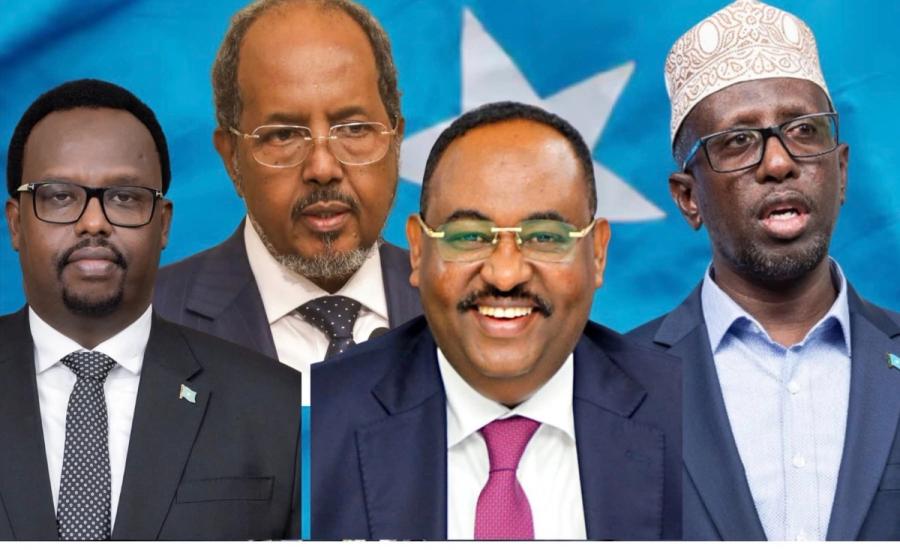
Friday , May 15, 2026 (Baidoa Online) -Somalia’s Federal Government announced on Wednesday that political talks with opposition groups have collapsed, marking a significant setback in efforts to reach consensus on the country’s electoral process. Despite the breakdown in negotiations, government officials said preparations for one person one vote elections will continue.
The announcement comes amid growing political tensions over Somalia’s electoral framework and the country’s transition toward a direct voting system. The collapse of the dialogue raises new questions about political consensus ahead of planned electoral reforms.
According to a government statement, officials remain committed to implementing universal suffrage elections, arguing that the process is necessary to advance democratic governance and strengthen public participation in national decision making.
The Federal Government said discussions held with opposition politicians and political stakeholders failed to produce an agreement on key issues related to the electoral process.
Officials did not immediately provide detailed information about the specific disagreements that led to the collapse of the talks. However, the government maintained that electoral preparations would move forward despite the absence of a political settlement.
According to the statement, authorities remain focused on establishing a one person one vote system that would allow Somali citizens to directly elect their representatives.
The government described the electoral transition as an important step toward expanding democratic participation and reducing reliance on indirect electoral models that have characterized Somalia’s political system for years.
Opposition groups have previously expressed concerns regarding the timing, implementation mechanisms, legal framework, and political consensus surrounding proposed electoral reforms. Several opposition leaders have argued that major constitutional and electoral changes should be agreed upon through broad consultation among stakeholders.
opposition representatives had not issued a collective response to the government’s latest announcement.
Government officials said efforts to build a democratic electoral system would continue despite political disagreements.
According to the statement, the administration believes the country cannot delay electoral reforms indefinitely and must continue preparations aimed at achieving direct elections.
Officials also emphasized the government’s commitment to maintaining stability and ensuring that political disputes are addressed through peaceful and constitutional means.
The announcement follows months of discussions between government representatives, opposition figures, regional stakeholders, and civil society actors regarding Somalia’s political future.
Somalia has relied primarily on indirect electoral systems since the collapse of the central government in 1991. Under recent arrangements, lawmakers have generally been selected through clan based and delegate driven processes rather than direct popular voting.
Successive Somali governments have pledged to transition toward universal suffrage, but security challenges, political disagreements, logistical constraints, and institutional limitations have repeatedly delayed implementation.
The issue has become one of the most significant political debates in Somalia’s current political landscape. Supporters of direct elections argue that the system would strengthen democratic legitimacy and public participation.
Critics have raised concerns about whether the necessary legal, administrative, and security conditions are in place to conduct nationwide elections in a country still facing threats from the militant group Al Shabaab and other governance challenges.
The collapse of the latest talks reflects continuing divisions among Somali political actors over how and when electoral reforms should be implemented.
Following the breakdown in negotiations, attention is expected to shift toward the government’s next steps in advancing electoral preparations.
Political observers say additional consultations could still take place in an effort to bridge differences between the government and opposition groups. No new date for renewed talks has been announced.
government institutions are expected to continue working on electoral planning, legal frameworks, and administrative preparations linked to the proposed one person one vote system.
The coming weeks may prove critical in determining whether political stakeholders can find common ground on one of the country’s most consequential governance issues.
The collapse of the dialogue highlights persistent political divisions over Somalia’s democratic transition. Reaching consensus on electoral reforms remains a major challenge for the country’s leaders as they seek to balance political inclusion, constitutional requirements, and public expectations.
The dispute could influence political stability, relations between federal institutions and opposition groups, and public confidence in the electoral process. A lack of agreement among major political actors may complicate efforts to implement reforms smoothly.
At the same time, the government’s decision to continue pursuing one person one vote elections signals its determination to advance a long stated objective of Somalia’s democratic development. Whether that objective can be achieved through broad political consensus remains one of the central questions facing the country in the months ahead.