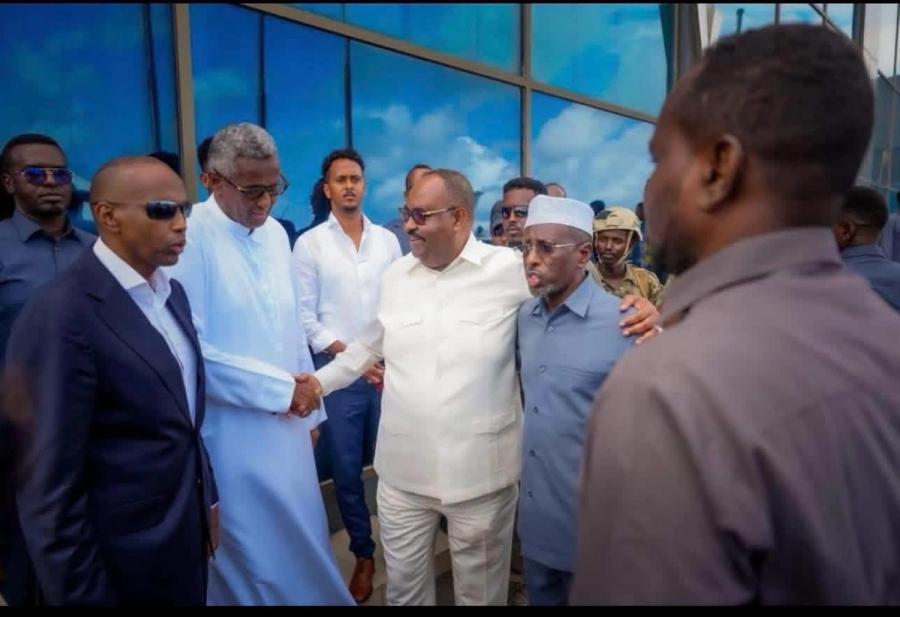
MOGADISHU, Somalia — September 19, 2026 — Somalia’s Future Council, an opposition coalition, has called on the United Nations and international partners to facilitate inclusive talks among Somali political stakeholders, warning that the country’s political crisis poses growing risks to statehood, stability and national cohesion.
The council made the appeal in a letter sent to President Hassan Sheikh Mohamud ahead of the UN General Assembly session, asking international actors to take a more active role in mediating the dispute and to provide guarantees that any agreement reached by Somali parties would be implemented.
The opposition group said it had also shared its concerns with international partners, accusing the federal government of pursuing political decisions without adequate consultation or consensus. It said Somalia required an internationally supported settlement to prevent the dispute from escalating.
In its message, the council accused President Mohamud of acting without sufficient political responsibility and referred to him as a leader whose term had expired. That is the opposition’s position and remains disputed by the federal government and its supporters, who point to constitutional changes adopted earlier this year.
The appeal comes as Somalia remains divided over the legal basis, timing and format of future elections, as well as the broader constitutional framework governing relations between Mogadishu and the federal member states.
The Future Council has urged the UN and the wider international community to support a Somali-led dialogue involving the federal government, opposition leaders, federal member states and other political stakeholders. It said external mediation should be coupled with clear guarantees for implementing any deal, reflecting concerns that previous political agreements have often faced delays, disagreements or uneven application.
The coalition’s latest intervention is part of a wider struggle over political legitimacy that has intensified since constitutional changes approved by parliament in March. The amendments introduced a five-year presidential and parliamentary term and set out a framework for direct elections, but they were rejected by several opposition figures and regional authorities who said the process lacked broad political consensus.
President Mohamud’s administration has defended constitutional and electoral reforms as necessary steps toward ending decades of indirect, clan-based voting and building a more democratic political system. Supporters of the reforms argue that one-person-one-vote elections are central to Somalia’s long-term state-building agenda.
Opposition leaders, however, have said major changes to the electoral system and constitution require an agreement that includes all key political actors and federal member states.
Dispute Over Elections and Constitutional Reform
Somalia has relied largely on indirect elections since the collapse of the central government in 1991, with clan elders and delegates playing a decisive role in selecting lawmakers, who then elect the president.
The government began advancing constitutional reforms in 2024. Parliament approved amendments to the first four chapters of the provisional constitution in March 2024, introducing provisions for universal suffrage, a multi-party system and a five-year presidential and parliamentary term, according to the Office of the Prime Minister’s published constitutional record.
The process remained politically divisive. Puntland withdrew recognition of the federal government’s constitutional amendments in 2024, arguing that the changes had not been agreed through a sufficiently inclusive process. Jubaland has also opposed aspects of Mogadishu’s political and electoral agenda, deepening tensions between the federal government and two influential regional administrations.
The dispute sharpened in March 2026 when parliament approved further constitutional changes that could delay elections and potentially affect the length of the president’s term. Reuters reported at the time that analysts and opposition lawmakers questioned the implications of the amendments, while the government said the reforms were part of the country’s long-delayed constitutional process.
The opposition has maintained that Somalia should not proceed with a new electoral system without a negotiated political agreement. The Future Council has previously proposed its own transitional model for direct elections, seeking to combine universal suffrage with temporary safeguards linked to Somalia’s existing clan power-sharing arrangements.
That proposal underscored that the dispute is not solely over whether Somalia should hold direct elections, but also over how the process should be organized, who should oversee it and whether it can be implemented across all federal member states.
Previous Political Tensions
Somalia’s current impasse follows a history of disputed electoral timelines and political confrontation.
In 2021, a disagreement over the election process and the extension of the previous government’s mandate triggered armed clashes in parts of Mogadishu, prompting international pressure for a negotiated settlement. The crisis was eventually defused through a political agreement that allowed the delayed indirect election process to continue.
This year, tensions again spilled into the capital. In June, clashes broke out between government forces and fighters aligned with opposition politicians ahead of planned anti-government demonstrations. The government said it had restored order, while opposition figures accused security forces of targeting their supporters. Reuters reported that the United Nations, African Union and regional actors called for dialogue after the violence.
The latest appeal by the Future Council places renewed focus on the role of international partners, who have long supported Somalia’s state-building, security and electoral processes. The council’s request for implementation guarantees appears intended to ensure that a future political agreement does not remain only a declaration but includes clear commitments, timelines and mechanisms for resolving disputes.
Security and State-Building Pressures
The political dispute is unfolding as Somalia continues to face serious security challenges from al-Shabaab, which retains the capacity to carry out attacks in Mogadishu and other population centres despite ongoing operations by Somali forces and African Union troops.
Political divisions could complicate coordination between Mogadishu and regional administrations at a time when the government is also navigating changes to international support for the African Union Support and Stabilization Mission in Somalia, known as AUSSOM.
The United States agreed this week to give the United Nations an additional year to phase out support for the AU mission, amid concerns about Somalia’s fragile political and security environment.
It remains unclear whether the federal government will respond formally to the Future Council’s letter or agree to internationally mediated talks.
The UN General Assembly meetings provide Somali political actors with an opportunity to engage foreign partners, but any durable agreement will ultimately depend on negotiations among Somali stakeholders. The key unresolved issues include the electoral timetable, the design of direct elections, the status of constitutional amendments and the role of federal member states in the national political process.
The Future Council said it wants a settlement that would prevent further escalation and be binding on all sides. The federal government has consistently said it supports constitutional reform and direct elections, but has faced sustained calls from opposition leaders and regional authorities for a broader consensus-based process.
Somalia’s political dispute is now directly linked to the credibility of its electoral transition. Without agreement on election rules and constitutional authority, competing political actors may continue to challenge each other’s legitimacy, making governance and security coordination more difficult.
The opposition’s appeal for UN-backed mediation also reflects declining trust between the rival camps. International facilitation has helped Somalia resolve past political deadlocks, but it cannot replace a domestic agreement accepted by the federal government, opposition parties and federal member states.