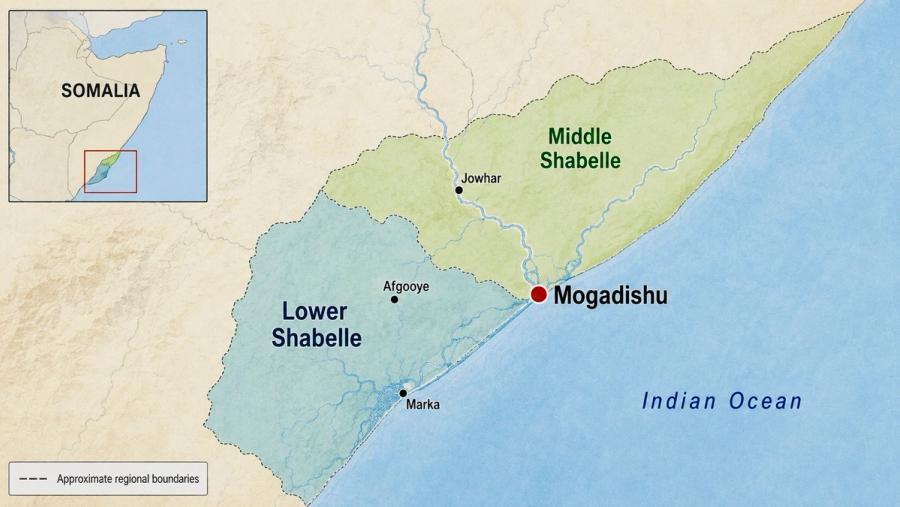
MOGADISHU, Somalia — August 13, 2026 — Somalia’s federal government has deployed additional forces to strategic locations around Mogadishu and the Shabelle regions after security assessments warned that Al-Shabaab could be preparing attacks against Somali and African Union military bases, according to security sources.
The government is concentrating its military resources on reinforcing the “Arc Security Plan,” a security arrangement covering four main corridors connecting Mogadishu with Lower and Middle Shabelle.
Security sources said the latest troop deployments began during the past two days and targeted sensitive positions considered essential to protecting the capital. The precise number of personnel involved and their deployment locations have not been publicly disclosed.
The operation follows reports of increased Al-Shabaab movements in several strategically important areas of Lower Shabelle. The militant group retains a presence in rural parts of the region and has repeatedly targeted military installations, government positions and roads used to transport personnel and supplies.
Two security assessments shared by African Union forces and Somalia’s federal security agencies identified militant movements that could indicate preparations for attacks on military bases, according to sources familiar with the reports.
The assessments have not been released publicly, and Somali authorities have not identified the bases believed to be at risk. The reported militant preparations could not be independently verified.
Over the past four days, commanders from countries with troops stationed around the threatened areas have reportedly ordered their forces to increase vigilance. Some military positions have raised their readiness levels because of concerns about possible coordinated attacks.
Government Reinforces Four Security Corridors
The Arc Security Plan was developed by Somali federal security agencies with support from Turkish security advisers, according to security sources.
The plan seeks to establish a defensive perimeter around Mogadishu by securing four main axes leading into the capital through Lower and Middle Shabelle. These corridors are central to the movement of people, commercial goods, humanitarian supplies and government forces.
Federal forces deployed under the plan are expected to protect major roads, reinforce vulnerable military positions and restrict Al-Shabaab’s ability to move closer to Mogadishu.
Lower Shabelle is particularly significant because several roads linking the capital with southern Somalia pass through the region. Control of those routes affects military supply operations and civilian travel between Mogadishu and regional towns.
Al-Shabaab has frequently used roadside bombs, ambushes and direct assaults against government and African Union forces operating in the Shabelle regions. The group has also attempted to disrupt traffic along major roads and isolate military positions from their supply routes.
The federal government has not issued a detailed public statement about the latest deployments or said whether military operations against suspected militant positions are planned.
AU Concerned About UNSOS Equipment Auctions
Separately, African Union officials have expressed concern about the reported auction of equipment held by the United Nations Support Office in Somalia, known as UNSOS.
Sources said the assets being sold in Mogadishu include equipment and container units previously used as accommodation. Some AU officials reportedly believe the disposal of the assets could indicate that UNSOS is preparing to reduce or conclude parts of its operations in Somalia.
UNSOS and the African Union mission have not publicly confirmed that the auction is connected to a wider withdrawal or reduction in logistical support. The sale of equipment can also form part of routine inventory management, replacement programs or operational restructuring.
UNSOS provides logistical assistance to African Union forces in Somalia, including transport, communications, medical evacuation, accommodation and other operational support. African Union troops rely on that assistance while operating from bases in areas threatened by Al-Shabaab.
A substantial reduction in logistical support could affect the mission’s mobility, supply system and ability to maintain remote military positions. No official timetable for such a reduction has been announced.
Mogadishu’s security is closely linked to conditions in Lower and Middle Shabelle because both regions surround key access routes to the capital.
Somali and African Union forces maintain several bases across the two regions to prevent Al-Shabaab from establishing positions near major population centres. Despite repeated military operations, the militants remain capable of moving through rural territory and attacking government-controlled towns and security installations.
Securing the approaches to Mogadishu has remained a central objective of the federal government as Somali forces assume greater responsibility for national security. The transition has increased pressure on federal units to hold territory while continuing offensive operations against Al-Shabaab.
Somali and African Union forces are expected to maintain heightened security at bases considered vulnerable to militant attacks. Additional deployments may also be made along roads and settlements included in the Arc Security Plan.
Authorities have not said how long the increased alert will remain in effect. The next steps are likely to depend on intelligence about Al-Shabaab’s movements and whether the militants attempt to attack military positions in Lower or Middle Shabelle.
The future scale of UNSOS support will also be closely watched by AU officials. Any confirmed reduction could require the African Union mission and Somalia’s international partners to find alternative arrangements for equipment, transport and accommodation.
The four corridors covered by the Arc Security Plan form part of Mogadishu’s outer defensive system. Increased militant activity in these areas could threaten military supply routes, civilian transport and the movement of goods into the capital.
Reinforcing the corridors may improve the government’s ability to respond to attacks, but maintaining security will require reliable intelligence, regular supplies and cooperation between Somali forces and African Union contingents.
For civilians, renewed fighting could disrupt travel and trade between Mogadishu and the Shabelle regions. Attacks or security operations along major roads could also restrict humanitarian access to communities outside government-controlled towns.
Concerns about UNSOS asset sales add a logistical challenge. If the auctions are followed by a significant reduction in UN support, African Union forces could face greater difficulty sustaining bases in remote and contested areas.