MOGADISHU, Somalia — July 9, 2026 —Somalia’s economy is showing signs of slowing growth as prolonged political uncertainty, declining international assistance, and cautious private investment weigh on business activity across the country. Economists say the combination of political disputes and external economic pressures is reducing investor confidence, slowing job creation, and weakening consumer spending, even as Somalia’s private sector continues to demonstrate resilience.
Businesses across Somalia are increasingly adopting a cautious approach to investment amid ongoing disagreements over the country’s political direction, according to economists and business analysts.
While no official government figures quantify the number of companies relocating operations overseas, members of Somalia’s business community say some entrepreneurs have expanded or shifted parts of their investments to regional commercial centers including Nairobi in Kenya, Addis Ababa in Ethiopia, Cairo in Egypt, Kampala in Uganda, and Kuala Lumpur in Malaysia.
Business owners cite access to larger financial markets, greater regulatory certainty, stronger banking systems, and concerns over Somalia’s political environment as factors influencing investment decisions. Many continue operating inside Somalia while diversifying investments abroad rather than fully relocating.
The reported movement reflects a broader trend among businesses seeking to reduce risk during periods of prolonged uncertainty, analysts say.
Slower Economic Growth
According to the World Bank, Somalia’s economic growth has moderated as the country faces multiple domestic and external challenges.
The institution estimates economic growth slowed to around three percent in 2025, down from stronger growth recorded during previous years. The slowdown has been linked to declining international aid, climate-related shocks, weaker domestic demand, and reduced private investment.
The International Monetary Fund has also warned that Somalia’s economic outlook remains vulnerable to political uncertainty, security challenges, changing donor support, and recurring droughts and floods.
Economists note that uncertainty often discourages investment decisions long before broader economic indicators deteriorate.
Business Activity and Money Circulation
Retail traders and small business operators in Mogadishu and several regional cities report weaker consumer demand compared with previous years.
Business associations say investment decisions have become increasingly cautious as companies delay expansion plans, reduce recruitment, or postpone new projects until there is greater political clarity.
Lower investment can reduce money circulating throughout the economy by slowing construction projects, limiting new employment opportunities, and reducing household purchasing power.
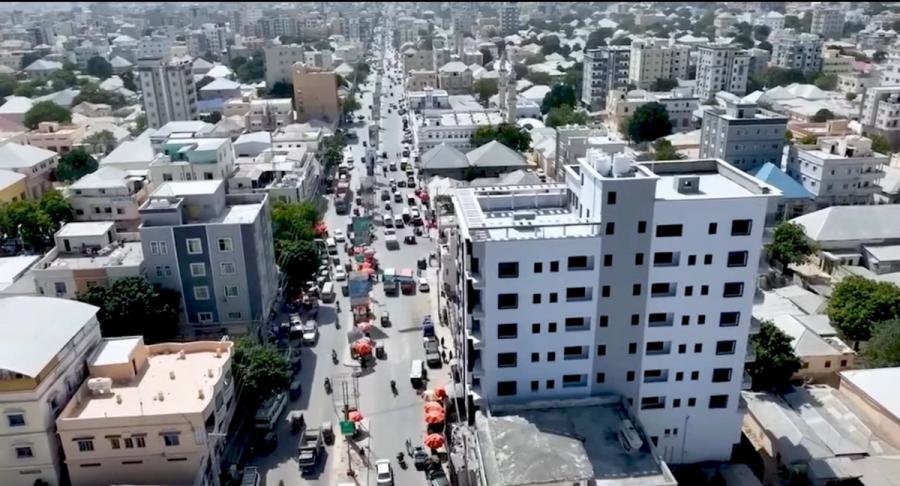
Although Somalia’s economy remains largely driven by the private sector, analysts say slower business activity has become increasingly noticeable in sectors including retail, construction, transport, and real estate.
Employment Challenges
Job creation remains one of Somalia’s biggest economic challenges.
The country’s young population continues to grow rapidly, with thousands of graduates entering the labor market each year. However, economists say formal employment opportunities have not kept pace with population growth.
Most Somali workers remain employed in the informal economy, while the formal private sector continues to face structural constraints, including limited access to finance, infrastructure challenges, and security risks.
According to development institutions, expanding private investment will be critical to creating sustainable employment opportunities for Somalia’s growing workforce.
Political Uncertainty and Investor Confidence
Economists generally agree that political stability plays a significant role in attracting domestic and foreign investment.
Somalia has experienced recurring political disagreements over constitutional reforms, electoral arrangements, and relations between the Federal Government and several Federal Member States.
Although many businesses continue operating successfully, analysts say prolonged uncertainty can encourage investors to postpone major projects or diversify investments into neighboring countries with more predictable regulatory environments.
Financial analysts note that confidence remains one of the most important drivers of investment, particularly in frontier markets such as Somalia.
International Aid and Economic Pressures
Somalia is also adjusting to lower levels of international financial assistance following recent shifts in donor priorities.
According to the World Bank and the IMF, reduced aid flows are increasing pressure on public finances while humanitarian needs remain significant in many parts of the country.
At the same time, climate shocks, including droughts and floods, continue affecting agriculture, livestock production, and rural livelihoods, adding further strain to economic recovery efforts.
Despite these pressures, remittances from the Somali diaspora remain one of the country’s most important economic lifelines, supporting household incomes and financing thousands of small businesses.
The Federal Government has continued implementing economic reforms aimed at strengthening public finances, improving domestic revenue collection, and attracting investment following Somalia’s debt relief achievements.
Officials have repeatedly stated that improving governance, infrastructure, and security remains central to the government’s economic agenda.
International financial institutions have welcomed progress in fiscal reforms while stressing that continued economic growth will depend on sustained political stability, stronger institutions, and an improved investment climate.
Somalia’s private sector has been widely recognized as one of East Africa’s most resilient, operating through decades of conflict, weak public institutions, and recurring humanitarian crises.
Telecommunications, mobile money services, livestock exports, aviation, logistics, and retail trade have expanded significantly over the past two decades despite security challenges.
However, economists say sustained long-term growth requires political certainty, reliable institutions, functioning financial systems, improved infrastructure, and greater domestic and foreign investment.
The World Bank and IMF have consistently identified job creation, private sector development, and governance reforms among Somalia’s most important long-term economic priorities.
Economists will closely monitor political developments, investment trends, and donor support over the coming months to assess their impact on Somalia’s economic outlook.
Business leaders say clearer political agreements and greater institutional stability could encourage delayed investments to resume, helping increase employment opportunities and stimulate domestic economic activity.
International financial institutions are expected to continue supporting Somalia’s reform agenda while emphasizing that political stability and investor confidence will remain key factors influencing the country’s medium-term economic prospects.
Somalia’s economy is heavily dependent on private enterprise, remittances, and external financial support. Any decline in investor confidence can affect employment, consumer spending, and the pace of economic growth, particularly in urban centers where private businesses drive much of the economy.
Reports that some Somali entrepreneurs are expanding investments in neighboring countries illustrate how businesses often seek to diversify risk during periods of uncertainty. However, there is no comprehensive official data showing the overall scale of such investment shifts or establishing political uncertainty as the sole cause.
The World Bank and IMF have both indicated that sustaining economic growth will require continued reforms, political stability, stronger institutions, and policies that encourage private investment. Progress in these areas is likely to influence Somalia’s ability to generate jobs, attract capital, and maintain economic momentum in the years ahead.
For ordinary Somalis, the pace of economic recovery will largely determine employment opportunities, household incomes, and the cost of living, making political stability and investor confidence central to the country’s broader development prospects.